Key takeaways
- Anyone can register a .co.uk or .uk domain, there are no eligibility requirements.
- Registering is simple: search for your preferred domain through a registrar, complete your purchase, and you're ready to go.
- Annual renewals typically cost between £12 and £20, depending on your registrar and plan.
- Transferring a .co.uk or .uk domain is straightforward. Ask your current registrar to update the domain's IPS tag to your new registrar's tag, and the transfer is usually completed almost instantly.
- .co.uk domains are among the UK's most trusted domain extensions. Registering both the .co.uk and .uk versions can help strengthen and protect your brand.
- If your ideal domain is already taken, a domain broker service may be able to negotiate its purchase from the current owner.

Nowadays, it’s rare to find a business without a website — or at least some online presence. You probably know that to have a website, you need a domain name. But what are the rules for domain name registration in the UK? Can anyone get a UK domain name?
It can be confusing at first, with all the domain name jargon, various domain extensions, and strict governance around domains.
Yet understanding the difference between top-level domains (TLD), country code top-level domains (ccTLD), and generic top-level domains (gTLDs) is crucial for anyone looking to buy domain names for their business.
So, this article will tackle your questions regarding registering domain names in the United Kingdom.
What is a domain name? Is it the same thing as a website?
Many people think a domain name is the same thing as a website. The two things are, however, slightly different.
A domain name is the website’s online address and appears within the Universal Resource Locator (URL) for any given website. This is what is typically shared by a business when asked how they can be found online.

For example, amazon.co.uk is the domain name of the popular website, while the URL is https://www.amazon.co.uk.
Domain names are unique — only one entity or person can use a particular domain at a time.
Most domain names purchased for business use include the business name, as in the Amazon example.
A website, on the other hand, is a collection of digital files stored on a web hosting server. These files can be accessed by typing the related domain name into a browser.
If you’re using a website builder like WordPress, you’ll still need to register a domain name and connect it to your hosting.
You may also like: What is a website - definition with examples
What is a domain name?
A domain name is the section of your web address that follows the www. For example, bbc.co.uk. A not for profit organisation called Nominet oversees the registration of all .co.uk and .uk domains, but they can be bought through a range of verified registrars like GoDaddy.
Should my domain name and business name match?
The main difference between a business and a domain name is that:
- A business name is used for branding and legal identification purposes.
- A domain name is a digital website address.
It’s always a good idea to have the domain name match the business name — if for no other reason than it cuts down on confusion.
However, it isn’t mandatory to have the same domain name as your business name to establish your online presence.
A business might have a web address that is different from its business name because:
- The domain name that matches their business name is registered to someone else.
- The business is a subsidiary of a parent company with a different name.
For example, Alphabet is Google’s parent company. But Google uses google.com for its website address.
Or sometimes, a business will register a special domain name as part of a marketing campaign, such as boxingdaysale.co.uk.
Because anyone — including your competitors or members of the public — can easily purchase domain names, it’s strongly recommended to get a domain name that contains your company name.
You should also register the same domain name in several relevant domain extensions (.e.g. .co.uk and .com). This protects your brand and maximises your reach.
You can always redirect any additional domain names to your primary domain name.
The benefits of registering more than one domain
By buying related or common misspellings of your primary domain name, you keep others from registering and using them to pull traffic away from your website.
Have a product or service that you want to promote more than others?
It might be worth giving it some TLC and registering its own domain name.
For example, eCommerce giant Amazon does that with Kindle. The domain kindle.store redirects to the Kindle product page on Amazon’s home website.
This is a savvy strategy, designed to capture all those people who are typing “buy kindle” into their web browsers.
Coca Cola is another good example of a brand that has invested in multiple domains to ensure visibility. For example, if you type coke.co.uk into your web browser it will redirect to coca-cola.com.
You may also like: How much does a domain name cost and why?
Can you use a language other than English for domains?
Yes. These are called Internationalised Domain Names (IDNs) and they are displayed in their native language script or alphabet — for example, the Arabic alphabet or a non-alphabetic writing system such as Chinese characters.
An IDN is a good choice for any website aimed at a population that speaks a language other than English.
ICANN, the Internet Corporation for Assigned Names and Numbers, is the global authority responsible for these types of domain names.
The importance of choosing the right domain name
Just like picking the right name for your baby, pet or business, choosing the right domain name for your website is essential. After all, if your business succeeds, you’ll be sharing this name — on the phone, in face-to-face conversations — for years to come.
- A good domain name will speak to what people want and stick in their heads.
- An unsuitable domain name, or one that infringes on someone else’s copyright, can damage your business and turn off prospective customers.
- An easy-to-remember domain name can help your customers recognise your product or make a connection between your business name and your products.
Another tip when picking a domain name is to avoid hyphens and numbers. No one remembers to put hyphens correctly. With numbers, they can be numerical or spelt out, which can be confusing.
The last thing you want is to confuse potential customers.
Which brings us back to the question of whether your domain name should match your business name. From a branding standpoint, this is a good idea.
It’s tempting to be clever with domain names, but clarity trumps everything. So you'd be wise to stay on brand as much as possible.
When your customers think of your business, you want them to remember your web address instantly. Don’t make them think too hard.
The right domain name may boost your search rankings
A bonus benefit of picking the right domain name is that it can be good for your search engine rankings.
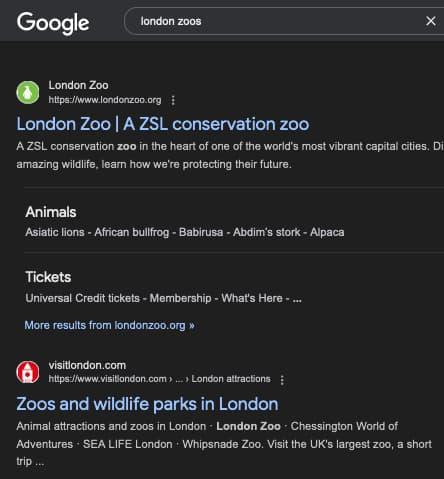
Search engines like Google look for keywords to decide what each page of your website is about. The words on your website provide search engines with an idea about what your business does.
Why does Google do this? Because they want to serve up the web content that most closely matches the searcher’s query.
Savvy business owners research the keywords that people are typing into their browsers when looking for their products or services, then weave those words into the text on each page.
Including a keyword in your domain name could give you an advantage in being found.
An example of this is cheshiredriveways.co.uk
This domain name has the advantage of containing a popular keyword (driveways) and a service location. If you lived in Cheshire and needed a new driveway, those are the very words you would likely type in to Google for help.
Search engines rely on keywords in deciding which websites to rank near the top of the search results page. And the top of the page is where you want your business to appear, as the top three get 54% of clicks.
The three types of domain name extensions
In addition to deciding what comes before the dot in your domain name, you’ll also need to decide which domain extension (or suffixes) to put after the dot.
Here are the three broad categories of domain extensions:
Original Top-Level Domains (TLDs)
These domain extensions are the highest in the Domain Name System (DNS) hierarchy and have been around the longest. Some examples of TLDs include:
- .com domain: short for commercial, .com is still the most popular domain extension in the world.
- net: short for network, this extension is often used by internet service providers (ISPs).
- org: short for organisation, .org is linked to charities, wikis or not-for-profit groups.
While the three extensions above are the most common, did you know there are over 1,000 possible TLDs? See the whole list here.
Country code Top-Level Domains (ccTLD)
Two-letter domains have been assigned to each country in the world. For example, China has .cn. Tuvalu has .tv.
The UK’s ccTLD is .uk, in addition to .co.uk.
The intention of ccTLDs is to be used by the country’s residents. Some countries, such as the UK (.co.uk and .uk), Colombia (.co), and Montenegro (.me), have let people outside of the country register domain names using their country code.
Generic Top-Level Domains (gTLD)

Generic top-level domains serve as a category in top-level domains. There are hundreds of gTLDs in use, including:
Some of these domains are restricted for use by certain individuals and groups (e.g. .gov and .edu), while others can be registered by anyone. You can scroll through the complete list here.
The .co.uk domain name extension is a must-have for any UK business.
Not least, because UK consumers associate it with trust. In fact, research from Nominet suggests that 91% of people linked .co.uk domains to the concept of safety.
What’s better? .co.uk or .uk?
| .co.uk | .uk | |
| Pros | - It’s familiar worldwide - It’s trusted | - It’s shorter - It lends itself to a more modern brand image |
| Cons | - It’s a little longer -It’s not as modern as .uk | - People may get confused and type the more familiar .co.uk into searches |
How can I buy a domain name in the UK?
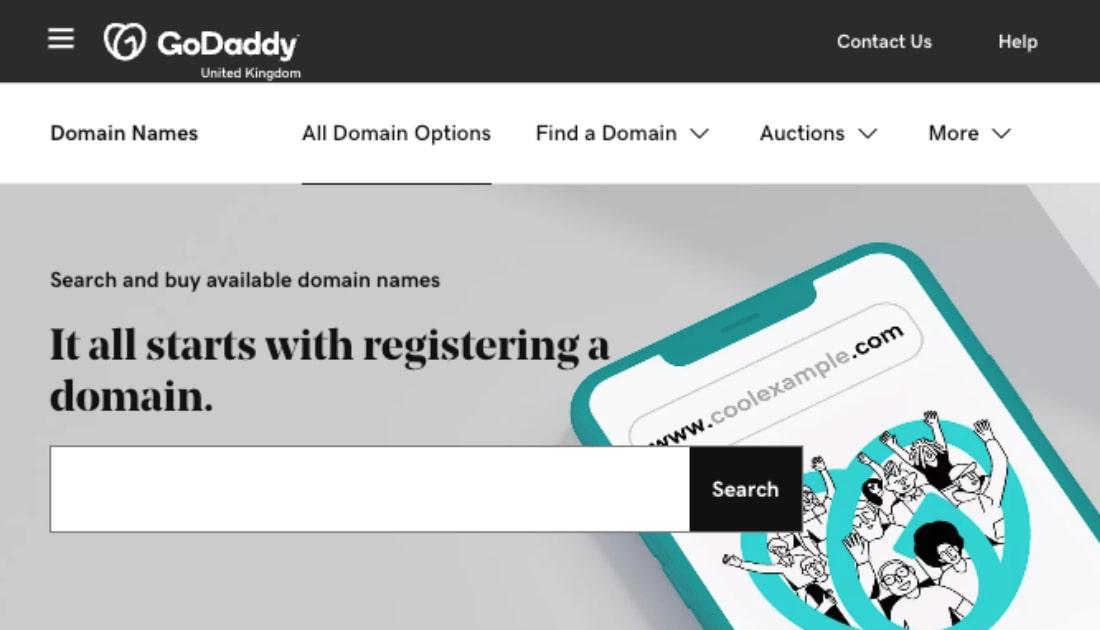
- Visit the website of a trustworthy registrar like GoDaddy.
- Search for your desired domain name on the site.
- Decide whether you want a .co.uk alone or to add .uk, .me.uk, or .org.uk, too.
- Add the domain to your cart.
- Provide your registration details.
- Pay.
- Follow the set up instructions provided. Typical .co.uk family registrations take between a few minutes and an hour.
How much does it cost to register a domain name in the UK?
Like houses, domain names vary in price. You can expect to pay between £0.01 and £12.99 per year for a typial .co.uk or .uk domain, depending on a variety of factors. The first year is often discounted with some registrars.
Premium domain names — those that are more valuable because of length, domain extension or domain authority — can cost much more.
What if the domain I want is taken?
If the .co.uk or .uk domain name you want has already been registered, don’t fret. You can check the domain owner's details using our WHOIS tool and then ask if they're open to selling their domain name.
Depending on your business structure and location, you may consider other UK domain extensions such as:
- .org.uk: Intended for non-profit organizations.
- .me.uk Intended for private individuals.
- .london: Commonly used for businesses located in or around the capital.
Currently, the most popular domain extensions in the UK are .com and .co.uk domains.
When it comes to domain names, shorter is often better and more valuable.
Read more about domain names, including what to do if the domain you want is taken and when to opt for .com, in this post.
How do you transfer a .uk family domain name?
Transferring a domain from the .uk family is slightly different to transferring other domains in that you don’t need an authorisation code.
The transfer process goes as follows:
- Find your new registrar’s IPS tag – GoDaddy’s is GODA01 for example.
- Contact your current registrar’s support or use your dashboard to ask them to change the IPS tag on your specific domain to that of the new registrar.
- Once your current registrar makes the update, the UK registry Nominet will process the transfer almost instantly.
Can you make money buying and selling domain names?
Is domain investing worth it — and is it legal in the UK? Can I sell a domain name?
The good news is, yes, you can sell domain names.
If you do it right, you can even make a profit.

Domain names can be bought, traded and sold much like real estate — only that it’s all on the web.
There is a massive demand for good, brandable custom domain names. All you need to do is:
- Think of them
- Register them if available
- Nurture them so their value increases
In fact, trading domain names has become a multi-million-dollar industry. Since domain names are affordable and easy to buy (even in bulk), entrepreneurs look to cash in on great domain names to own and resell.
SEO professionals use various metrics to assess the value of any domain. The most reliable metric is the Domain Authority.
Editor's note: Want to have a general idea of the resale value of any domain name? Type it into this free appraisal tool.
Where can I buy and sell domain names?
There are many marketplaces, such as GoDaddy Auctions, where you can post your registered domain for sale. You can either set a fixed price, auction it, or allow people to make an offer.
- Set price: Setting a specific fee is the preferred method for domain sellers with an extensive portfolio of domains who aren’t rushing to sell them.
- Auction: This is a good place to sell higher-profile domain names where there is a lot of interest, since auctions can result in the highest possible price.
- Make an offer: Make an offer sales are well-suited for niche domains and industries that are more specialised.
Frequently Asked Questions
Still have questions? The answers may be here.
Which domain provider is best in the UK?
GoDaddy is one of the best domain providers in the UK. The company has more than 30 years’ experience in the industry and more than 84 million registered domain names under management.
It serves thousands of Brits and their businesses, providing free 24/7 support via phone, text or chat.
The support team can help with everything from domain transfer to email hosting to SSL certificates for your website.
More than 123,100 consumer reviewers on TrustPilot give GoDaddy an average of 4.6 out of 5 stars.
How do I get a domain name in the UK?
You can register a domain name in the UK through a domain name registrar like GoDaddy, following these steps:
- Visit the website of a registrar.
- Search for a domain name you like.
- Add your chosen domain to your cart.
- Add your registration details.
- Pay.
How do I check if a domain name is available in the UK?
To check if a domain name is available in the UK, visit the website of a domain registrar like GoDaddy.
Enter your ideal domain name into their domain search section and they will show you if it’s available for purchase in the UK.
If you have your heart set on a particular domain name but it has already been registered by someone else, GoDaddy’s automated search tool will suggest similar domain names for you to choose from.
If you are determined to get a domain name that is already taken, GoDaddy offers a Domain Broker Service staffed by agents who can negotiate on your behalf to buy the domain name from its current owner if possible.
What are the requirements for registering a .org.uk domain name?
Anyone can register a .org.uk domain name. Domain names ending with the .org.uk extension were originally intended for charities and non profits, but restrictions have been relaxed.
How much does it cost to register a .uk domain name?
You can expect to pay between £ 0.01 and £12.99 per year for a .co.uk or .uk domain. Check this link for today’s prices.
How long can you register a .co.uk or .uk domain name for?
All .uk domain names can be registered for between one and 10 years at a time. Registrars often offer different registration periods. Many offer also run special offers on registration periods of a certain length, for example three years.