In the digital age, building a strong online presence in the Middle East is a necessity for aspiring freelancers, business owners, and side hustlers who want to thrive in one of the fastest-growing digital markets in the world. With skyrocketing internet adoption, mobile-first consumers, and rapidly expanding e-commerce, the MENA region offers vast opportunities for visibility and growth, only if you know how to navigate its unique cultural and technological landscape.
Your online presence is the digital footprint your or your business leaves on the internet. It can include anything from your company's website and social media profiles to your business listings in directories. But what exactly is an online presence, and how can you build one that effectively promotes your business and engages your target audience and potential customers?
What is an online presence?
Your online presence is essentially all the types of content that can be found on the internet under you or your company's name. This includes your website, blog entries, social media posts, and even your presence on listings and directories like Google, Bing, and Yahoo.
User-generated content, often referred to as "organic content," is another important aspect of your online presence. This is what people are saying about your brand online.
Examples include tweets that mention you, Quora answers, forum posts, and online reviews. Such content can significantly influence your brand's reputation, as people tend to trust opinions of other consumers more than they trust advertising messages from brands. That paradigm has shifted dramatically over the last decade, and more people are creating, sharing and engaging with content across the endless spectrum of platforms.
Why is it important to have an online presence in the Middle East?
In today's digital age, having an online presence is crucial for businesses to reach a wider audience. With more people turning to the internet to search for products and services, companies without an online presence risk being completely overlooked by potential customers. Having a website, social media accounts and other digital platforms allows businesses to not only showcase their offerings, but also interact with their audience and build relationships with customers.
Furthermore, an online presence allows businesses to track and analyze their performance against specific metrics, giving them insights into what works and what doesn't. With tools like Google Analytics, businesses can measure website traffic, engagement, and conversions, allowing them to make data-driven decisions and optimize their online presence for maximum effectiveness. An online presence is essential for businesses to stay competitive, do online marketing effectively and thrive in today's digital landscape.
The digital opportunity in the region is grounded in strong internet adoption and mobile usage. For example, SEO studies show that mobile devices account for over 70% of search traffic in the Middle East, making mobile-first optimisation critical for visibility. Large e-commerce growth, including projections of the regional digital marketing software market rising sharply, underscores that online visibility directly correlates with revenue growth.
Build your brand online
Your online presence is a huge part of your brand identity. When you build a strong online presence, you are taking control of your brand narrative within the digital space. As an online business, it is also important to build your online presence on platforms that allows you to showcase your brand story and offerings effectively.
In fact, accordingly to GoDaddy's entrepreneurship survey in 2022, developing online presence (19%) is one of the top areas where respondents plan to invest in order to grow their businesses, mainly in UAE and Egypt.
As a start, having a strong online presence is integral to building brand awareness for your business.
Effectively engage in digital marketing
Many business are using digital marketing as part of their marketing strategy. In our 2022 survey, many small business owners are also looking to increase online marketing (21%) as part of their marketing plans.
After all, with more people searching online before making any purchases, it is essential for businesses to invest in online advertising. However, without a strong online presence, running marketing campaigns online becomes challenging. Where would you send your customers to if they search for you online?
Understanding the Middle Eastern digital landscape
To craft an effective digital presence, you must first understand the landscape. The Middle East is hardly monolithic: varying degrees of digital maturity, language differences, and cultural behaviours all affect how users engage online.
1. Internet & mobile adoption
Internet adoption in the region is high and growing. Countries such as the UAE and Qatar report near-universal internet penetration, while nations across the GCC, North Africa, and the Levant continue to expand connectivity year over year. Mobile apps remain the preferred channel for digital content and commerce across most markets.
2. Cultural & linguistic diversity
Arabic remains dominant, though English and other languages play important roles in certain markets. This diversity means that online content must often be multilingual and culturally resonant, not just translated. For example, Arabic localisation goes beyond language to embrace storytelling nuances valued by regional users.
3. Platform usage and preferences
Social media usage is robust in the region, with platforms like Instagram, Facebook, TikTok, Twitter/X, Snapchat and WhatsApp enjoying widespread adoption. Preferences vary by age, country, and purpose (e.g: entertainment vs commerce), but the common denominator is engagement. Users don’t just scroll, they interact with brands that communicate in contextually authentic ways.
What are some ways to build an online presence?
Building a strong online presence involves several key elements. Each of these elements plays a unique role in promoting your business online and engaging your target audience. It's a crucial part of your digital marketing strategy.
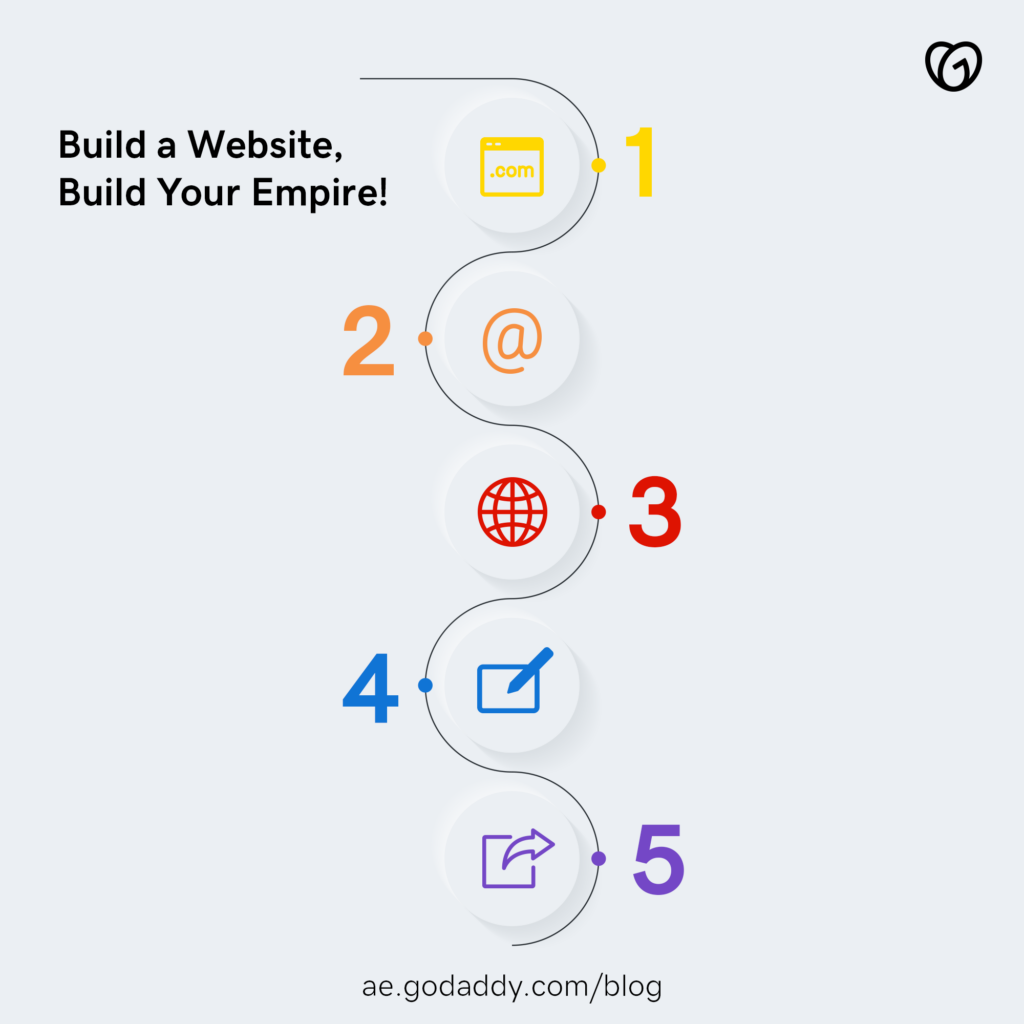
1. Having your own domain name
Your domain name is your address in the digital world. It's the mothership of your online presence and will typically feed into the rest of your online activities. Here are a tips when choosing a domain name:
- Keep it short and memorable
- Avoid numbers and dashes
- Include your location or keywords that describe your business
- Opt for .COM before trying other extensions.
A well-chosen domain name can enhance your brand's visibility and credibility online, choose your domain name today.
2. Getting a professional email address
A professional email address is your brand’s point of contact in the digital world. It's a unique email address that is branded and incorporates your domain name. While it costs money to have a professional address, it's worth the investment as it makes your business appear more legitimate which you can always use in your email marketing. It also provides a consistent and professional image for your brand, which can help build trust with your customers.
Make sure your potential customers take your business seriously by using a professional email address that matches your domain name.
3. Building your website
Your website is the digital equivalent of your physical business. It's where customers can learn about your products or services, make purchases, and get in touch with you.
Depending on your requirements, there are varying costs to building a website. However, if you are looking to build a website quickly, GoDaddy Airo helps you generate a website in a few minutes. All you need to do is to answer a few simple questions!
Having a website is only step one. The site must speak directly to your audience. Design for thumb navigation, fast load speeds, and accessible menus. Most users will interact first on phones rather than desktops.
Engage audiences in their languages, especially Arabic and English. Localization means credible cultural relevance. For instance, adapting idioms, visuals, and examples to resonate with regional users.
Craft landing pages that guide users through a clear journey: from discovery to trust building to action (e.g., inquire, purchase, subscribe).
Planning your website
When planning your website, start by identifying your business goals and your target audience. What are you trying to accomplish through your website? Who is your potential customer? What kind of website are you building? Answering these questions will help you lay down your business goals and their effect on your audience and website.
Next, determine your unique selling proposition (USP). This is what sets your business or product apart from your competitors. It could be your product's unique features, your pricing, or the ease of access to your services. Your USP should be clearly communicated on your website to attract your target audience and convince them to choose your business over your competitors.
Finally, create content for your website. This includes the text, images, and videos that will appear on your website. When creating content, keep in mind the needs and preferences of your target audience. Your content should provide value to your audience, answer their questions, and help them solve their problems. This not only attracts more visitors to your website but also builds trust with your audience, which can lead to higher conversion rates.
Top website design tips
Avoid common website design mistakes such as lack of mobile responsiveness, complex layouts, offering too many options, and missing contact information. Instead, opt for a simple, intuitive design that guides users to take the desired action. This is a crucial part of web design.

Also, consider incorporating trust signals into your website design. Trust signals are elements that increase the credibility of your website, such as customer reviews, case studies, and trust badges. These elements can reassure your visitors that your business is trustworthy and reliable, which can increase their likelihood of doing business with you.
4. Optimizing your website for SEO
To ensure your website is easily found by users online, it's important to optimize your website’s content using SEO (Search Engine Optimization) techniques. This involves using keywords related to your industry to boost the position of your website on search engines like Google and Bing. SEO is a long-term strategy that can significantly increase your website's visibility and traffic over time.
Around 78% of Middle Eastern consumers begin their purchase journey with search, highlighting the importance of organic rankings over paid ads.
Get found with SEO using the GoDaddy Marketing Suite. Get your site Google-ready to help customers find your business.
Efficient SEO strategies in the Middle East account for Arabic keyword optimisation and Right-to-Left (RTL) interface considerations, both of which significantly impact how search engines interpret and rank content.
Local search presence helps businesses connect with nearby customers, especially useful for service-based freelancers and local shops. This includes registering on local business directories and using location-based keywords that reflect specific cities and regions.
Editor's Note: Not sure how to get started with SEO? Check out our guide here!
5. Getting your business listed on online business directories
This is a step often missed out by many entrepreneurs. However, it is also an essential part of your online marketing strategy and maintaining a strong web presence, especially if you are a local business targeting customers within your locale.
Business directories improve your online visibility by ensuring your address and all the right information is provided for those who search online for services, products, or places related to what you provide as a business. An example of such directories is Google My Business. Being listed in these directories can also improve your website's SEO, as they provide high-quality backlinks to your website.
The GoDaddy Website Builder allows you to create and manage your GMB listings at no extra charge and without complicated add-ons.
How to extend your online presence?
1. Social media marketing
Social media marketing is crucial for small business owners. Given the wide adoption rate of social media platforms globally, these platforms offer a vast audience that can be reached with targeted promotional campaigns. This helps your business to increase brand awareness, making it an essential part of your online presence.
Through your business' social media accounts, you can also engage with your customers and prospects in a more informal and personal way. These platforms allow for direct communication with customers, enabling businesses to respond to feedback, answer queries and build relationships.
Social media marketing can be cost-effective, making it a great option for small businesses with limited budgets. It also offers valuable insights to help businesses refine their marketing strategies and target audiences more effectively.
As a start, determine which social media channels are your potential customers active on. Social media platforms like Instagram and TikTok dominate visual engagement, while WhatsApp and Facebook remain strong for community building and customer communication. If you are selling to businesses, definitely explore LinkedIn as an option. Many of these platforms allow you to engage with your customers and prospects in a more informal and personal way.
Short-form video, stories, reels, and live sessions are effective formats in 2026, tapping into trends established in 2025 and evolving through AI-assisted creation tools.
It might also be worthwhile to consider doing influencer marketing through your social media channels. Collaborations with regional influencers, especially micro and nano influencers, can boost reach and credibility.
2. Email marketing
Email marketing is a powerful and cost-effective way to communicate with your customers and prospects, and is versatile enough to be used for an assortment of business and marketing objectives. It allows you to send personalized messages to your customers, keep them updated about your products or services, and nurture your relationship with them. Building an email list is a key part of this process.
Editor's Note: Not sure how to start engaging customers on your email list? Check out our guide on the tools you can use to get started with email marketing!

Content marketing
With your own website, you can now get started with content marketing. Unlike purely promotional tactics, content helps you educate, connect, and earn trust, which is especially important in relationship-driven cultures across the region.
Content marketing involves creating and online material (such as videos, blogs, and social media posts) that is intended to educate and generate interest in products or services.
Whether you are running an e-commerce company or providing professional services online, content marketing should be an integral part of your marketing strategy. By creating relevant content to help educate users, you are establishing your knowledge and expertise by sharing what you know.
By anticipating questions that your potential customers might have, and eventually creating relevant content to answer these questions, you are also optimizing your website for SEO.
Customers who key their queries onto a search engine and land on your site might be doing research before their purchase. These potential customers might eventually purchase from you or engage your services.
On top of creating your own content, you can also invite other experts to contribute their content on your website. Guest posting is a great way to bring about diverse expertise, especially if you are offering consultancy services.
Many beginners assume English content is enough. While English works well for certain audiences (especially in the UAE, Qatar, and Bahrain), Arabic content significantly expands reach. Even partial Arabic localisation, such as headlines, CTAs, or social captions, can improve engagement and SEO performance.
Editor's Note: Thinking of doing content marketing differently? Try doing a podcast! Here's a guide to help you get started.
Online security
Online security is crucial for protecting your online presence and property from attacks and breaches over the internet. This includes protecting your website from malware, encrypting stored and transmitted data, and obtaining SSL certifications. SSL (Secure Sockets Layer) is a security protocol that provides a secure connection between internet browsers and websites, allowing you to transmit private data online. Websites with SSL certificates have a padlock in the browser URL bar, which increases the trustworthiness of your website.
Expanding your online presence
Once you've established your online presence, it's time to expand it. This can be done through various online platforms and marketplaces like Amazon, or through online advertising and marketing campaigns. Content marketing is a particularly effective strategy for expanding your online presence, as it allows you to provide valuable information to your audience and establish your brand as an authority in your industry.
You can also expand your online presence through guest posting on other websites or starting a podcast. These strategies can help you reach a wider audience and attract new customers to your business.
Monitoring your online presence
Monitoring your online presence is crucial for understanding how your brand is perceived online and identifying areas for improvement. You can do this by tracking various metrics, such as website traffic, social media engagement, and email open rates. You can also monitor customer reviews and feedback to understand what your customers like and dislike about your business.
Building brand awareness through online presence
Your online presence is a powerful tool for building brand awareness. By consistently providing valuable content and engaging with your audience, you can establish your brand as a trusted authority in your industry. This can lead to increased customer loyalty, more referrals, and ultimately, more sales.
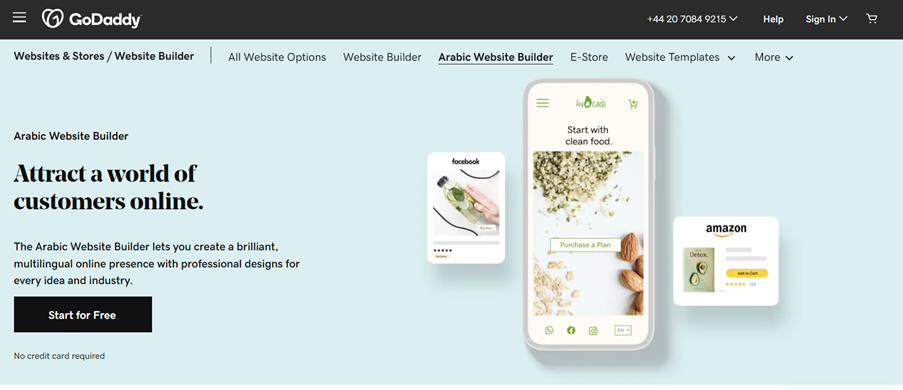
How to build your website using GoDaddy's Arabic Website Builder: A step-by-step guide
Here’s a step-by-step guide to using the GoDaddy Arabic Website Builder, a powerful marketing tool for your local business or online business.
Step 1: Choose a template
The first step in creating your website is choosing a template. GoDaddy's Arabic Website Builder offers a variety of professionally designed templates that are tailored for different industries and purposes. Whether you're a small business owner, a freelancer, or a blogger, you can find a template that suits your needs.
Step 2: Customize Your template
Once you've chosen a template, you can customize it to fit your brand. You can change the color scheme, fonts, and layout of your template. You can also add your own images and text to make your website truly unique. This is where you can start to automate your digital presence.
Step 3: Add pages
Next, add the pages you need for your website. This could include a home page, an about page, a services page, a blog page, and a contact page. Each page should have a clear purpose and should provide valuable information to your visitors. This is your business profile on your business website.
Step 4: Optimize for SEO
GoDaddy's Arabic Website Builder includes built-in SEO tools that can help your website rank higher in search engine results. You can add keywords to your website's title, meta description, and content to improve its visibility. This is crucial for local SEO and to rank higher in Google search.
Step 5: Publish your website
Once you're happy with your website, you can publish it with a single click. GoDaddy's Arabic Website Builder includes hosting, so you don't need to worry about finding a separate hosting provider. Your website is now part of the online directories.
Step 6: Update regularly
After publishing your website, it's important to keep it updated with fresh content. This not only keeps your visitors engaged but also improves your website's SEO. Regular updates also help your website to stay relevant to the algorithms of search engines.
GoDaddy's Arabic Website Builder makes it easy for you to create a professional website that enhances your online presence.
Whether you're just starting out or looking to improve your existing online presence, this tool can help you create a beautiful and functional website that helps you reach more customers and grow your business.
Conclusion
Building a strong online presence is a crucial step in growing your business. By understanding the different aspects of online presence and implementing the tips provided in this guide, you can create a powerful online presence that helps you reach more customers and grow your business.
Remember, your online presence is a reflection of your business in the digital world. Make sure it accurately represents your brand and offers value to your customers. Whether you're just starting out or looking to improve your existing online presence, it's never too late to start implementing these strategies.
For more tips and guides on building your online presence, check out our other articles on the GoDaddy Blog. Whether you're a local business or an ecommerce platform, your web presence is key to your success.
Editor's Note: This article was first published on 21 June 2023 and updated on 3 December 2025.