

If you’ve ever wondered how to start and register a business in Singapore, now is a great time to take the leap. Singapore remains one of the world’s most startup-friendly economies. With streamlined regulations, competitive corporate tax rates, and a transparent framework, these are designed to help entrepreneurs succeed. Whether you are an aspiring side-hustler turning professional, a business owner looking to scale, or an investor eyeing the gateway to Southeast Asia, we've put together a guide to help you navigate the intricacies of setting up a business in Singapore in 2026.
Don't be daunted by the amount of paperwork and regulations. It might seem a lot at the start, but we are here with you. In this guide, we’ll walk you through every step you need to know. From choosing an appropriate business structure and reserving your company name, to navigating the official registration with Accounting and Corporate Regulatory Authority (ACRA), and setting up post-incorporation essentials, you'll gain practical tips, common pitfalls to avoid, and pro strategies for foreign founders. By the end, you’ll have a clear roadmap and be ready to launch your Singapore-based business with confidence.
Let’s delve right in, shall we?
Why is Singapore an attractive place to start a business?
Singapore is consistently ranked as one of the easiest places to do business globally. Here are some of the top reasons why you should start a business in Singapore:
1. Pro-business environment
Singapore has a pro-business environment that encourages entrepreneurship and innovation. The government has streamlined procedures for starting and running a business, making it easy for entrepreneurs to get started.
On top of that, the government is also pro-business by implementing policies and initiatives to support the development of entrepreneurs, as well as small and medium-sized businesses. These include such as grants, tax incentives and incubator programs.
For example, the Startup SG Founder (SSGF) programme was created to support aspiring first-time entrepreneurs to start their own innovative businesses by providing mentorship and financial support.
Through SSGF, first-time founders can access funding through a startup grant and mentorship from Accredited Mentor Partners (AMPs). This includes pitch training, networking opportunities with investors and corporates, secretarial and accounting support, and access to exclusive programmes.
2. Low taxes
Singapore offers tangible business advantages as the tax regime is pro-growth. Corporate tax is relatively low compared to many economies in Asia, and new businesses can often access tax exemptions, incentive schemes, and grants to support early growth. In fact, Singapore's corporate tax rate is one of the lowest in the world, which helps businesses keep more of their profits. Profits of your companies operating in Singapore will be taxed at 17%.
3. Political and economic stability
Underpinned by a clear, transparent rule of law and efficient governance, Singapore offers political and economic stability. For businesses, this means fewer surprises, less regulatory risk, and a stable base to plan growth.
Singapore's strong and stable economy is conducive for starting and growing a business. It has a highly developed financial system and a skilled workforce, which are essential for any business. And thanks to its strong leadership, Singapore saw an impressive post-COVID-19 recovery.
4. Strategic location
Singapore is strategically located at the crossroads of Southeast Asia and the Asia-Pacific region. Its logistical and digital connectivity makes it a regional hub for trade and commerce. Hence, Singapore is an ideal location for businesses that want to tap into the fast-growing markets of Southeast Asia and beyond.
5. Ease of doing business
Singapore has a global reputation for ease of doing business. With efficient digital platforms like BizFile+, registration and regulatory compliance are streamlined, reducing red tape that many entrepreneurs encounter elsewhere. This transparency and efficiency not only speeds up setup but also gives credibility to the business. These becomes important when dealing with clients, partners, or investors.
Who can start a business in Singapore?
One of the most appealing aspects of starting a business in Singapore is its inclusivity. Both locals and foreigners can register and run companies, as long as you meet certain requirements.
If you are a Singapore citizen or Permanent Resident (PR), the path is straightforward. You can register your business, serve as director/shareholder, and enjoy full operational autonomy. There are no restrictions on Singapore residents forming a business here. This lowers the bar for entrepreneurs to formalise their business rather than operate informally.
For foreigners, the rules are still friendly, but with a few important conditions. Foreign entrepreneurs can 100% own their Singapore-registered company. However, there must be at least one local resident director: this can be a Singapore citizen, PR, or a holder of a valid work pass like an Employment Pass (EP) or the entrepreneur-oriented EntrePass.
If you’re setting up the company but living overseas or not yet moving to Singapore, you can appoint a “nominee director” via a registered corporate service provider. This ensures that your company meets the legal requirement, while you still retain ownership and operational control. Many corporate secretarial firms and service providers offer this as part of their company formation packages. You're also required to have a registered Singapore address (physical or virtual) and a company secretary within six months of incorporation.
What are some businesses you can start in Singapore?
1. Home-based business
A home-based business is a business that is operated from the home of the entrepreneur. These businesses can range from small, one-person operations to larger companies with multiple employees. They typically involve low startup costs and minimal overhead, which makes them an attractive option for those looking to start a business in Singapore.
Starting a home-based business in Singapore can be a great option for many reasons. One of the main benefits is the low startup costs, as you do not need to invest in commercial property, which can be expensive. This makes it an accessible option for those who have limited capital to invest. Additionally, home-based businesses do not have the same operational costs as traditional brick and mortar businesses, which can also help keep costs low.

Another advantage of starting a home-based business in Singapore is the flexibility it offers. As a home-based business owner, you have the freedom to set your own schedule, which can make it easier to balance work and personal life. Additionally, home-based businesses can be operated from anywhere, which makes it easy to move or travel while still running your business.
Some examples of home-based businesses include, delivery-only food businesses, virtual marketing agencies, and freelance consulting. Check out this article for more home-based business ideas in Singapore that you can consider.
2. E-commerce business
E-commerce has seen significant growth in recent years, providing new opportunities for businesses and entrepreneurs in Singapore.
According to a report by the Infocomm Media Development Authority (IMDA), e-commerce sales in Singapore reached $3.1 billion in 2019, an increase of 15% from the previous year. This trend is expected to continue, with e-commerce sales forecasted to reach $5.4 billion by 2023.
The increasing availability of internet access and the widespread use of smartphones have made it easier for consumers to shop online, and this has led to a growing demand for e-commerce businesses. According to the IMDA report, more than 85% of Singaporeans have access to the internet, and mobile device penetration is at about 150%. With the IMDA forecasting that about 80% of Singaporeans will shop online by 2023, the opportunities are endless.

Some examples of e-commerce businesses in Singapore include online scented candle stores or online accessory stores like The Prickly Pins.
3. Tech startups
The rise of tech startups in Singapore has been a significant development in recent years, as the city-state has become a hub for innovation and entrepreneurship. There are several factors that have contributed to the growth of tech startups in Singapore.
First off, the Singapore government has been actively supporting the growth of tech startups through various initiatives and schemes, such as the Startup SG program and the Startup SG Founder scheme. These initiatives provide funding, mentorship, and networking opportunities for tech startups.
This, coupled with Singapore’s highly educated and skilled workforce, creates the perfect recipe for the growth of innovative tech businesses. The city-state has a strong focus on education and research and development, which has led to a talent pool of engineers, data scientists and software developers.
Furthermore, Singapore has a well-developed venture capital and private equity ecosystem that provides access to funding for tech startups. There are also various government-led initiatives that provide funding for startups, such as the National Research Foundation's Technology Incubation Scheme. If you’re not sure how you can find investors, fret not.
Read more: How to start a software company in Singapore?
Choosing the right business structure
Your first major decision when starting a business in Singapore is choosing the appropriate legal structure. The structure you select will determine your company’s legal standing, tax obligations, liability, and operational flexibility. Common business entities include:
- Sole Proprietorship - Simple to set up and suitable for solo entrepreneurs or freelancers. However, you retain unlimited personal liability.
- Partnership (General or Limited) - Owned by two or more individuals, sharing profits and liabilities. Liability can be unlimited (general partnership) or partially limited (limited partnership), depending on the setup.
- Limited Liability Partnership (LLP) - Combines aspects of partnerships and companies; provides some liability protection while offering flexibility. Useful for professional firms (e.g. consultants, agencies).
- Private Limited Company (Pte Ltd) - By far the most popular for startups and businesses looking to scale. It offers a separate legal identity, limited liability, ability to raise capital, and access to tax incentives. It can have up to 50 shareholders (individuals or corporate entities).
In general, if you’re a solo freelancer or starting small with minimal risk, sole proprietorship or LLP may suffice. On the other hand, if you’re thinking long-term, want to scale, attract investors or hire staff, a Pte Ltd is usually a better choice. Its separate legal identity gives you personal asset protection and credibility.
This decision is critical, because switching later may mean more hassle, restructuring costs, or loss of initial tax/asset advantages.
How to start a business in Singapore?
Step 1: Identify your target audience and their needs
Before starting your business, you need to have a clear idea about your target audience and their needs before you launch your business. Focus on the customer and what they potentially want from the product or service you intend to offer. Here is a list of questions you need to ask:
- What is the purpose of your product or service?
- What are the benefits of using your product or service?
- How is your product or better than your competitors?
A good resource for you to get inspiration for ideas is on Quora. You can see all the questions people are asking, and some common challenges faced by these answer seekers.
These become excellent insights for you to develop your unique solutions to help them solve their problems.
Step 2. Identify your business value proposition
As you plan your business, you should have a clear view of what you want to do.
Be specific and precise about the type of business you want to start, the location of the business, or your target audience.
One of the best frameworks that can help you is the Lean Business Canvas. Widely used by entrepreneurs all over the world, it helps you to visualize your idea and your business model.
Once you identify challenges and problems faced by your target customers, you need to research on potential competitors for your planned business.
With customer and competitor research out out of the way, start looking into the product or solution you want to develop. Think about how your product or solution benefits your customers, connecting it to your customer's challenges. Develop strong differentiation factors from your competitors allows customers the reason to pick your product or solution.
Editor's Note: Get started on ideating for your business and product with this nifty guide!
Step 3. Decide on your business location

After you have figured out your business idea, think about where you want to operate your business. Here are some common places to start a business.
1. Home-based business
If you plan to test your business idea or keep your business small, you don’t need a separate office space! You can start your business from home. This allows you to save money on rent. Besides saving money, you get to spend more time with your family. That's a win-win!
2. Co-working space
If you need to separate your work and living space, a co-working space such as WeWork is your next option. Many co-working spaces are set up with the intent to help you to start your own business. Being in a co-working space gives you an opportunity to network and interact with like-minded entrepreneurs. You can seek out feedback for your business idea, or even find your business partners.
3. Retail space
If you plan to start a retail business, make sure that you have sufficient capital to invest in the business. You need the capital to purchase inventory and pay for the rent of your retail space. There are many types of retail spaces available in Singapore. Popular ones include shopping malls, shops in heartland neighbourhoods or even shophouses in heritage districts. The choices are aplenty. In addition, you need to set aside budget for interior design and a contractor to beautify your shop.
Step 4: Develop a business plan and find your startup capital
As you prepare for your business, make sure you develop a complete business plan. Building a business without proper planning is like building a house without a blueprint. With the right business plan, you will have visibility of your targeted goals, how you will operationalize your business and the capital you need.
When you are starting out, it is better to start small and build on your business step-by-step. Even if your startup has potential, it may take time for you to see significant results. Having said that, there are some companies that start off with an idea and grow rapidly from there. To find out how much capital you might need, check out sites like Crunchbase and Flippa. On these sites, many founders share the cost structures of their business.

If you plan to raise funds for your business, check out sites like AngelList and Crunchbase for potential investors interested in your product.
Editor's Note: Explore how you can seek out microfinancing options to raise the funds you need for your business!
Step 5: Register your company in Singapore
Once you have your business plan ready, it is time to register your company in Singapore. All businesses will need to be registered with the Accounting and Corporate Regulatory Authority of Singapore (ACRA).
If you are thinking of operating a micro-business, you can consider registering a sole proprietorship instead of a private company as the registration process is easier and the maintenance is cheaper.
If you want to register a private limited company in Singapore, there are 3 things you need to provide ACRA.
- Business name: You need to provide a unique name legally approved by the ACRA. Choose a name that is short, easy to remember and relevant to your business. You can try using free name generators online if you need some ideas.
- Business address: An address is also important because it helps other people to connect with your business. If you are just starting out, you can register your business with a virtual office offering mail services.
- Nature of your business: The full list of the Singapore Standard Industrial Classification (SSIC) code corresponding to your business activity is issued by the Department of Statistics of Singapore. Your business activities must fall under one of the pre-defined classifications. On top of that, you need to provide additional information to elaborate on your chosen classification.
A step-by-step guide on how to register your business in Singapore is provided in the next section.
Editor's Note: Need help choosing your business name? GoDaddy's got you covered here.
Step 6: Get familiar with tax regulations and reliefs in Singapore

Once you have registered your business in Singapore with ACTA, the you do not need to register with the Inland Revenue Authority of Singapore (IRAS). However, you should familiarise yourself with the reports and statements IRAS need to receive from you while you are operating your business in Singapore.
Furthermore, there are various tax reliefs for startups that can help you get off the ground during the first few years of business. All companies with an annual chargeable income of under SGD100K will only have to pay 25% on their taxable income of 17%.
For example, assuming your startup earns SGD80K in taxable profits (i.e. after deducting any deductible expenses and investments from your company’s gross profit), during the first year of operations, your company is only liable to pay 4.25% (i.e. 25% of the corporate tax rate of 17%), or SGD3.4K in corporate tax for that financial year. Once your company is incorporated in Singapore, you can check with IRAS for additional tax relief packages.
Step 7: Set up a business bank account in Singapore
After registering your company, it's time to open a business bank account. Setting up a business bank account is easy and can be done within an hour.
Opening a business bank account helps you keep your finances organized. The account will also act as a single point of reference for all your business transactions.
Even if you are planning to operate as a sole proprietor, you should still set up a separate business bank account. DBS, OCBC, or UOB are some of the largest banks in Singapore and you can bank on them (pun intended!) if you operate a business in Singapore. Most banks in Singapore require your UEN, BizFile business profile, and ID documents for all company officers/shareholders before opening an account. A bank account separates your personal and business finances, which is crucial for accounting, tax, and credibility.
Alternatively, you can also consider opening a virtual bank account with Payoneer, Skrill or Wise. These are suitable for e-commerce and freelancing businesses. You can receive payments from worldwide buyers in their local currencies. Exchange rates are also mostly competitive on these platforms, hence allowing you to avoid exorbitant charges.
Step 8: Obtain your business website domain and create a well-designed website
Once you have decided on your business name and registered for your business, you should look into securing an ideal domain name for your business website as soon as possible. This is especially important if you are going to be marketing or selling your products and services heavily online.
To learn more about a domain and how to pick one, check out these following resources to help you understand the best domain that you should obtain in Singapore:
On top of getting a domain name, if you don’t have a website ready to brand your business and capture leads, you are missing out.
A well-designed website can help to establish a professional image for your business and make a positive first impression on potential customers. This, in turn, helps to increase credibility for your business by providing detailed information about your products or services, contact details, and even customer reviews.
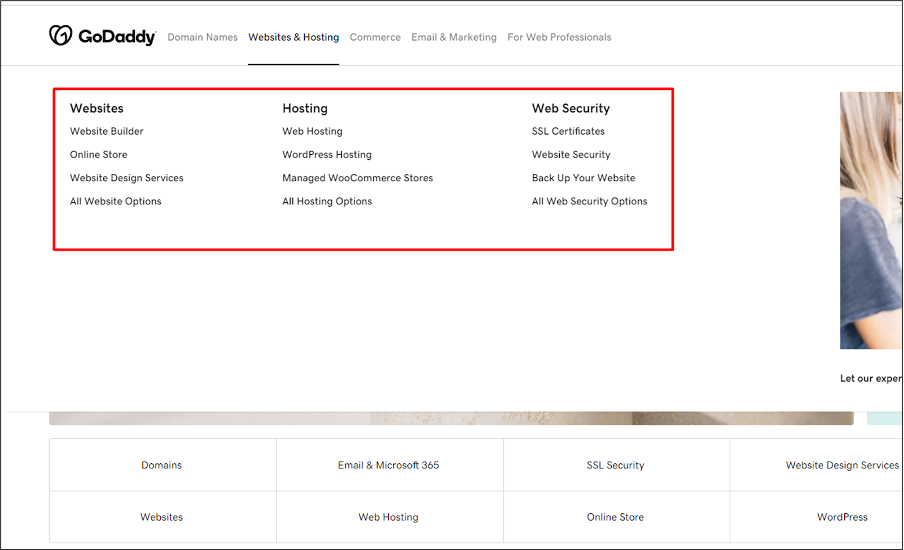
A website should also be designed with navigation in mind. If your site visitors can’t find where your various product, product feature, or service pages are in your navigation menu, why would they put in the effort to try if you aren’t reciprocating it?
To get started in building a website in Singapore, here are some resources you can refer to:
Step 9: Invest in digital marketing
There has never been a time where digital marketing is more crucial. Having a live website is not enough to help you grow your online presence. You will have to engage in search engine optimization (SEO) and paid ads.
Google’s natural language processing ability (NLP) allows it to serve search results that are most relevant to your query.
People find your website based on specific queries they key into the search browser. The browser’s algorithm (typically Google) is able to recognise the search intent behind the user’s query and return search results of web pages with content that match the search intent of the keyword.
Digital marketing is a great way for you to promote your products online.
And this is where SEO comes in. Good SEO means being able to recognize the search intent of a particular keyword and write content to optimize your web page specifically for that keyword. Notably, SEO is a long-term game and you cannot expect to see results too soon.
When it comes to paid ads, the operations really depends on which platform you are advertising. If you decide to go with Google AdSense, you’ll rely on keywords too. Only this time, you are bidding for the highest spots on the search engine results page (SERP) with an actual budget.
When working in unison, SEO and paid ads can do wonders for your brand awareness and online presence.
Pre-registration preparations: what you need to register a business in Singapore
Now, let's dive into the nitty gritty of registering your business in Singapore. Before jumping into registration, preparing ahead will save you time, avoid rejection or delays, and make the process smoother. Here’s what you’ll need:
- Company name: Unique, not identical or too similar to existing names, not offensive, and not infringing trademarks. You’ll reserve this via BizFile+.
- SSIC business activity code: Classifies your main business activity, such as e-commerce, consultancy, retail, etc. You’ll select this during registration. Many applications get stuck due to wrong or vague SSIC selection.
- Paid-up capital: Minimum required is S$1. You can begin with that and increase later as you grow.
- Shareholding & share structure: Names and particulars (for individuals or corporate shareholders). A Pte Ltd can have up to 50 shareholders.
- Registered office address in Singapore: Must be a physical address (serviced office, rented office, or HDB-approved home office). P.O. boxes are not allowed. Virtual office addresses are accepted.
- At least one local director (resident in Singapore). This is required to satisfy ACRA’s local directorship rules.
- Company secretary: Must be appointed within six months of incorporation. Secretary must be a Singapore resident.
- Company constitution (M&AA): You can use the standard model constitution provided by ACRA, or upload a customised one.
- Identification and personal details: For all directors/shareholders - passport or NRIC details, residential address, nationality, etc.
Getting these ready beforehand makes the registration via BizFile+ far smoother.
How to register your business in Singapore: a 2026 step-by-step guide
After getting all the prep work done, here is a step-by-step guide to register your business in Singapore:
Step 1: Reserve your company name
Use BizFile+ to check name availability and reserve your desired company name. The reservation fee is S$15. Name reservation is usually fast, and reserved names are held for 120 days.
Step 2: Submit your business registration / incorporation application on BizFile+
After getting your business name approval, you can proceed to fill in registration details: company type (e.g. Pte Ltd), SSIC business activity code, director/shareholder details, registered address, share capital, constitution, etc.
Step 3: Pay your incorporation registration fee
After filling in your company registration details, you will need to make a payment of S$300 for incorporation.
Step 4: Await for approval by ACRA
In many straightforward cases, approval is granted within 1–3 business days. For simple setups, approval can come very quickly, especially if all details are correct and there are no “review triggers” such as restricted words, regulated business activities.
Step 5: Receive your official business registration documents
Once approved, you’ll get a Unique Entity Number (UEN) and a BizFile Business Profile / Certificate of Incorporation. These documents confirm that your company is legally registered and can be used to open a corporate bank account, apply for licenses, etc.
What is the cost of registering a business in Singapore?
Understanding costs and time commitment helps you plan effectively when registering for a business in Singapore. This is especially useful if you’re bootstrapping or working with limited capital. Here's a quick summary:
1. Government fees
| Type of government fee | Cost |
| Name reservation | $15 |
| Company incorporation | $300 |
Do take note that these are the total fees if you register your business without any paid external help.
2. Additional Costs
These additional costs are optional, and can be worked out depending on your needs.
| Type of Cost | Cost |
| Virtual office / registered address service (if you don’t have a physical address) | |
| Nominee-director and/or corporate secretary service (common for foreign founders) | |
| Corporate-secretarial or incorporation packages (if using a service provider) | Range from several hundred to a few thousand SGD, depending on inclusions. Some full-service packages (with address, nominee director, secretarial services) might cost more, but offer convenience. |
Other post-incorporation steps & compliance essentials for your business in Singapore
Here are some important follow-up steps and ongoing responsibilities to ensure your business stays compliant and can operate smoothly:
1. GST registration (if applicable)
If your business turnover exceeds the threshold (or you expect to exceed it), you’ll need to register for Goods and Services Tax (GST). Even if not required immediately, some companies opt to register early, especially if they are B2B or expect to claim GST credits.
2. Set up accounting, bookkeeping, corporate secretarial services
Singapore companies must maintain statutory registers, keep proper records, and file annual returns. A company secretary plays a crucial role to ensure compliance and timely filings.
3. Plan for corporate governance and compliance
Even for small companies, maintaining company constitution, shareholder/share-capital records, and ensuring timely submission of changes (e.g. change of address, director, shareholding) is important.
4. Apply for necessary licenses or permits (if business activity requires)
Depending on your industry (food, retail, education, finance, etc.), you may need different licences. For many regulated industries, registration with relevant agencies or additional permits may be necessary. Some entrepreneurs use the Online Business Licensing Service (OBLS) to apply for required licences/licenses online.
Common mistakes & pitfalls to avoid when starting a business in Singapore
Despite the streamlined process, many new entrepreneurs run into issues when starting their businesses in Singapore, which can result in unnecessary delays or rejections. Here are common mistakes and how to avoid them:
- Choosing a name that is too generic, similar to existing ones, or contains restricted/trigger words can delay or block name approval.
- Selecting an incorrect SSIC business activity code. This matters for classification, licensing, and may affect future compliance. Always check carefully.
- Forgetting the local director / company secretary / registered address requirement. This is specially common among foreigners or remote founders.
- Using a P.O. box address as your company registered address. This is not allowed, as your address must be a physical, operational address in Singapore. Virtual office addresses are accepted too.
- Underestimating post-incorporation compliance. Some examples include failing to maintain statutory registers, annual filings, accounting records, or bank account setup delays.
Avoid these common pitfalls by preparing carefully, double-checking details, or engaging a corporate-services provider if needed.
More tips for new business owners
Still feeling nervous about embarking on your journey to start a business in Singapore? Here are more insider tips to make your startup journey smoother and more strategic:
- Start with minimal paid-up capital (S$1): This keeps initial cost low but still gives you full company status. You can always increase capital later as you expand or seek investment.
- Use a virtual office / serviced address if you don’t have a physical office: This is especially common for digital businesses or remote founders. It saves cost while fulfilling legal requirements.
- Appoint a corporate secretary early: even if you plan to handle admin yourself. A secretary ensures you don’t miss filing deadlines or statutory requirements.
- Plan for GST and tax early even if you’re below the registration threshold now. This helps you budget better and avoid surprises as you grow.
- Use a corporate-services provider for compliance & convenience (especially for foreigners). They can handle nominee-director, registered address, filings, and ongoing compliance. The ease and time saved can be worth the extra cost, especially when you’re focused on building the business.
These small decisions at the beginning can pay off in fewer headaches and smoother growth down the road.
Useful resources & for entrepreneurs
- ACRA + BizFile+ portal: This is the official platform for business name reservation and company incorporation (and ongoing filings). Essential for any formal business setup.
- Online Business Licensing Service (OBLS): This is useful if your business needs specific licences or permits (e.g. food, retail, education, financial services). Helps you navigate cross-agency licensing efficiently.
- Corporate secretarial / service providers: especially helpful for foreigners or remote founders who need nominee directors, virtual address, or assistance with filings. Many firms in Singapore offer “company-formation packages” that bundle these services.
Ready to start a business in Singapore?
And there you have it! Here is our step-by-step guide on how you can register and start a company in Singapore.
Compared to many countries globally, Singapore is still considered one of the best places to start a business, given the amount of support you can get as a newbie entrepreneur. Despite the challenges, the experiences and the personal growth you gain can far outweigh the struggles that come with running a business.
With these steps, you will be able to start a business in Singapore and overcome the initial hurdles. The best thing about starting businesses in Singapore is the widespread availability of resources online. When in doubt, Google what you need! Besides utilizing search engines, you can also check out the following government sites:
- ACRA - https://www.acra.gov.sg/
- IRAS - https://www.iras.gov.sg/
Both of these sites contain all the necessary information about different business activities you can do in Singapore.
Good luck in starting your business in Singapore!
This post was originally published on Jun 3, 2021, and was updated on Mar 13, 2023, Feb 8, 2024 , Aug 21, 2024 and Nov 21, 2025.