As an entrepreneur, you may or may not know there’s a whole heck of a lot that goes into getting a domain name.
The name you come up with for your side hustle or startup is often the first impression that potential customers have of your business. Your business name gives people a sense of who you are and what your company is all about.
Your business’s domain name is just as important.
Still trying to figure out where to start when buying a domain name in Canada? Don’t worry — we’ve got you covered.
In this guide, we’ll answer the top 10 questions about buying a domain in Canada, from what a domain name is to why you should buy one and the differences between registering and buying a domain name. Let’s go!
Check to see if the domain you want is available now
Top 10 things to know about buying domain names in Canada
Unless you plan to avoid the internet altogether, you’ll want to register a unique domain name to use:
- As your unique space on the web
- To create a professional email address
- As the web address for your business website
- For a direct link to your social media page
- As an investment that, if managed properly, can make money
You’ve heard about branding, right? Branding is everything that goes into creating a public image for your business. Owning your own, one-of-a-kind domain name is right up there with creating a terrific logo and choosing business colors you use everywhere.
1. What exactly is a domain name?
While most folks out there probably have a general idea of what a domain name is, it’s worth laying out the details before diving too much deeper.
So — what exactly is a domain name, then?
A domain name is essentially the address people will type into the search bar of their web browser to find your site.
The domain name here, for example, is GoDaddy.com.
By punching these domain names into Safari, Chrome, or whatever your browser of choice might be, you’ll be taken directly to the business website.
If you’re still not clear on domain names, check out this separate guide on what is a domain name, domain VS URL, and other useful facts.2. How do I buy a domain name in Canada?
Buying a domain name here in Canada is no different than buying a domain name anywhere else in the world — that’s the beauty of the world wide web!
It’s a simple, two-step process:
- Then you simply check out, paying an annual fee to a domain registrar (more on this later in this article)
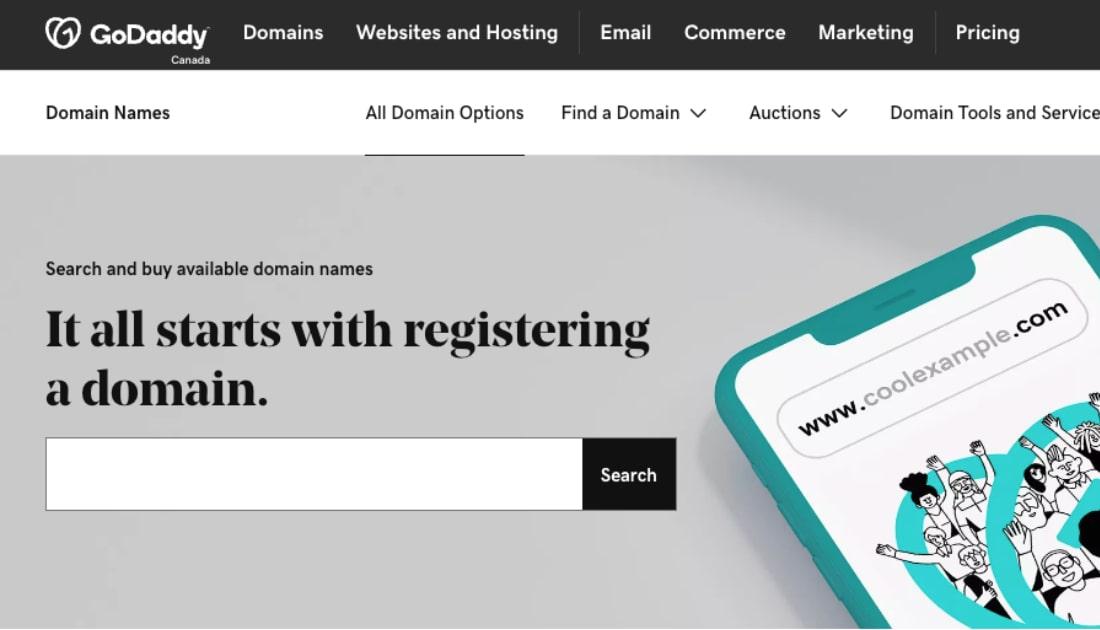
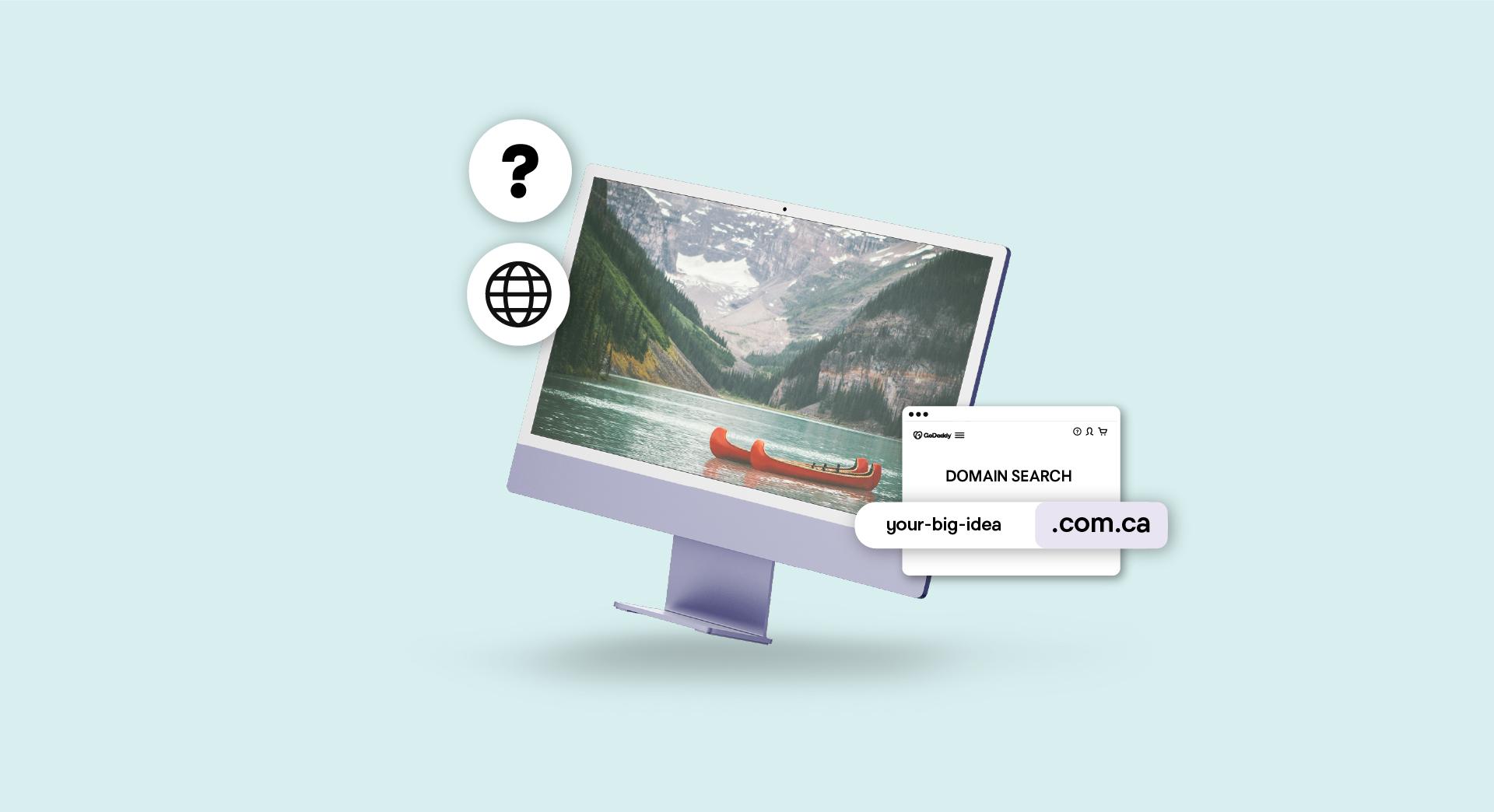
- First, you need to search for an available name using a domain name search tool (GoDaddy’s got a fast one)
Et voilà! You’ve got yourself a bona fide domain name on the global internet.
Uh oh. Has somebody already registered your domain name? The only domain name that perfectly says everything your business is and stands for?
Don’t panic yet.
First, take a peek at the current status of your desired domain name by running a WhoIs check.
This will show you the contact information for the person who currently owns the domain name you want and when their ownership rights are set to come up for renewal.
In cases where the domain owner has WhoIs privacy, only the registrar’s contact information will be shown.
Armed with this knowledge, you can reach out to the owner (or the registrar) to ask if they’d be willing to sell. You may be able to swoop in and grab the domain name if the owner lets it expire.
GoDaddy can also help you snag that domain with a broker service that specialises in the negotiation process. This takes the stress and hassle out of getting the domain you want in exchange for a fee you and the seller agree to.
3. Knowing your .ca from your .com domains
The first part of your domain name — the "GoDaddy” in "godaddy.com” to be precise — can be any combination of words or letters that you can come up with.
But what about the part on the other side of the dot?
That closing bit of a domain name is known as its extension. Like your domain name, the extension you choose can go a long way when it comes to helping potential clients identify what your business is all about.
For example:
- A .com extension typically indicates a commercial or business-related venture
- Domains ending with .org are regularly used by not-for-profit or community-driven ventures
- A .ca domain name lets people know they’re dealing with a Canadian business
- The .quebec extension is often used by Québécois hotels, restaurants, and attractions
There are many more extensions out there currently. In fact, GoDaddy offers hundreds of domain extensions.
But regardless of which one you go with, you can sleep soundly knowing that it simply comes down to a branding choice that doesn’t have any sort of an impact on search engine results.
4. What does a Canadian domain name cost?
As the official country-code domain of Canada, .ca is the most Canadian choice of all. It tells people at a glance that:
- You’re located right here in Canada
- Your business supports our economy
- All prices will be shown in Canadian dollars
- You collect and pay Canadian taxes
- There’ll be no border or customs issues
It’s no surprise that 46% of Canadians say they have purposefully made an online purchase from a Canadian retailer instead of a U.S. or other international one in 2024.
For more information on the .ca extension, there are few better resources than the registry that manages it: the Canadian Internet Registration Authority (CIRA). GoDaddy is an approved .ca domain provider through CIRA.
While a currently-registered domain name can go for just about any price a seller lists, a new .ca domain will typically cost anywhere from $5-$20 to register for one year. After that, your annual cost may be in the $33 range.
5. How do I permanently buy a domain name?
It’s not possible to purchase a domain name permanently. A person or entity cannot register a domain name forever or own it in perpetuity.
Instead, domain name registration is managed on a recurring annual basis. If you were to register it for one year and then forget to renew it, it would be held for 26 days and then released to auction.
GoDaddy sends multiple emails to alert domain owners during the 30 days prior to and 30 days after any domain expiration, ensuring that you’re able to maintain uninterrupted ownership of your domain for as long as you’d like to keep it.
Your best bet is to set your domain to auto-renew and keep your payment method up to date.
Some registrars will allow you to prepay your renewal fees for up to 10 years in advance, depending on the domain extension.
6. What’s the safest way to buy a domain name?
The first step to safely buying a domain name in Canada is to choose a reputable registrar.
There are a handful of household-name registrars with tens of millions of registrations under their belts that you can trust — GoDaddy being one of them.
Seek out customer reviews, testimonials, and even personal recommendations before sharing your intended domain name with any registrar.
Shop around
Whatever domain name and extension you’ve settled with, don’t just sign up with the first registrar you happen to come across. Instead, shop around — get a sense of registration pricing, explore bundles, and keep an eye open for promotions. Here’s a comparison of the best domain registrars.
You can often register your domain name for next to nothing and get discounts on website builders, web hosting, and security apps by searching. So take the time to be picky!
Always register your domain in your own name
This is a relatively simple task and will ensure that you always have access to administrative privileges on the account — even if you and your web designer end up parting ways.
Remember that you can always change your mind
Be sure to do your homework before signing up with a registrar — but rest easy knowing that nothing is set in stone.
If you realize that you’re not quite the fan of your registrar that you thought you were, no problem. Transferring your domain name is as easy as requesting an authorization code for your unlocked domain name from your current registrar and sending it over to your new one.
7. Why buy a domain name?
There are several reasons to buy a domain name — here are a few of the most important ones:
To establish an online presence for your business. It’s not much of a stretch to say that if your business can’t be found online, for most people, it simply does not exist.
Once you have a domain name, you can create a space where people can easily find and engage with your business — whether that’s a website or a social profile.
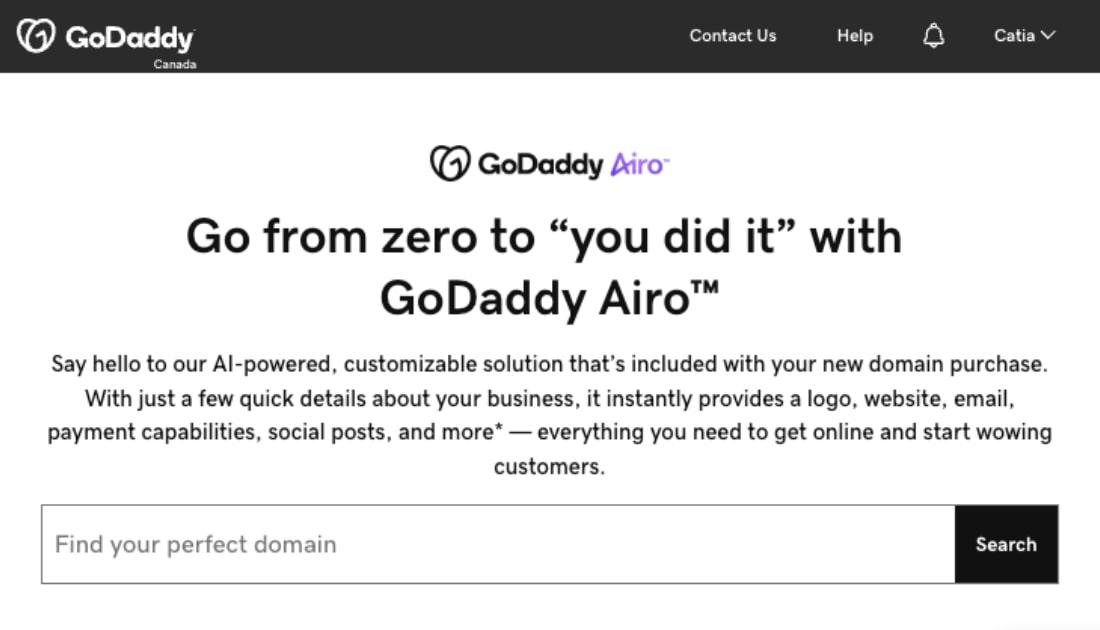
Free services. Domain name purchases often come with various perks vital to online businesses. Secure email boxes, privacy protection, round-the-clock customer support … suddenly, those annual renewal fees look like they’re working pretty hard for your business!
Digital sales. One of the biggest reasons to buy a domain name is that it opens the door to online sales and services. Even if you don’t start out selling online, you’re expanding your company’s reach and paving the way for future ecommerce sales. Sounds like a recipe for increased leads and sales to us!
Domain investing. Buying and selling domains for profit is big business for those willing to spend the time, money, and effort mastering it.
8. What are the most popular domain name extensions?
When it comes to which domain names are the most popular, you wouldn’t be far off in assuming it’s the ones you most commonly run into.
A couple of these we’ve already mentioned in the article earlier on, but some of the most popular domain name extensions in Canada include:
- .com: An extension denoting commercial or for-profit sites and the most popular top-level domain (TLD) on the internet.
- .ca: This country code top-level domain (ccTLD) can only be obtained by those who meet a Canadian presence requirement. It’s backed by research demonstrating that Canadians prefer to shop at and visit .ca sites.
- .org: This extension is typically affiliated with non-commercial entities, including not-for-profits, community causes, NGOs, and more.
- .net: The .net extension was initially intended for use by internet service providers. Nowadays, though, it’s often a popular alternative to the .com domain for more tech-aligned, web-affiliated businesses.
Since 2013, the Internet Corporation for Assigned Names and Numbers (ICANN) has been rolling out hundreds of new, descriptive domain extensions:
- Geographic extensions such as .amsterdam, .berlin, and .istanbul
- Restaurant-related domains, including .menu, .pizza, and .beer
- Sport-related extensions like .bike, .fish, .golf, and .hockey
- Lifestyle domains such as .club, .fashion, and .wedding
- Industry-related domains, including .realestate, .law, and .insure
ICANN is the official body that oversees the global domain name system (DNS). Its goal is to give individuals and businesses greater choice by offering domain extensions that describe a wider range of websites.
9. Registering vs. buying a domain name
If you’ve gotten this far, you might wonder at the distinction between the terms “registering” and “buying” when it comes to this whole domain process.
Ultimately, the difference between registering and buying a domain is not much more than a linguistic one.
When you register a domain name, you’re essentially buying it (or, more accurately, leasing it) for a limited time — typically for one to three years, as we’ve established above.
In choosing and paying for a domain name, the registrar you’ve decided to work with essentially signs it over to you (and only you) as its owner for that agreed-upon period of time.
Once that time has passed, the domain name will come up for registration again. From there, you must decide to renew it or let the registration expire — at which point, the domain name would be up for purchase on the open market again.
Any domains you own but aren’t currently using for a website can earn their keep with something called Cash Parking.
10. What is an SSL certificate?
As you’re going through registering your domain, you might wonder, “Wait — what about those little padlocks that pop up when I visit certain websites? How do I get one of those?”
That’s honestly a great question. A Secure Sockets Layer (or SSL) certificate is a digital certificate that creates a secure, private connection between your website and anyone who visits it.
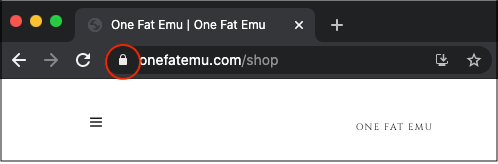
The padlock lets people know that it’s safe to submit private information to that website.
This technology acts like an online passport, authenticating the identity of a website and encrypting information sent back to its server. When a person wants to send confidential details like their credit card number to a site, the user’s browser works to access the server’s SSL certificate, establishing a secure digital connection for the information exchange.
What precise details are contained within an SSL certificate? You’ll find four critical pieces of information:
- The SSL certificate holder’s name
- The serial number and expiration date of the certificate
- The digital signature of the authority who issued the certificate
- A copy of the certificate holder’s public key
GoDaddy has several SSL certificate packages, including certificates for businesses of all sizes, not to mention a managed option for those smaller operations that might not have a dedicated IT team member on staff.
The final word on buying domain names in Canada
We’ve spent a lot of time describing the intricacies of domain names, but the process of buying one isn’t complex.
In fact, you can do it right now
Check to see if the domain you want is available now
There are a few key things to remember:
Find the right domain name. Remember, choose a domain name that either mirrors your business’s actual name (one less thing for your customers to remember!), or that connects thoughtfully to your company, product/service offering, or overarching values.
Choose an extension that aligns with your business. For example, if you’re looking to open an online retail boutique, choosing the .org extension as your web address could set confusing expectations for your customers. In this example, .com or .shop would be a far better choice. Be sure to choose an extension that’s right for your venture.
Do your homework when choosing a registrar. When sorting out which registrar to partner with, take a moment to ensure they’re a trustworthy collaborator — it’s your own business and hard work on the line, after all! Then, look up some reviews and find a registrar that will give you some extra bang for your buck in customer support and bundled services.
Don’t stress too much about it all. If you find a registrar a few weeks or months down the line that you feel would meet your needs better, all you’re likely to be out is a few bucks — switching is a relatively painless process.
Follow these steps, and you’ll be set up for digital sales, service, and success.
Oh — and of course, welcome to the online neighbourhood! We can’t wait to see how your business looks online.
FAQs
Do I need to be a Canadian citizen to register a .ca domain name?
You would need to meet the Canadian Presence Requirements to register a domain in Canada. These requirements include citizens, permanent residents, and corporations registered in Canada. For a full list of allowed entities, this guide on .ca registration eligibility can help.
What is the best domain name extension for a Canadian business?
This will depend on your business goals, but generally, the best domain options are:
- .ca: As the official country-code domain (ccTLD) for Canada, it signals trust and locality to Canadian customers. It’s also generally more available than .com domains.
- .com: The .com extension is still the most recognizable worldwide. However, it may be more difficult to find your desired domain.
- .shop/.store: If your business is focused on ecommerce, these extensions are a great way to display your wares online.
Can I register a domain name with French characters?
Yes, you are able to do so using an Internationalized Domain Name (IDN). IDNs are foreign language domain names that include non-ASCII characters. However, please be aware that .ca domain names are not compatible with this feature. We recommend reviewing our IDN help guide for a full list of eligible domain extensions.