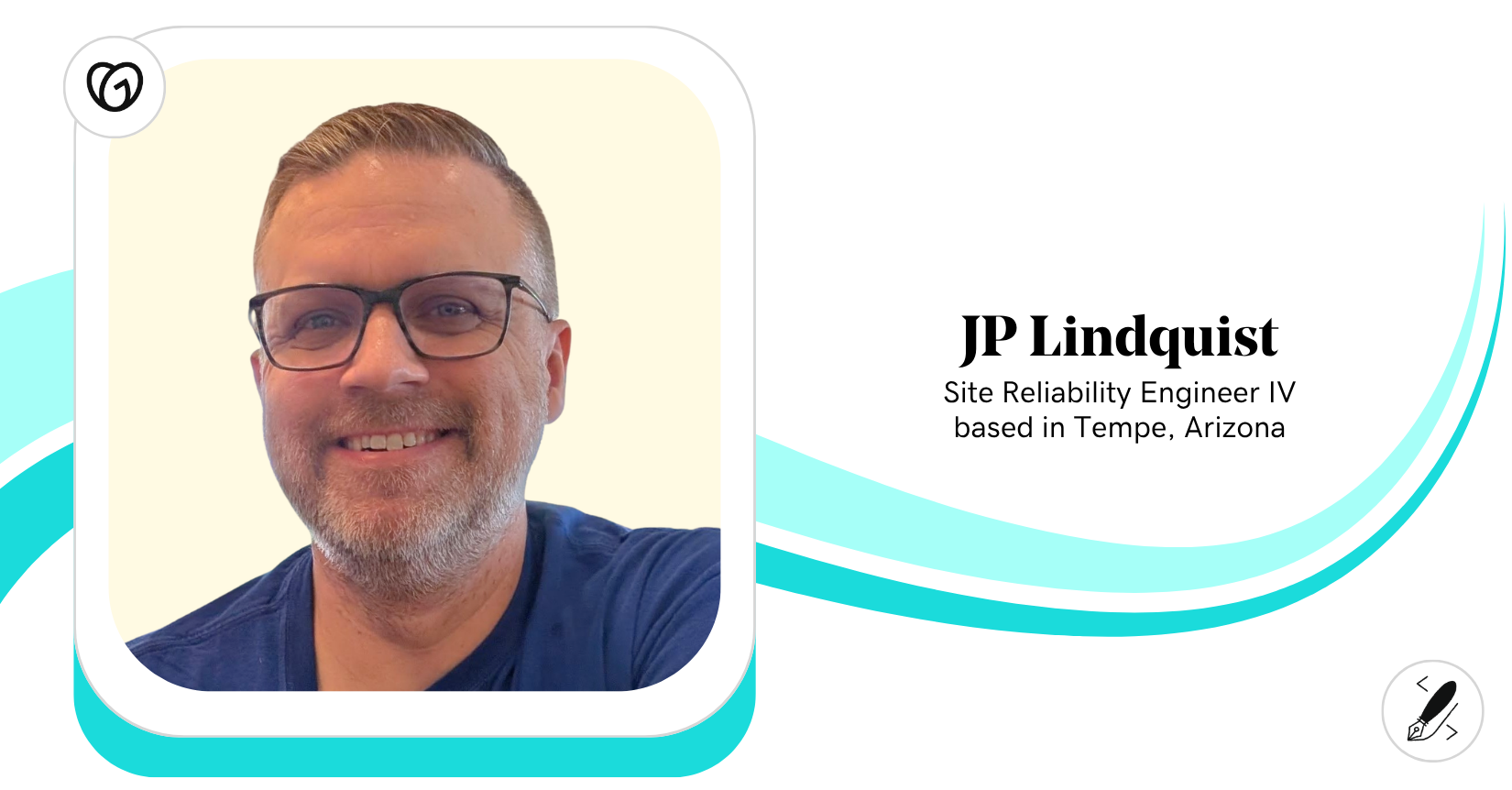
You've been with GoDaddy for 20 years! Can you share your career path and how your role has evolved?
I grew up between two worlds: the analog 80s and 90s on one side, and the early digital age arriving on the other. I was immediately drawn to technology and the desire to know how things worked. That passion led me to pursue computer science (CS), beginning with introductory courses in high school taught by truly inspiring teachers. I later continued my studies in college, working towards a CS degree that I ultimately did not complete. I ended up in the banking world for a while and eventually moved out to Arizona, where a coworker told me about GoDaddy and thought it would be a good fit for my background. I applied, got hired, and I have been here ever since.
Like almost everyone in the early days of the company, I started on the phones in Sales and Support. My technical background made me successful, so I moved to outbound, where I did well in sales. It wasn't the technical nature of the role that appealed to me. It was the opportunity to quickly solve customers' technical problems while on the phone and then guide them toward products that could help their businesses succeed.
I was in sales for many years, but I still wanted the technical role I always pictured. Over the next few years I transitioned between hosting support, server support, hosting administration, then eventually into Site Reliability Engineering.
The role changed how I thought about the work. Traditional support is about the singular issue in front of you: resolve it, move to the next one, and keep the queue down. While that behavior may be appropriate for that role, as an SRE it is a liability. Resolving something quickly, while still important, is not the same as fixing the underlying issue so it does not come back. The instinct has to shift towards asking why something happened, and what that tells us about everything else we might not yet see. The same went for repetition. When I found myself doing something manual and time consuming more than a few times, I realized there was almost always an opportunity there, and I would rather spend the time automating it once, whether that is a script or tool, rather than doing the extra work over and over.
Today, I am focused on building reliable infrastructure and securing the platforms and applications that run on it. We manage a variety of infrastructure and services: every environment from development and testing through production, and everything from standalone web servers to large, complex Kubernetes clusters to the various supporting systems around them. All of it is handled with configuration management and GitOps, so changes stay consistent and repeatable. All of it is well monitored, with alerting built for early, proactive detection, so we catch issues before they turn into incidents or outages.
What's the most challenging yet rewarding thing you've worked on at GoDaddy?
Less a single project and more a defining decision: getting out of my comfort zone. I chose to leave a path I knew well and excelled in to pursue one I wanted even more.
I was successful in sales. I knew the role, consistently delivered results, and could have easily stayed on that path. Walking away from that to start at the bottom of a technical organization meant trading the thing I was confident in for the thing I had wanted since I was a kid but had never actually done professionally.
Every step after that was a version of the same trade. Hosting support, server support, hosting administration, SRE: each one meant handing back expertise I had built and becoming the least experienced person in the room again. It often took months before I felt comfortable and had a solid grasp of the tech stack. It took even longer before I could move beyond simply keeping up and start identifying opportunities to improve processes and automate work.
What got me through it every time was a willingness to get my hands dirty, and to say "I don't know, but I'll find out," then actually going and finding out. That is an uncomfortable thing to say out loud, especially when you are new and want to prove you belong. It beats guessing. It gives you a reason to go get the right answer and understand it.
The reward is what sits on the other side of all that. Availability and performance look like numbers on a dashboard, but for our customers, and their customers, that is someone's business and livelihood on the line. Being on call during the football commercials, watching dashboards while the ad airs and a wave of people arriving all at once, making sure everything holds through a window that does not come back. There are real stakes to it, and I have been on every side of it: the customer, the person on the phone taking that call, and now one of the people responsible for the systems underneath.
Looking back, what felt like a difficult transition at the time, or a goal that seemed a long way off, has been worth every bit of it. Every step added something that carried forward: automation, configuration management, observability, debugging complex systems, and remembering why we are here and who we are working for. None of that came from a class. It came from doing the work, breaking a few things, and building the tools along the way.
Which emerging technologies or patterns do you think will matter most in the next 2 years?
Without a doubt, AI. I do not think there is much debate left about that. It is the most transformative technology I have seen in my career, and it is moving faster than anything else has.
I still have the same goals: solve the problem, find a way to make it easier, or automate it entirely so it is not a future problem. How we go about it, and how fast we get there, has changed drastically. Research that once took weeks before producing anything useful can now be accomplished in a matter of hours. Going from an idea to something tangible that quickly still feels like magic, and it's become an invaluable partner for troubleshooting, research, and breaking down large, complex projects into manageable pieces.
How do you stay motivated and disciplined in your learning journey, especially when faced with setbacks?
I have to learn by doing. You can tell me a thousand times to do something a certain way, but I am hands on. I need to see it and feel it myself. While it is a great way to learn, it can be an efficient way to break things as well. The discipline for me is less about study habits and more about being willing to get into something I do not understand yet and stay with it until I do.
Setbacks are part of that. Every incident or outage has a cost, and affects real customers who are trying to run something that matters. When something fails, the questions come immediately: how could we have caught this sooner, how could we have prevented it, and what are we doing to make it better?
What keeps me motivated is the satisfaction in solving problems, helping people, having a great team, and building infrastructure and tools we can be proud of.
When something does go wrong, the setback itself is usually what motivates me most. I would rather spend the time making sure it cannot happen again, or that we would catch it far earlier next time, than move on and hope. There is always something to improve, and an incident tends to point right at it.
Are there any resources that you would recommend to others interested in personal development?
Just be a sponge. Have the desire to learn and understand everything you touch, all the way down to root cause, every time. Learn to harness the powerful tools available to you, whether that is automation, AI, or whatever comes next. Keep asking the big-picture questions: how can I be better, how can I make this better, how can I make this simpler for the person who comes after me?
As for mentors, I have been fortunate enough to have an amazing support system: family, teachers, and coworkers who encouraged me to follow what I was actually interested in and pursue a career that would be fulfilling. I knew where I wanted to go, and I was always lucky to have people supporting me along the way.
What's your motto or personal mantra?
I have two:
"Some things you have to learn the hard way." I learn best hands on, so for me this one means do not be afraid to get your hands dirty, and learn from your mistakes.
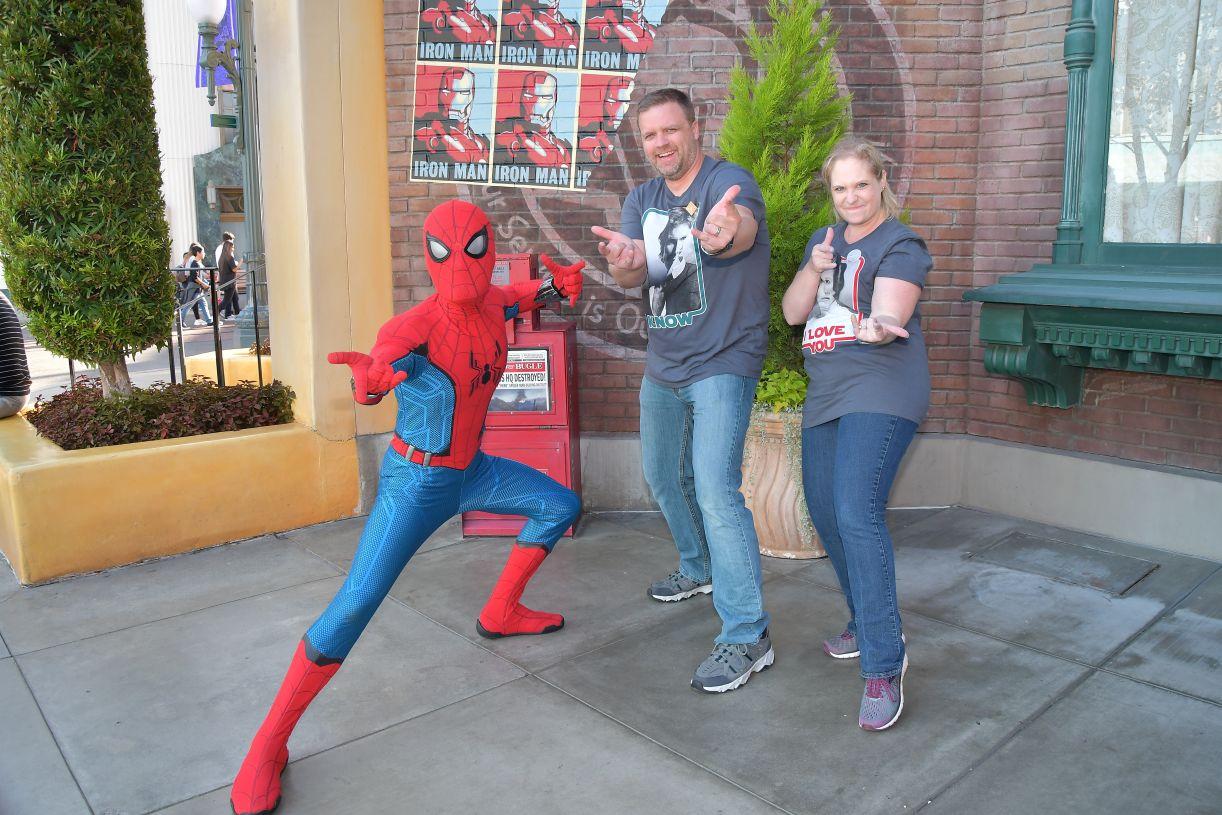
"With great power comes great responsibility." I am a huge Spider-Man fan, and this one has always meant something to me. If you can help, you should help. Be accountable.
Are you enjoying this series and want to know more about life at GoDaddy? Check out our GoDaddy Life social pages! Follow us to meet our team, learn more about our culture (Teams, ERGs, Locations), careers, and so much more. You’re more than just your day job, so come propel your career with us.