What does “Your Work. Global Impact.” mean to you personally?
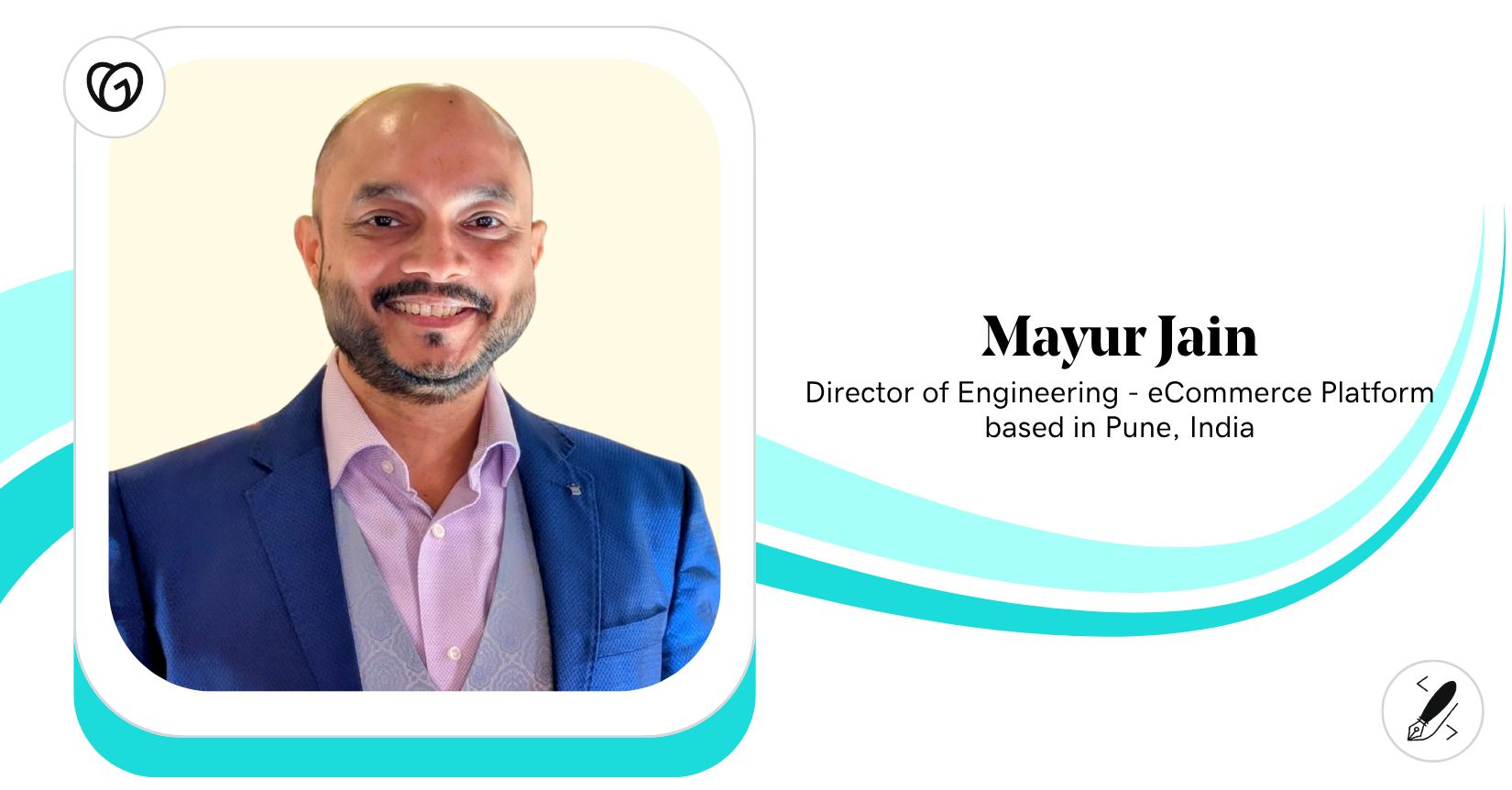
One of the things I’ve appreciated most in my nine years at GoDaddy is that your impact isn’t determined by where you sit—it’s determined by the ownership you take. That’s what “Your Work. Global Impact.” means to me.
When I helped build one of the first engineering teams in India, we weren’t asked to simply implement ideas coming from another geography. We were given ownership of GoDaddy’s pricing platform, a platform that’s central to every purchase our customers make. My team owns the architecture, technical direction, and execution of that platform, working alongside colleagues across the globe as equal partners.
What’s been equally exciting is seeing that same philosophy expand across the company. Over the past few years, we’ve not only grown our engineering presence in India but also started building product management teams here. That speaks volumes about the confidence GoDaddy has in its people. Even though most of our customers are in North America and DEM markets, the expectation is the same for everyone—we’re expected to deeply understand our customers, make thoughtful decisions on their behalf, and build products that help them succeed.
We consistently connect our engineering decisions to customer and business outcomes, so it’s never difficult to see why the work we do matters.
Of course, that ownership comes with accountability. When things go well, great work is celebrated publicly and the teams behind it are recognized. When they don’t, we’re expected to own the outcome, learn from it, and make our products and platforms better.
To me, that’s what “Your Work. Global Impact.” truly means: meaningful ownership, real accountability, and the opportunity to influence products that serve millions of customers, regardless of where you’re based.
What principles guide your decision-making when balancing speed of delivery with product stability?
One of the things I’ve been incredibly fortunate about during my nine years at GoDaddy is the opportunity to learn from some exceptional leaders. At different stages of my career, I’ve reached out to senior leaders across the company for mentorship, and they’ve always been generous with their time and perspectives. One of those mentors was Travis Muhlestein, our Product and AI CTO, who shared an insight a couple of years ago that fundamentally changed the way I make such decisions.
Like many engineering leaders, I used to think about the classic trade-off between speed, quality, and cost. Travis challenged me to think about a fourth dimension: scope. Rather than compromising on quality or stretching timelines, he encouraged me to focus on delivering the smallest meaningful outcome first, then iterate quickly based on what we learn. It’s a simple idea, but it’s had a profound impact on how I approach software delivery and lead engineering teams.
For me, quality is non-negotiable. It’s not something you validate at the end of a project—it’s something you build into every stage of the software development lifecycle. That includes thoughtful design, comprehensive testing, observability, monitoring, resilience, and security. Over the past few years, GoDaddy has made a significant investment in shifting security left, making it an integral part of how we build software rather than an afterthought. Today, security considerations begin as early as requirements gathering and system design, and that mindset has become second nature for my teams.
AI has made this approach even more effective. It helps us move from idea to production much faster without compromising on quality or security. The goal isn’t simply to ship faster—it’s to deliver meaningful value continuously while preserving the trust our customers place in us.
What’s a challenge you overcame that shaped your career trajectory?
When I joined GoDaddy in 2017 as a Senior Engineering Manager, I thought I was a strong technical leader. That assumption only lasted a few weeks.
I quickly realized that the engineering bar at GoDaddy was unlike anything I had experienced before. Leaders were expected to be deeply hands-on, my VP was still writing production code, and I found myself surrounded by engineers whose technical depth I genuinely admired. It was both inspiring and intimidating.
I quickly realized there wasn’t a shortcut. At GoDaddy, engineering leaders are expected to be deeply technical and lead from the front. Relying on my past experience wasn’t going to be enough. If I wanted to succeed here, I needed to raise my technical game—and fast.
I spent much of 2018 relearning, experimenting, and investing countless hours outside of work to sharpen my technical skills. My team, my manager, and the broader engineering organization challenged me every day, but they also gave me the support and space to grow. Looking back, that combination of high expectations and genuine support was one of the greatest gifts of my career.
By the end of that year, earning my manager’s confidence—someone I deeply respected for both his technical expertise and leadership—was incredibly satisfying. It validated not just the progress I’d made, but the mindset I’d adopted.
That experience fundamentally changed how I think about growth. No matter your title or experience, there’s always something new to learn. To this day, I continue to invest in my technical growth, setting aside at least four hours every weekend to learn new technologies, build side projects, and stay hands-on. It not only keeps me curious and challenged, but also helps me ask better questions, make better engineering decisions, and better support my engineers as they solve increasingly complex problems.
What excites you about GoDaddy’s AI future?
What excites me most about GoDaddy’s AI future is actually the same thing that excites me about GoDaddy’s future in general—our culture of learning.
I’ve seen this playbook before. Back in 2018, when GoDaddy made the strategic decision to migrate to AWS, the company didn’t just create a small group of cloud experts and ask everyone else to depend on them. Instead, it invested in every employee. We received training, access to hands-on learning, and even a monthly AWS budget to experiment, build side projects, and learn by doing. Within a relatively short period of time, cloud skills had spread across the entire organization. Even our product managers and program managers were learning AWS because understanding the technology helped them make better product and business decisions.
What’s exciting is seeing that same philosophy applied to AI today. Everyone has access to AI tools along with the freedom to experiment responsibly. More importantly, we’ve created a culture where people actively share what they’re learning through demos, showcases, and everyday collaboration. AI isn’t something that’s happening to us—it’s something we’re learning together.
That same mindset is also shaping the products we build for our customers. Experiences like GoDaddy Airo help entrepreneurs turn an idea into a professional online presence in minutes, while initiatives like Agent Name Service (ANS) are helping shape open standards for trusted AI agent identity on the internet. By contributing to technologies like ANS, GoDaddy isn’t just adopting AI internally—we’re helping build the infrastructure that will enable AI to operate safely, transparently, and at internet scale.
For me, that’s what makes GoDaddy’s AI future so exciting. It’s not just about adopting the latest technology—it’s about creating a culture where every employee, not just engineers, has the opportunity to learn, experiment, and innovate.
More importantly, it’s a culture where no one gets left behind. As AI continues to reshape our industry, I believe that commitment to investing in people will be one of GoDaddy’s greatest competitive advantages, helping us build better products, create better customer experiences, and shape the future of the open internet.
What advice would you give engineers considering GoDaddy India?
My biggest piece of advice isn’t specific to GoDaddy—it’s something I’d recommend before joining any company. Don’t just evaluate the role; evaluate the culture.
Talk to people who work there. If you know someone, ask them about their experience. If you don’t, ask thoughtful questions during your interviews. Try to understand how engineers are empowered, how decisions are made, how people learn and grow, and what the expectations are. You’re not just choosing your next job—you’re choosing the environment where you’ll spend a significant part of your life and build the next chapter of your career.
What’s kept me at GoDaddy for nine years comes down to four things: meaningful ownership, a culture that truly champions continuous learning, consistently high engineering standards, and leaders who genuinely invest in the growth of their people. Those are the qualities I would encourage every engineer to look for, regardless of where they decide to work.
Technology is evolving faster than ever, and that’s what makes this such an exciting time to be an engineer. Stay curious, keep learning, and don’t be afraid to embrace change. The engineers who continue to grow, experiment, and challenge themselves will always find opportunities to make an impact.
If that kind of culture resonates with you, I’d encourage you to explore GoDaddy. Attend one of our engineering events, connect with people who work here, or reach out to me on LinkedIn. I’d always be happy to share my experience and tell you what it’s like to build meaningful products and services that help more than 20 million entrepreneurs and small businesses focus on what matters most — pursuing their dreams.

Are you enjoying this series and want to know more about life at GoDaddy? Check out our GoDaddy Life social pages! Follow us to meet our team, learn more about our culture (Teams, ERGs, Locations), careers, and so much more. You’re more than just your day job, so come propel your career with us.