

If you own a restaurant, you’re likely very familiar with large parties requesting a split check. Sometimes the ability to split the bill is for convenience, but there can also be scenarios where a business dinner needs to be split into its various charge cards, making check splitting less of a convenience and more of a necessity.
Split payments aren’t limited to only restaurants, though. If you’ve been curious about how your business might benefit from split payments and how you can implement it yourself, this guide is here to help you out.
What is split payment?
A split payment allows for a single transaction to be divided between multiple payment methods, multiple people, or even multiple points in time.
Split payments are handy for both business owners and customers, as they allow for far more flexibility with how transactions can be completed, as well as allowing for more ways to pay for larger purchases that may otherwise be abandoned.
Types of split payments
There are different ways for retailers to split payments. Let’s go over some of the various options for splitting payments below.
Splitting between multiple people
This type of split payment is probably the one that comes to mind first and involves splitting a transaction between two or more people. Common situations here would include multiple people going in on a shared gift or a large dinner party at a restaurant needing to split the bill.
Breaking up a payment across multiple methods
Splitting a purchase across multiple payment methods tends to be more common for large purchases. For example, if a customer’s debit card has a daily spending limit, being able to split a purchase between two different payment methods, like cash or another credit card, can help the customer avoid hitting their limit and complete the transaction successfully.
Making payments over time/BNPL
Buy-now-pay-later (BNPL) programs are becoming more common through retailers that sell large-ticket items as a way to allow customers to break up large payments over time. Not all payment systems will support this option, so if it’s a payment option you’d like to offer, possible workarounds would be to invoice the customer at pre-arranged intervals or charge their card on file over time.
BNPL is not the same as split payments, but BNPL tends to be more commonly offered than split payments.
Why offer split payments?
Having the ability to accept multiple payment types within the same transaction can be beneficial to both your business and your customers.
Provides flexibility
Most customers have a preferred payment method, so offering the ability to split a purchase across multiple payment methods improves both customer satisfaction and checkout rates. It also supports group purchases and accommodates budget-conscious shoppers, which provides flexibility that helps your business stand out.
Helps close larger sales
If your customers are able to split purchases across multiple payment methods, they’re likely to complete a larger order than they would with a single payment method. This is especially helpful during the holiday season, for example, allowing customers to spend from budgeted accounts (instead of worrying about maxing out their cards in one transaction).
Reduces cart abandonment
Offering split payment options reduces purchasing barriers for customers, as it allows customers who may not have enough funds on one card (or in cash) to complete their purchase. This avoids cart abandonment, even in physical store environments.
Increases average order value
If your customers know that they’re able to split purchases between multiple payment methods, they’re likely to spend more with your business. This is especially true if they’re aware of this option before they begin shopping.
Improves customer experience and loyalty
Customers like having options, and providing options directly translates to customer satisfaction. Additionally, not all businesses provide the option to split a purchase between payment methods, so by doing so, you’re creating a competitive advantage for your business that can encourage customer loyalty and repeat patronage.
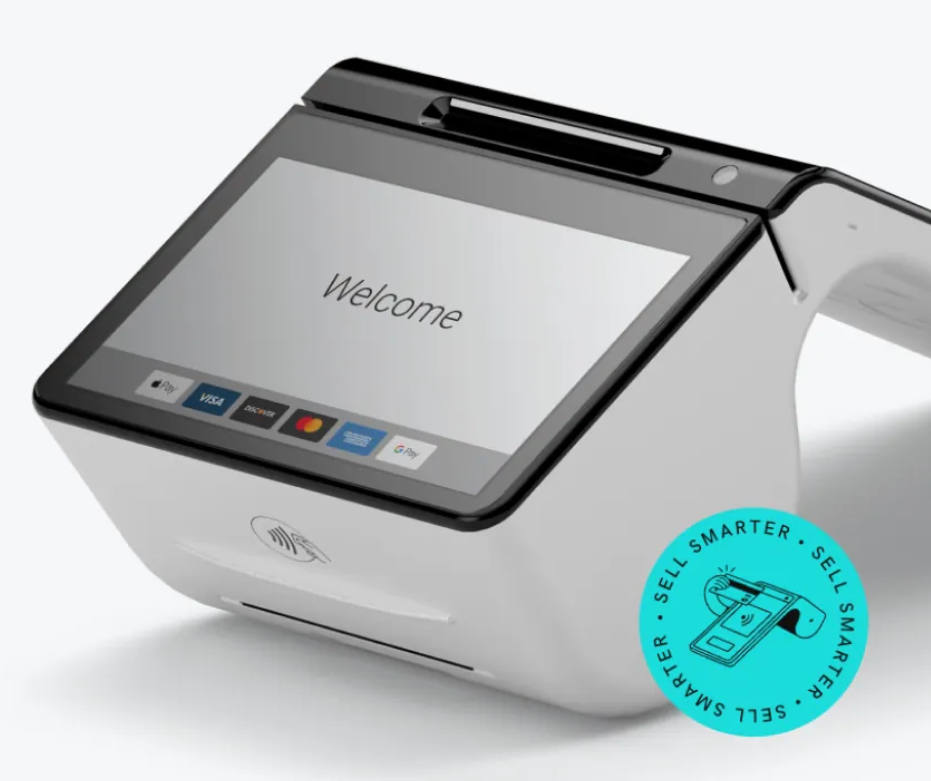
You've likely experienced the frustration of being told that you can't split your bill at the end of your dinner. As a business owner, make sure you evaluate your POS solution, such as GoDaddy's Smart Terminal Flex, for easy split payments during checkout.
How to offer split payments for your business — in-person versus online
The type of business that you run will determine the steps you’ll need to take to enable split payments for your customers.
Paying in-person: At the point of sale (POS)
For in-person businesses, the split payment option would be handled via your POS terminal. Many POS systems offer split payment functions natively, which allows cashiers to break up transactions across multiple payment methods (or customers).
Another option worth mentioning here would be using your POS device’s invoicing feature to allow customers to pay for a large purchase over time, or to set up a recurring membership or subscription with your company.
Online payments: Multiple payment methods online
Payment options like invoicing or paylinks can give your customers the ability to pay online using their preferred payment apps or credit cards. This payment route is generally best for service-based businesses, such as landscapers or salon owners, and can offer both split payments or pay over time options.
Benefits of split payments by business type
Not all businesses will use split payments in the same way, so the benefits of offering this feature will vary by industry.
Restaurants and cafes
Customers have an expectation of being able to split the bill when dining out. By offering this ability, you’re meeting your customers’ expectations, as well as creating a smooth and pleasant purchase experience.
If your restaurant or cafe offers catering, you’re able to split payments into milestones, which allows your clients to pay at preset intervals, such as before the work is started, when the food is delivered, and again at the end of the event.
Retail stores
Allowing for split payments in the retail industry can lead to increased sales totals, as you’re enabling your customers to spread a purchase between multiple payment methods (whether that’s a debit card, credit card, or cash).
Professional services
Service-based businesses can also benefit from split payments. Depending on the services your business provides, customers may need the ability to split their payments across different payment methods, or the ability to pay over time (which can be accomplished via invoicing).
Salons/appointment-based businesses
Certain salon procedures can be pricy, so offering the ability to split a payment up by payment method or over time can help build customer retention for future bookings.
How to start offering split payments at your business
If you’re ready to offer split payments, here are some tips to get you on the right track:
- Choose a POS system that offers payment splitting natively: Before selecting your POS device, make sure that the features being offered fit your business model. A furniture store, for example, would likely prefer a POS device that offers dual screens for better order accuracy, while a restaurant would do better with portable, handheld POS devices.
- Look for transparent pricing (no extra fees for splitting): Credit card fees can add up quickly on their own, so you’ll want to be sure that your POS provider isn’t also charging extra for splitting purchases.
- Test the payment split option before rolling it out: Testing your POS system before officially offering payment split options can help find potential issues before going live.
- Train your staff: While many POS systems are fairly user-friendly, you’ll want to ensure that your staff knows the ins and outs of how to split payments.
- Monitor your sales performance: Keep track of how often the split payment option is used, as well as whether it positively impacts your overall sales.
If you’re not sure what POS provider is right for your business, check out our researched breakdowns for the best merchant service providers and best POS systems.
Offer split payments with GoDaddy Payments and POS
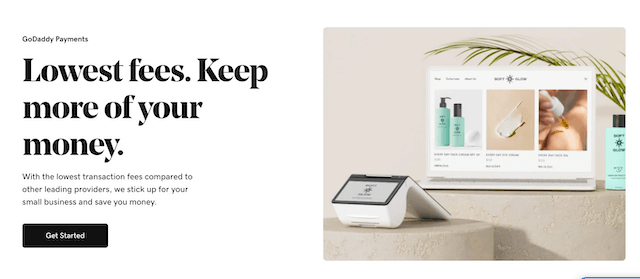
Businesses that offer split payment options have a powerful way to build a loyal customer base by providing the payment flexibility that many consumers are looking for. GoDaddy Payments, as well as GoDaddy POS, allow businesses to natively offer payment splitting to their customers. And, with no hidden fees for splitting payments (equal or adjusted splits start at 2.3% + 0¢ in-person), as well as user-friendly POS hardware designed for a variety of business types, GoDaddy helps business owners offer a seamless checkout experience.
Ready to give your customers more ways to pay? Get GoDaddy Payments and POS and start offering the flexibility that your customers want.
Split payments FAQ
How do I set up split payments on a POS terminal?
A cashier would enter the full order total, select the split payment option at checkout, and hand the terminal to each customer so they can pay their portion one at a time. GoDaddy's Smart Terminal supports this workflow for splitting a single order across multiple payment methods.
Can a customer split a payment between two credit cards?
Yes, most modern POS systems allow a single order total to be divided across two or more cards, with each person charging their own card for their share. GoDaddy Payments supports splitting a transaction across multiple payment methods at checkout, or via payment schedules with GoDaddy Invoicing.
Is there a minimum or maximum amount for a split payment?
Some payment processors set a minimum transaction size or cap the number of ways a single sale can be split. GoDaddy Payments' Smart Terminal does not apply any minimum, maximum, or split-count limit.
Do I need special hardware to accept split payments?
Split payments typically work on standard POS terminals without any extra equipment. GoDaddy's Smart Terminal supports split-tender checkouts as a built-in feature.
Does splitting a payment change my processing fees?
Processing fees are generally based on the total transaction amount and payment type, not on how many ways a sale is split. GoDaddy Payments charges the same per-transaction rate on split-tender sales as on single-tender sales.
Can I require a minimum purchase before offering split payments?
This is a business policy decision, not something payment processors typically restrict. A business can choose to offer split payments on every sale or only above a certain order size.
What happens if one customer's card is declined during a split payment?
Most POS systems let the cashier retry or replace just the declined portion without canceling the rest of the transaction.
Can customers split a payment unevenly, not just 50/50?
A split payment doesn't have to be divided equally. Most systems that support split tender allow custom amounts, so one person can cover more of a shared order than another.
Do I need to tell customers in advance that split payments are available?
There's no legal requirement to disclose this in advance, though letting customers know upfront, for example, with signage or a mention at checkout, can reduce confusion and speed up service. This is a business best practice, not a payment processor policy, so it applies the same way with GoDaddy Payments as with any provider.
How do refunds work on a split payment?
Refund handling on split-tender sales varies by processor: some refund proportionally back to each original payment method, others refund through a single method.