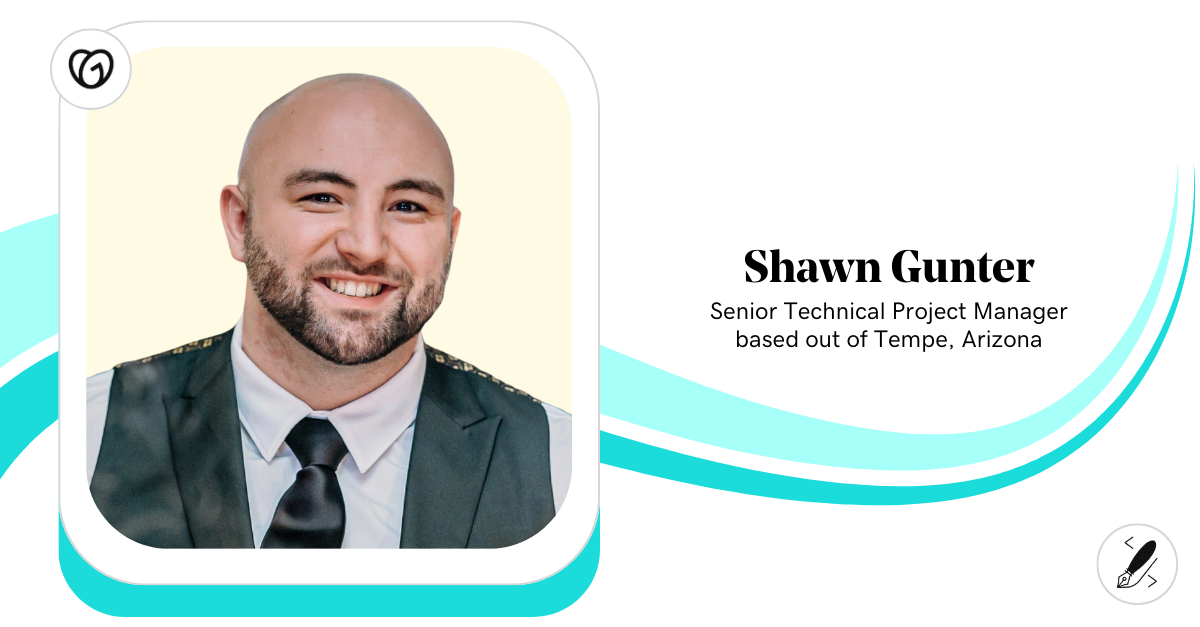
Tell us a little bit about yourself and your career journey to date.
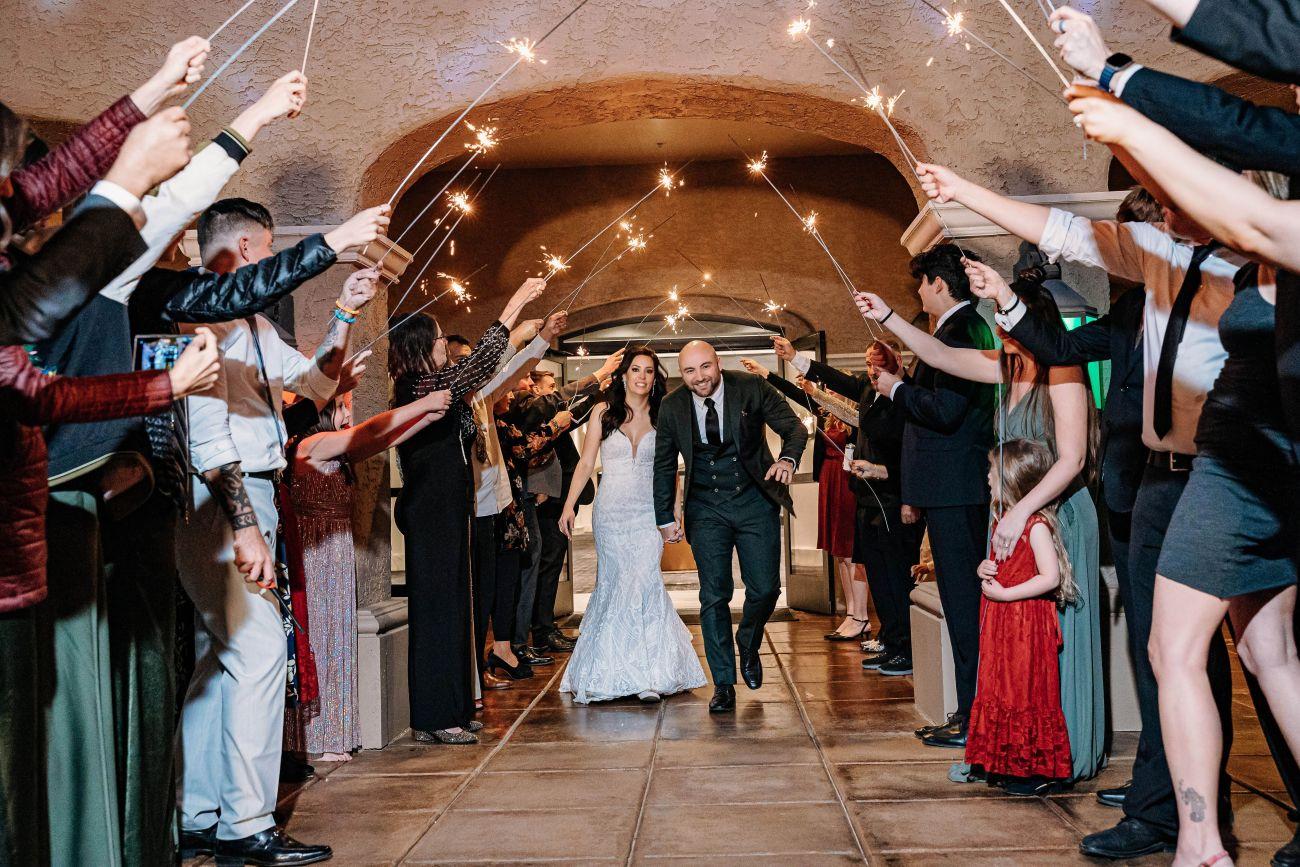
My journey to GoDaddy started with a coincidence that changed everything. I was working a sales booth at Costco when I ran into an old friend from my gym sales days. Turns out, he was there celebrating a GoDaddy sales competition win. I'd never even heard of GoDaddy, but hearing him talk about the company — the pride in his voice, the excitement about his future, the way he talked about actually building a career here — something clicked. I knew I wanted that.
I came in as a Sales Guide with one goal: to be the best. Sales was my wheelhouse, it's where I'd always thrived. But GoDaddy humbled me quick — there was a learning curve on the technical side I wasn't expecting.
Eventually, I was given the chance to coach other guides, and that’s when everything changed. I was assigned to work with a guide who had missed their goals for two consecutive months, failed to earn their bonus, and was feeling overwhelmed and stressed. When I offered help, they weren't exactly thrilled — classic "I don't need your help" energy. So, I made a bet: Let me help you on one call. If it doesn't work, I'm gone. If it does, you let me help you the rest of the month.
That day ended up being their best day of the year. Top of the team. And they hit their goals consistently from then on out.
But here's the moment that told me I'd made the right choice: three years later, that same guide stopped me in the office. They shared that, since our conversation, they had consistently earned bonuses, completely transformed their financial situation, and finally achieved the technical role they had always aspired to. That conversation lit a fire in me for supporting others in their growth—a drive that has never faded.
From there, I was asked to take on a team in a completely different channel — messaging and chat — something I had zero experience in. It wasn't the popular choice, but it felt like the right one for me. That role pushed me to partner closely with our digital and engineering teams, and somewhere along the way, I fell in love with the systems behind how we support customers.
That curiosity led me to pursue project management training, learn the basics of how our platforms actually work under the hood, and ultimately become the bridge between operations and engineering. I wanted to be able to speak both languages — to truly understand the technology so I could lead more effectively.
Eventually, GoDaddy saw the need for a dedicated routing and technical enablement function, which led to the creation of our Contact Intelligence team. Today, I own the messaging routing strategy — and honestly, I never could've predicted this path. But every step along the way provided valuable lessons that have built who I am today.
How do you translate complex technical concepts for non-technical stakeholders?
Analogies. So many analogies. My brain just works that way, and I've found it's the fastest path to that "ohhhh, I get it" moment.
But honestly, translation isn't just one direction for me — it goes both ways.
When I'm working with operations partners, I focus on understanding their "super why." Not just what they want, but why they want it. What's driving the ask? What business problem are they actually trying to solve? Getting to that root helps me capture requirements in a way that engineers can actually work with — and it prevents the miscommunication that usually happens when highly technical and non-technical folks try to talk directly.
Then, when I get the technical answer back from engineering, I flip it around. I take the tech talk and reconnect it to that original "super why," using analogies that hit home. The goal isn't just to explain what we're building — it's to build excitement around how their need is being met, and sometimes even spark ideas for what else might be possible.
Oh, and visuals. I use a lot of visuals. If I can draw it, diagram it, or map it out, I will. It just makes everything click faster.
How do you incorporate experimentation and A/B testing into your project planning and timelines?
It starts with a hypothesis. Whenever I'm planning a project, my first question is: what are we actually trying to prove or change? I like to bake in the mindset that every new idea will be tested — that way we're building our history as we go and can learn from both the wins and the misses.
I'm a big believer in failing fast, but in a controlled way. I try to live in both lanes — moving quickly when I can, and slowing down to be methodical when it's truly needed.
How I balance speed versus rigor usually comes down to impact. There are a lot of small improvements that you can ship quickly, but they still require analysis because those incremental gains add up over time. Bigger, more impactful changes need a more structured approach to make sure we get it right.
I actually took StrengthsFinder a while back, and two of my top strengths are Futuristic and Strategy. I think that wiring helps me constantly ask "what's possible?" — which naturally feeds into a culture of experimentation.
But at the core, it comes down to planning and knowing your "why." What's the purpose of this idea? What behavior or outcome are you trying to change? Once you can identify that clearly and pull the data behind it, you can see the potential return and know whether it's worth the investment.
How do you keep yourself motivated and inspired in your work?
For me, it's twofold.
First, it's the "what's possible." I genuinely love living in that space — seeing potential, imagining what could be, and then figuring out how to make it real. In a role where I get to enable new capabilities and approach problems with a solving mindset, I wake up every day asking "how are we going to tackle this today?" It's never the same, it's always a challenge, and I love that.
And when I hit something I don't know the answer to? That's just an opportunity to learn.
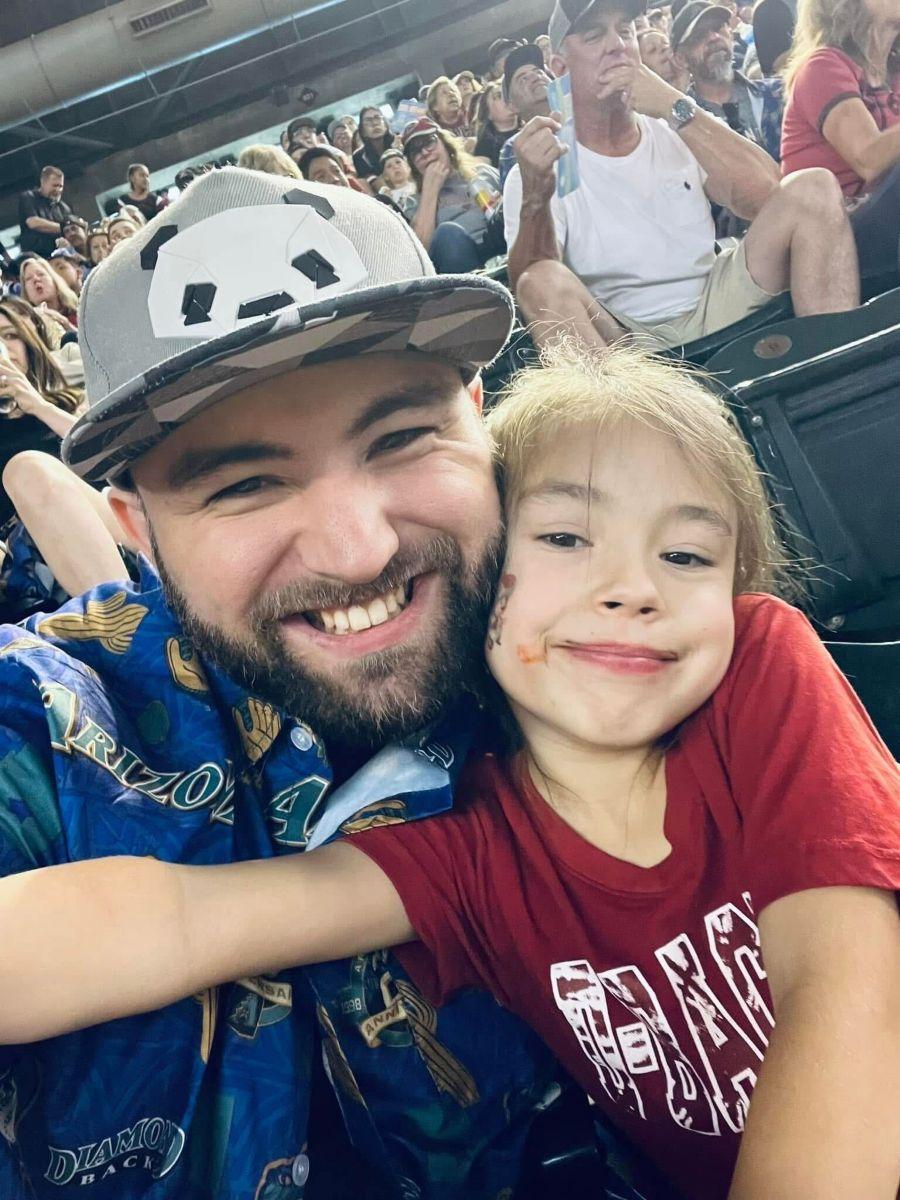
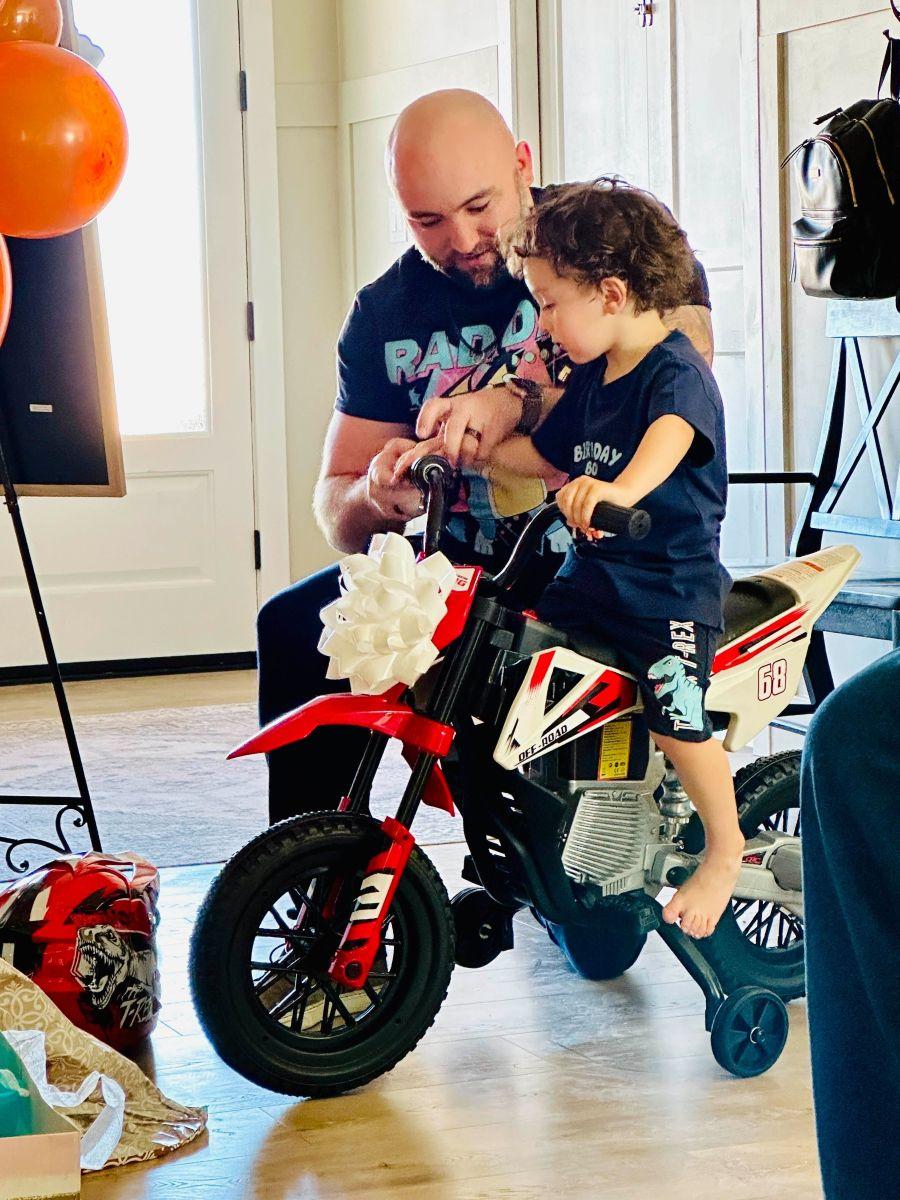
But the deeper motivation is my two kids. I want them to grow up watching a dad who doesn't just do — he looks for potential. He looks for what's possible and challenges himself to go after it. If I can model that mindset for them, that's the real win.
If you had to describe GoDaddy's culture in one word, what would it be and why?
Empowering.
It doesn't matter what part of the company you're in — you feel empowered to make a change.
Whether it's in your own life, a customer's business, or the technology around us, there's a real sense that you have the ability to impact things.
We're empowered to take risks, to learn, and to own opportunities. That's been true at every stage of my journey here — from my first days in sales, to stepping into leadership, to now owning routing strategy for messaging. The door was always open if I was willing to walk through it.
What do you enjoy doing outside of work?
Outside of work, I run a 3D printing business called Twisted Relics. It started as a fun hobby, but once I realized how many problems 3D printing could actually solve, it evolved into something bigger. Our model is built around on-demand printing as well as solutions-based projects — basically, if someone has a need, we figure out how to make it real.
But my family is truly my life. My wife Natalie, our daughter Taylor, our son SJ, our two dogs Bob and Marshal, our cat Gunner, and our axolotl Strawberry — they're everything. We're working on becoming the host family for extended family gatherings, which has been a goal of ours.
We're also extremely competitive in our household. Whether it's video games or racing up the stairs to bed, everything turns into a competition. But we balance that out with our chill moments too — family bike rides, exploring new parks, and just spending time together.
Are you enjoying this series and want to know more about life at GoDaddy? Check out our GoDaddy Life social pages! Follow us to meet our team, learn more about our culture (Teams, ERGs, Locations), careers, and so much more. You’re more than just your day job, so come propel your career with us.