

Forming an LLC is one of the first big steps in building a business. In Delaware, that step is known for being relatively simple, with minimal upfront information required and a clear filing process that can be completed quickly.
Let’s explore how to start an LLC in Delaware step by step, including filing and registration, compliance requirements, and typical costs, so you know exactly what to expect.
How to start an LLC in Delaware in 5 steps
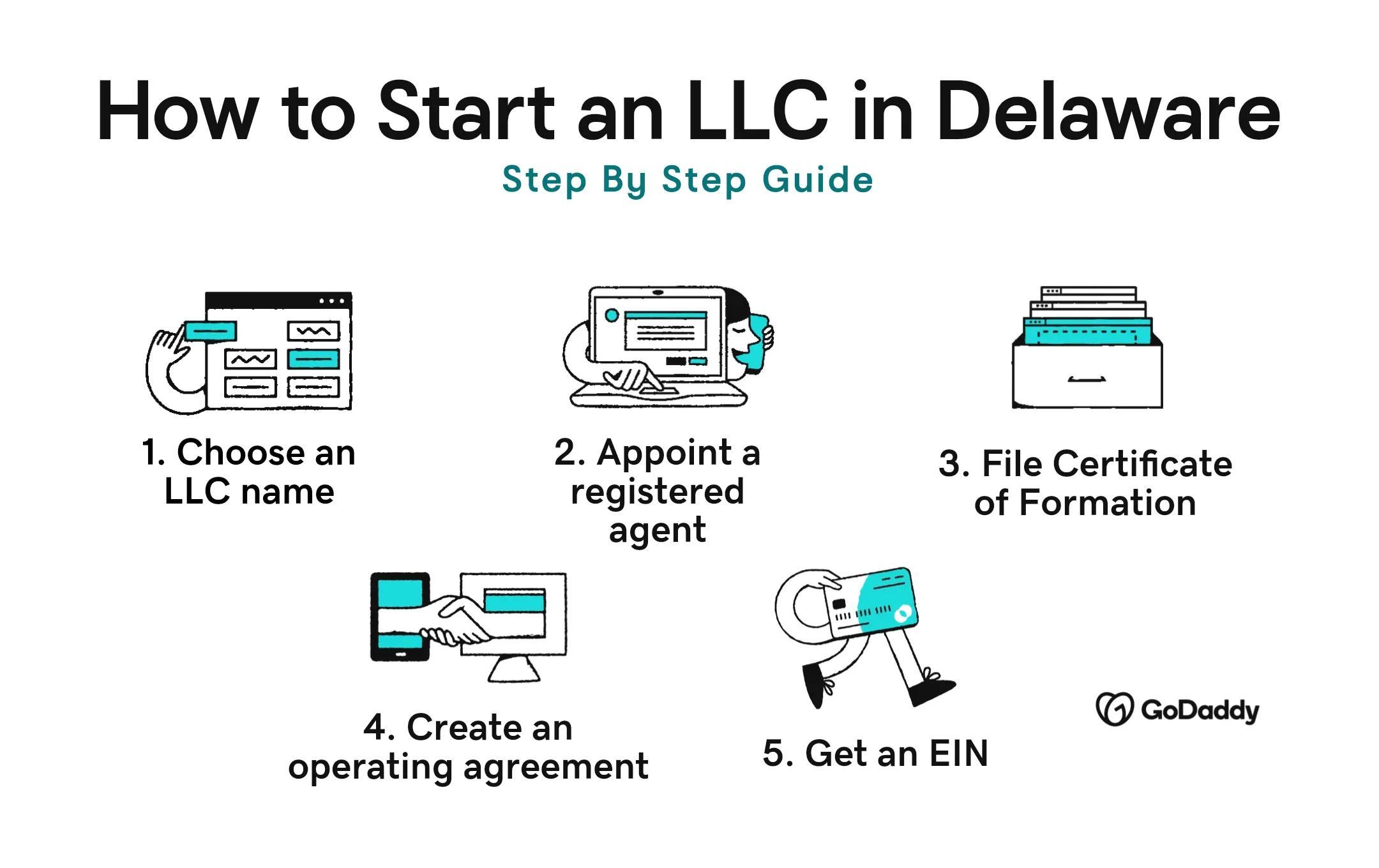
To open an LLC in Delaware, you’ll need to choose a name for your business, appoint a registered agent, file a Certificate of Formation, write an operating agreement, and get an EIN from the IRS. It may sound like a lot, but the process can usually be completed in a few days when you file online through the Delaware Division of Corporations or the Delaware One Stop portal.
If you’re starting a new business, you may want to start by reading this guide comparing LLC organizers to LLC members. When you’re ready to take the leap, you can set up your LLC for free with GoDaddy Airo.
Choose a name for your LLC
The first step to getting your business up and running in The First State is to choose a name for your new LLC. The name you decide on impacts how customers view your brand, and it must meet the state’s naming requirements before you can file, so take some time to think it through.
The Delaware Division of Corporations requires that your LLC name:
- Includes “limited liability company” or an abbreviation such as “LLC” or “L.L.C.”
- Is distinguishable from other business names already registered in Delaware
- Does not imply the business is affiliated with a government agency
- Avoids restricted words like “bank,” “trust,” or “insurance” unless additional approval is obtained
Once you have a name in mind, you can check availability using the Delaware Division of Corporations business entity search. Delaware also allows you to reserve an LLC name for up to 120 days for $75 if you want to secure it before filing your formation documents.
Get your business domain name
After you nail down the perfect business name, buy a domain name to match your LLC. This helps keep your branding consistent and protected, while making it easier for customers to find you online.
Get a DBA
A DBA, short for “Doing Business As,” allows a Delaware LLC to operate under a name different from its legal LLC name. In Delaware, this is commonly referred to as a trade name. For example, “First State Consulting LLC” could register a trade name to do business as “FS Consulting.” If you’re unsure whether a DBA is right for your LLC, learn more about what is a DBA here.
Trade names can be filed through the Delaware Department of Revenue’s One Stop portal.
Appoint a registered agent
Every Delaware LLC is required to have a registered agent to receive legal notices, tax documents, and official state correspondence. Your registered agent helps keep your LLC in good standing by making sure important paperwork is received and handled on time. In Delaware, a registered agent must:
- Have a physical street address in Delaware
- Be available during normal business hours
You can act as your own registered agent, designate another individual, or use a professional registered agent service. Many business owners choose a professional service to maintain privacy and ensure nothing important is missed.
File a Certificate of Formation
For your Delaware LLC to be official, you must file a Certificate of Formation through the Delaware One Stop portal. When filing, you’ll need to provide:
- Your LLC’s name
- The name and address of your registered agent in Delaware
The filing fee is $110. Once your Certificate of Formation is approved, your Delaware LLC is registered with the state.
Create an operating agreement
Delaware does not require LLCs to file an operating agreement with the state, but having one is strongly recommended because it outlines how your LLC will run, helps protect your limited liability status, and reduces the risk of disputes between members.
Even single-member LLCs benefit from an operating agreement because it documents the separation between the business and the owner. Some banks and lenders may also ask to see an operating agreement before opening accounts or approving financing.
A Delaware LLC operating agreement typically includes:
- Roles and responsibilities of members and managers
- Ownership interests and capital contributions
- How profits and losses are allocated
- Voting rights and decision-making authority
- Procedures for adding or removing members
- Recordkeeping and meeting expectations
- Steps for dissolving the LLC
For help writing your operating agreement, read our “What is an Operating Agreement?" article.
Get an EIN
Employer Identification Numbers (EINs) are federal tax IDs provided by the IRS. Your Delaware LLC needs an EIN to:
- File federal taxes
- Hire employees
- Open a business bank account
- Apply for licenses or permits
LLCs can apply for an EIN through the IRS website. To learn more about which tax IDs your business may need, check out this guide to TIN vs EIN.
How long does it take to get an EIN?
EINs are issued immediately when you apply online. Mail and fax filings may take a few weeks to process.
How much does an EIN cost?
An EIN is completely free to get and maintain. There are no application, processing, or renewal fees.
Types of LLCs available in Delaware
Delaware business owners can choose from several types of LLCs. Each option is designed to fit different business goals and ownership setups.
- Single-member LLC: Owned by one person and simple to manage while still offering liability protection.
- Multi-member LLC: Owned by two or more members and often used by partnerships or co-owned businesses.
- Series LLC: Allows multiple divisions within a single LLC, each with separate assets and liabilities.
- Professional LLC (PLLC): Designed for licensed professionals who must meet state-specific requirements.
How much does it cost to start and run an LLC in Delaware
Starting and maintaining a Delaware LLC is relatively simple, but the ongoing costs are higher than in some states. Here’s what you can expect to pay:
- Certificate of Formation: $110 one-time filing fee
- Name reservation (optional): $75 for 120 days
- DBA/trade name registration (optional): Filed at the county level, fees vary
- Registered agent service (if applicable): $50–$300 per year
- Annual LLC franchise tax: $300, due each year by June 1
- Business licenses and permits: Vary by industry and location
- Taxes: Delaware does not have sales tax. LLC members may owe state income tax on Delaware-sourced income, depending on how and where the business operates.
Most Delaware business owners should plan to spend between $410 and $785 in their first year, depending on the services they choose and the required licenses and permits.
What happens after your LLC is up and running
Officially forming your Delaware limited liability company is a big step, but there are a few more tasks to complete before welcoming customers.
Open a business bank account
Opening a separate bank account for your Delaware LLC helps keep business and personal finances distinct. This separation supports your liability protection, simplifies accounting and taxes, and adds credibility with customers and lenders. Most banks will ask for:
- Your business address
- Your approved Certificate of Formation
- Your EIN from the IRS
- Your operating agreement
- A valid photo ID for all account holders
- An initial deposit, which varies by bank
File for permits and required business licenses
Delaware requires most businesses to obtain a general business license through the Division of Revenue before operating. Additional licenses or permits may apply depending on your industry or local jurisdiction. To find out what your LLC needs, visit the Delaware One Stop website and its Index of State of Delaware Business Licenses and Registrations. You should also review federal regulations if your business operates in regulated industries such as food service, health care, or transportation.
Get a Certificate of Status
A Certificate of Status, also called a Certificate of Good Standing, is an official document issued by the Delaware Division of Corporations that confirms your LLC is properly registered and up to date with state requirements. You may need this certificate when:
- Opening a business bank account
- Applying for financing
- Entering into contracts
- Registering to do business in another state
You can request a Certificate of Status through the Delaware Division of Corporations.
Other things to consider for your Delaware LLC
Delaware offers several advantages for LLC owners, but there are also a few state-specific rules worth understanding. The sections below cover key legal, tax, and compliance details that can affect how your Delaware LLC operates.
Legal protections for LLC owners
An LLC provides limited liability protection, which means your personal assets are generally protected from business debts and lawsuits. Delaware is especially well known for its strong legal framework supporting business entities.
A key part of this framework is the Delaware Court of Chancery, a specialized court that focuses exclusively on business disputes. Its judges are experts in corporate and commercial law, which can lead to more predictable outcomes for business owners.
Delaware also offers privacy benefits for LLCs. Member and manager names do not need to be publicly listed in business formation documents.
Delaware franchise tax
All limited liability companies in Delaware must pay an annual franchise tax of $300 for the privilege of being registered in the state. This tax applies regardless of income or activity level. The tax is due June 1 each year and is paid through the Delaware Division of Corporations eCorp website. Late payments can result in a $200 penalty that accrues interest at a monthly rate of 1.5%.
Delaware gross receipts tax
Delaware’s Gross Receipts Tax is a tax on revenue generated from business activities conducted in Delaware. It is paid by businesses that have a physical presence or significant business operations in the state. LLCs formed in Delaware but operating entirely out of state typically do not owe this tax.
Businesses subject to the tax must register with the Delaware Division of Revenue. Rates vary by industry and generally range from a fraction of a percent to just over 2 percent. Gross receipts taxes can be paid through the Delaware Taxpayer Portal.
No annual reports
Delaware LLCs are not required to file annual reports, which reduces ongoing paperwork and compliance tasks. That said, the lack of an annual report does not eliminate all obligations. Delaware LLCs must still pay the annual franchise tax each year to remain in good standing.
No sales tax
Delaware does not impose a state sales tax, which means businesses do not collect sales tax on transactions within the state. The state also offers additional tax benefits, including no state-level value-added tax.
If your LLC sells to customers in other states, you may still need to comply with those states’ sales tax laws based on economic nexus rules.
When it’s a good idea to start an LLC in Delaware
Delaware may be the perfect home for your LLC if your business goals include:
- Seeking venture capital or outside investors
- Operating in multiple states
- Building a company with long-term growth or public offering goals
- Using complex ownership structures, such as a Series LLC
- Prioritizing strong legal protections and flexible operating agreements
- Maintaining greater privacy for owners and managers
Launch your Delaware LLC with GoDaddy
Starting an LLC in Delaware comes with real advantages, but the setup process still requires time and care. From filing your formation documents to staying compliant year after year, having the right tools in place can make a meaningful difference.
GoDaddy's LLC Registration service is designed to help you move through each stage of the LLC registration process confidently. It brings expert formation guidance, compliance support, and ongoing business tools together in one place, so you can spend less time digging through details.
FAQ
Can I start an LLC in Delaware if I don't live there?
Yes, you can start an LLC in Delaware even if you don’t live there. The main requirement is having a registered agent with a physical address in Delaware to receive legal and state correspondence on your behalf. However, if your business operates outside Delaware, you may also need to register as a foreign LLC in the state where you actually do business.
Why does Delaware have so many LLCs?
Delaware has earned a reputation as a business-friendly state thanks to its predictable legal system and flexible LLC laws. The state’s Court of Chancery focuses exclusively on business matters, which gives companies clearer guidance and more consistency in legal decisions. Delaware also allows streamlined formation, strong liability protections, and greater privacy for LLC owners, which makes it attractive to both startups and established companies.
What are the disadvantages of a Delaware LLC?
While Delaware offers many benefits, it is not the best fit for every business. Delaware LLCs must pay a $300 annual franchise tax, even if they do not operate in the state. Business owners who live elsewhere may also face additional costs and paperwork if they need to register as a foreign LLC in their home state.