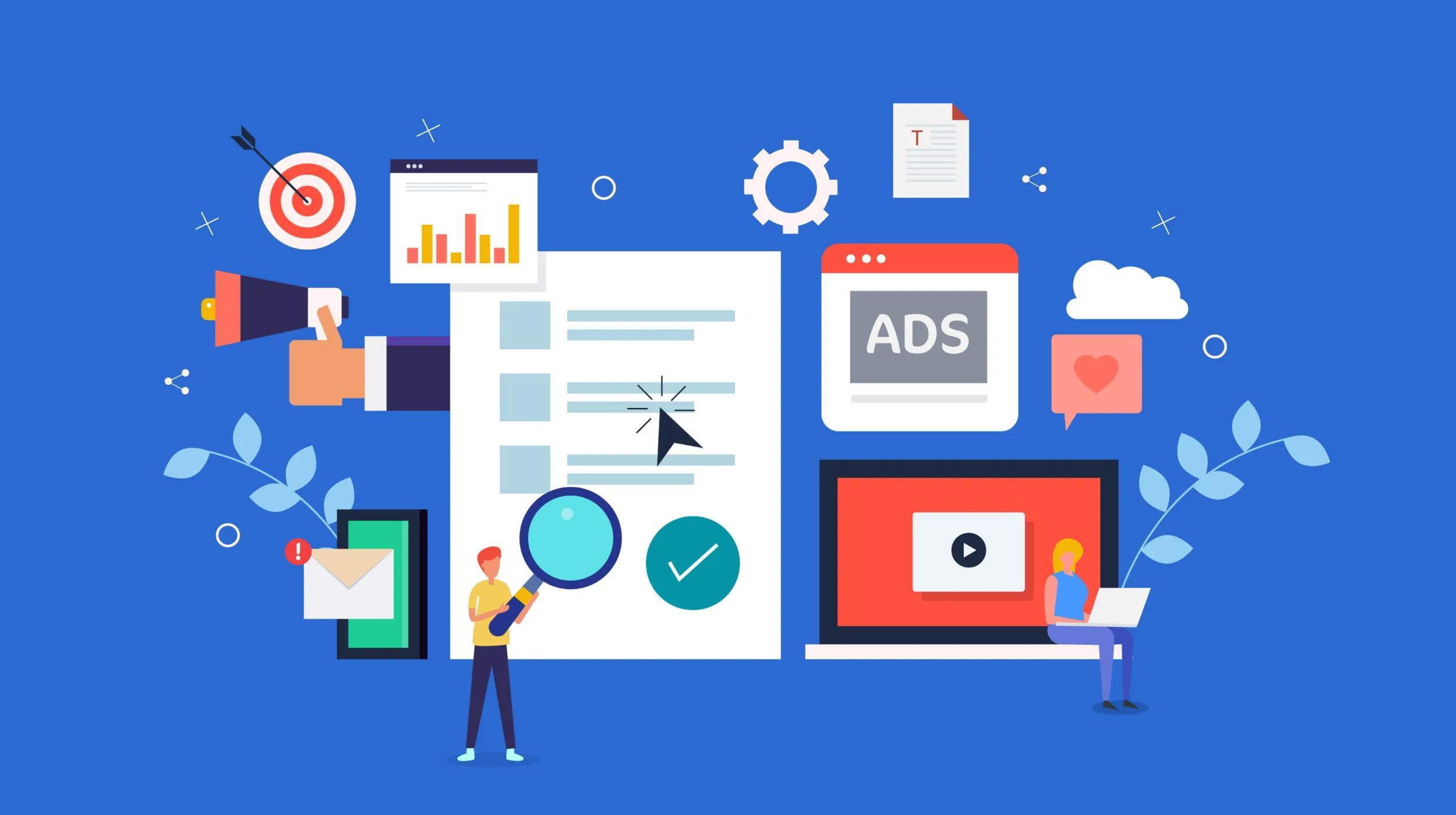

SEO and SEM are two paths to getting found online that share the same goal: showing up when your customer searches for something you offer. They work very differently, though, so it’s key to understand their timelines, costs, and rules — and combine them wisely to get the most out of your budget.
What is SEO?
By definition, SEO (Search Engine Optimization) is the set of techniques applied to a website to improve its position in the organic results of search engines. In other words, SEO is a site’s natural placement in search, and an SEO strategy aims to increase a website’s visibility.
If you want more detail, check out our article where we explain what SEO is and why it’s so important for your site.
What is SEM?
By definition, SEM (Search Engine Marketing) refers to the practices used to gain maximum visibility through paid advertising campaigns in search engines.
Put simply, SEM is the paid results that users see in their search results.
That is, with ad campaigns, the advertiser bids to appear in the top positions reserved for ads and pays each time a user clicks the ad.
The difference between SEO and SEM
As you’ve seen, SEO and SEM are different strategies that you should coordinate, not confuse, and definitely know how to tell apart.
- Cost: With SEO, you don’t pay per click, while with SEM, you buy visibility via cost per click (CPC), bidding, and daily caps.
- Time: SEO takes months to show results and builds lasting value; SEM delivers immediate impact as long as there’s budget, and disappears the moment you stop paying.
- Placement: SEO shows in organic results. SEM appears as labeled ads on the SERP (search engine results page).
- Targeting: SEM targets by keywords, location, device, and schedule, while SEO “targets” through your site’s technical setup, content, and authority.
- Sustainability: A big SEO advantage is cumulative traffic over time. SEM turns off when you cut spending.
- Measurement: SEM allows A/B testing and tight control; SEO needs longer cycles and tracking of rankings and CTR.
- Competition and costs: In SEM, competition drives up CPC. In SEO, you compete on relevance and quality.
How and when to use each one
Now you know what SEO and SEM are — and that starting an SEO plan doesn’t rule out launching SEM, either. In fact, they complement each other perfectly. All you need are strong ideas and the right budget to cover both fronts.
For SEO, because it’s organic and delivers durable results, it should be a priority from day one of any online project. The sooner you start, the sooner your content can build relevance and authority in search. It’s essential for a solid, long-term digital presence.
To get going, identify the keywords people use when they look for products and services like yours, and weave them naturally into your site. Creating a blog and publishing quality content that also targets these keywords is a winning move.
For SEM, it’s ideal when you need fast results, like a product launch or a limited-time promotion. It’s also great for projects that need immediate visibility or operate in highly competitive spaces. The right time to start SEM is when your campaign objectives are clear, and you have the budget to sustain your ad investment.
To run a successful SEM campaign, define your goals and target audience first. Then do your keyword research and create an account on a platform like Google Ads. From there, create ads with clear messages and strong, persuasive calls to action (CTAs). Set a budget and start bidding on your selected keywords. Monitor performance and keep optimizing based on results. It’s easier to do than to explain.
Practical examples of SEO, SEM, and GEO strategies
GEO (Generative Engine Optimization) optimizes content so answer engines and voice/AI assistants select your page as a direct response to one or more questions. To rank, you need to understand intent, structure information clearly, and use concise formats that make it easy to extract featured snippets and FAQs.
Imagine SEO, SEM, and GEO for a small business that designs and sells handmade jewelry:
- SEO: Optimize the category “Handmade 925 silver rings” with long-tail keywords; create a buying guide; add compressed images; include product structured data and reviews; build internal links across collections; and improve Core Web Vitals on product and listing pages.
- SEM: Launch a Google Ads Search campaign with transactional keywords, appropriate match types, RSA (Responsive Search Ads), price, and location extensions. Bid with Target CPA, run remarketing for cart abandoners, and build a fast landing page with reviews, real-time stoc,k and precise local geotargeting.
- GEO: Publish FAQs like “How do I clean 925 silver?” with concise 50-word answers. Add step-by-step lists and a valid FAQPage/HowTo schema. Include direct, scannable paragraphs to win featured snippets, and incorporate related questions (People Also Ask).
Pros and cons of SEO and SEM
Now that you know what SEO and SEM are, understanding their upsides and downsides will help you set budgets, timelines, and expectations.
- SEO benefits: Sustainable traffic without paying per click; builds trust; often earns higher organic CTR on informational queries. Downsides: results are slower; you’re exposed to Google algorithm updates; and you need ongoing investment in content, technical work, and links.
- SEM advantages: Immediate visibility, strong control over targeting, and fast scaling. On the downside, CPC varies with competition, and performance is directly tied to budget.
Which strategy gets better results?
Just like the cost of SEO or SEM, time is a big factor when we talk about results.
In the short term, a SEM campaign can give your sales a quick boost. Your site can show at the top of the results almost immediately when people search specific terms.
SEO results aren’t immediate — you’ll start to see the payoff in the medium to long term.
With SEO, it’s different. Even with active optimization, it’s unlikely you’ll see strong results in under six months.
Even if you publish often, deliver a great user experience, and nail your technical setup, Google needs time to discover your site and start ranking it.
That doesn’t mean SEM is “better” than a solid SEO strategy. In fact, once you stop spending, you vanish from the results right away.
So don’t neglect either one. Work on both together to claim top positions for high-intent keywords.
How do Google algorithm updates affect SEO, SEM, and GEO?
Google’s core updates change how organic results are ordered; they can impact your SEO and the visibility of featured snippets — a key GEO component.
For GEO, keep content clear, use valid schema (FAQ/HowTo), and deliver concise answers. In SEM, performance depends on the auction (bids, Ad Rank, Quality Score), not the organic algorithm, though SERP (search engine results page) design changes can affect click behavior.
To avoid losing ground, monitor Search Console and Google Ads after each update, compare keyword performance, and adjust content, bids, and messaging quickly. Blink, and you’ll miss it.
Recommended tools for SEO and SEM
- Screaming Frog SEO Spider: Large-scale on-site audits.
- Google Search Console: Impressions, clicks, coverage, and indexing by query.
- Keyword Planner: Keyword ideas, volume, and cost estimates.
- Google Ads and Performance Max: Activation and multichannel reach across Google.
- Google Ads location targeting: Radius, cities, areas.
- Google Business Profile: Local SEO, reviews, and NAP.
- PageSpeed Insights + Core Web Vitals (INP): Real-world performance.
- Ahrefs: Keywords Explorer and Site Audit for competitive analysis.
Stay ahead of the trends in SEO, SEM, and GEO for 2026
Looking ahead through 2025 and into 2026, SEO, SEM, and GEO share an AI-driven search landscape, with higher bars for quality and speed.
- AI Overviews and AI Mode: Clear answers, cited sources, and scannable structure for visibility in summaries (GEO).
- Helpful integrated into core: Strengthen E-E-A-T (experience, expertise, authoritativeness, and trustworthiness), originality, and real experience.
- Core Web Vitals (INP): Optimize interaction responsiveness; performance affects rankings and UX.
- Google Ads: Broad match + Smart Bidding and Performance Max to scale reach.
- Local SEO: Strengthen your Google Business Profile, keep NAP consistent, and build reviews; segment by location or radius.
- Structured data: Validate with Rich Results Test to be eligible for rich results and AI answers.
Knowing what SEM and SEO are — and when to use each — isn’t complicated. It does take time and focus, but it’s easier than you think.
FAQ: Everything you need to know about SEO and SEM
What do you pay for — SEO or SEM?
SEM requires direct investment, since you pay to appear in search results immediately. That includes cost per click (CPC) or impressions, depending on your strategy.
SEO doesn’t require paying to appear in organic results, but it does involve indirect costs like content creation, technical optimization, and analytics tools.
Which businesses should use SEO and which should use SEM?
SEO is ideal for businesses seeking sustainable, long-term results, like online stores, blogs, or local companies aiming to rank organically.
For example, a furniture store could benefit from SEO to attract people searching for terms like “high-quality furniture in New York.”
SEM is perfect for businesses that need instant results, like promotions, events or product launches. A tech startup might use SEM to capture users quickly with Google Ads or social ads.
Is it better to combine SEO and SEM or use them separately?
Combining SEO and SEM can be very powerful, especially in competitive markets.
SEO generates steady long-term traffic, while SEM provides immediate visibility. For example, during a product launch, SEM drives quick traffic while SEO works in the background to rank the page organically.
If your budget is tight, you can start with SEO and add SEM later for specific campaigns.
How long does it take to see results with SEO vs. SEM?
SEO can take 3–6 months to show significant results because it involves content, links, and technical optimization. SEM, on the other hand, delivers results almost instantly once your campaign is live.
However, SEM results are short-lived: stop paying, and they disappear. To maximize ROI, many companies run both SEO for long-term visibility and SEM to win customers quickly.
How do you measure ROI for SEO and SEM?
For SEO, measure ROI by analyzing growth in organic traffic, leads, and sales attributed to organic visits. Use tools like Google Analytics to find your top-converting pages.
For SEM, calculate ROI by comparing ad spend to revenue generated. Track metrics like cost per conversion (CPA), click-through rate (CTR), and conversion rate.
Both require ongoing optimization to maximize results.
What common mistakes should be avoided in SEO and SEM?
In SEO, failing to properly optimize content, targeting irrelevant keywords, or keyword stuffing (which can get you penalized). Not investing in quality backlinks can also limit your rankings.
In SEM, spending on poorly chosen keywords, failing to define your audience, and not tracking the right metrics are common pitfalls.
In both cases, lack of analysis and ongoing optimization reduces effectiveness.