
For domain investors, the domain aftermarket is where fortunes are made. Premium domains that were registered years ago for just a few dollars now sell for thousands or even millions.
It's a space where savvy investors identify undervalued digital assets, acquire them strategically, and then sell them to anyone seeking the perfect web address for their brand.
It doesn't matter if you're looking to flip domains for quick profits, build a portfolio that generates passive income, or buy the perfect premium name for your business, understanding how the domain aftermarket works is important.
This guide walks you through every step you need to become a savvy domain investor. Let’s jump in.
What is the domain aftermarket?
The domain aftermarket is an investment platform where previously registered domain names are bought, sold, and traded after their initial registration.
Think of it like how a marketplace tends to work for comic books or sports memorabilia. The goal isn’t about getting something hot off the presses, but more about scooping up an item with proven demand and value.
The domain aftermarket exists because premium domains — short, memorable, keyword-rich names — are also scarce and valuable. That’s why you’ll find domain investors (often called "domainers"), businesses seeking brand-aligned names, and brokers who facilitate transactions all vying for deals.
Popular aftermarket platforms include GoDaddy Auctions and Afternic. Sale prices can range from a few dollars for expired domains to millions for highly sought-after names like Voice.com, which went for a whopping $30 million.
Domain aftermarket step-by-step guide
It can get overwhelming to imagine all the possibilities that domain investing can offer, and it’s easy to get ahead of yourself. Let’s take a look at how this works, in six easy-to-understand steps.
1. Choose the right platform
As a domain investor, you’ll benefit most from a platform that provides lots of options for buying, and makes it easy to manage your investments. Let’s check out some of the best:
GoDaddy Auctions
GoDaddy Auctions provides access to a large marketplace of expired and user-listed domains with competitive bidding, making it ideal for finding undervalued domains at scale. The platform's high traffic volume increases visibility for sellers and provides abundant inventory for buyers seeking investment opportunities.
GoDaddy Domain Broker
GoDaddy Domain Broker handles negotiations on behalf of investors who want to acquire premium domains from private owners. This service is valuable when targeting specific high-value domains that aren't publicly listed for sale.
Afternic
Afternic offers access to over 20 million domains, and fast transfers and distribution, expanding a domain investor's reach. A bulk domain search feature allows you to find available aftermarket domains through multiple-keyword searching, as well as checking inventory at GoDaddy.
GoDaddy Discount Domain Club
The Discount Domain Club provides reduced registration and renewal fees, which can help domain investors who are managing large portfolios. Lower costs improve overall return on investment for long-term domain holdings.
GoDaddy MCP integration with Claude
GoDaddy MCP integration with Claude enables AI-powered domain research, portfolio analysis, and automated insights that help investors identify trends and opportunities more efficiently.
2. Research market trends, valuable domains, and investor tools
Use data-driven tools to identify emerging opportunities and assess domain value before investing. Start with Google Trends to spot rising search terms and industries gaining momentum — increasing search volume often signals valuable domain niches.
If you’re serious about success as a domain investor, check out GoDaddy Discount Domain Club Domain Pro membership. In addition to savings, you’ll get access to many of the tools discussed here through GoDaddy Domain Academy Software Tools.
Analyze keyword search volumes using tools like Keyword Research by GoDaddy to gauge demand and commercial intent. You’ll find the global, broad match search volume of any keyword or phrase. It also includes the broad search volume and average cost-per-click (CPC) of advertisers by country.
Additionally, monitor industry news and tech developments for emerging sectors (AI, green energy, etc.) where premium domains will be sought.
Check NameBio for historical domain sales data to understand pricing patterns. Use EstiBot or similar appraisal tools for automated valuations. Finally, study expired domain lists on platforms like ExpiredDomains.net to find drops with existing traffic and backlinks.
3. Identify if the domain is worth buying
Don’t pull the trigger on an important investment just because you like the name or it seems to you like a good idea. Dig into the details with a thorough due diligence across multiple factors:
- Domain valuation: Start with appraisal tools like GoDaddy Domain Appraisals to get an idea of market values based on comparable sales, keywords, and market data. While these valuations aren’t the final word, they do provide a baseline for pricing expectations and can help you avoid overpaying.
- Web Archive check: Use Archive.org's Wayback Machine to review the domain's history. Check for red flags like spam, adult content, or malicious use that could result in search engine penalties. However, quality content indicates established authority and valuable backlinks.
- WHOIS lookup: Do a GoDaddy WHOIS search to check registration details, expiration dates, and registrar information. This reveals how long the domain has been registered and verifies ownership legitimacy.
- Domain ownership history: Research how many times the domain has changed hands. Frequent transfers or drops may indicate issues, while stable ownership of premium domains suggests solid value.
- Domain length and characteristics: Shorter domains are generally more valuable and memorable, while .com domains command premium prices (alternative TLDs vary by market). Avoid characters like hyphens and numerals. For brand-building, pronounceable, easy-to-spell names work better. And for visibility, exact-match domains for high-value search terms boost SEO value.
Combined, these factors help determine if a domain is worth its asking price and fits your investment strategy.
4. Negotiate effectively
While most domains are Buy It Now (BIN), many other domain offerings allow you to make a reasonable initial offer (typically 10-30% below the asking price) and then negotiate. You might also consider using GoDaddy Domain Broker Service — professional brokers who handle negotiations discreetly, maintain your anonymity, and leverage their expertise to land better deals while saving you time.
5. Close the deal
After nailing down your price, use an escrow service (like Escrow.com) to protect both parties. These ensure funds are held securely until the domain transfer is verified. The seller initiates the transfer through their registrar, you approve it at yours, and then the funds get released upon confirmation. Double-check that you receive authorization codes and verify full ownership before finalizing your payment.
6. Transfer the domain
With the deal closed, it’s time to transfer your domain. The seller typically provides an authorization code from their registrar and unlocks the domain. You start the transfer at your registrar using this code and the domain name. Approve any confirmations you get via email, and the process typically completes within five to seven days. Once it’s done, make sure the domain appears in your account and update any DNS settings as needed.
Understanding auction formats and buying options

Domain investors have multiple methods available for snagging valuable names, each with distinct rules and strategies. Understanding these formats helps you choose the right approach based on your budget, timeline, and target domains. Here are the main types:
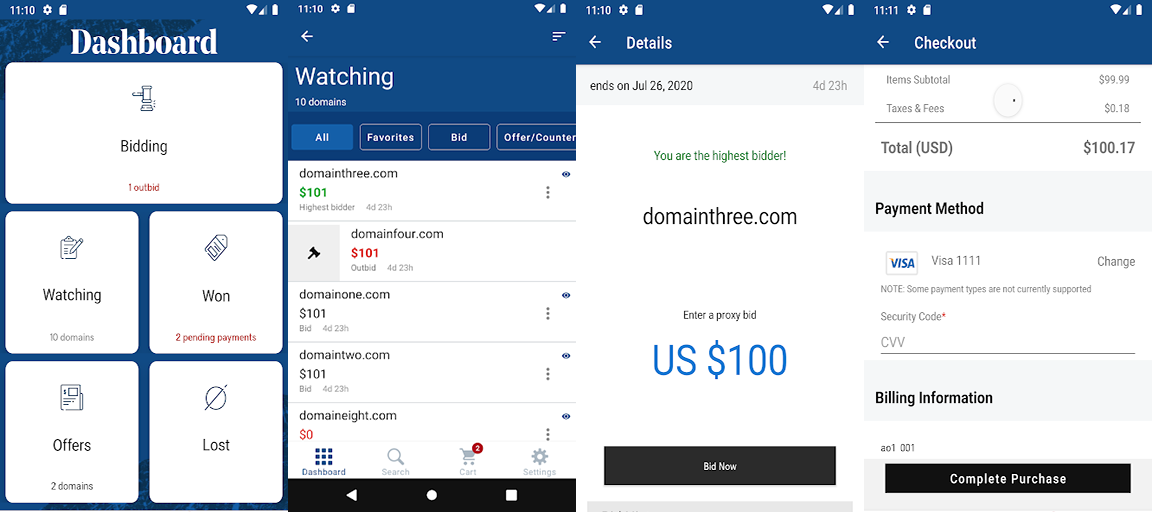
- Standard auction: Traditional bidding where the highest bid at closing time wins. Auctions have set end times, and the domain goes to the top bidder. GoDaddy Auctions is a prime example of this popular format.
- Timed auction: Auctions with a countdown clock that may extend if bids are placed near the end (anti-sniping). This ensures all bidders have fair opportunity to respond to last-minute competition.
- Reserve auction: The seller sets a hidden minimum price (reserve). Bidding continues, but the domain only sells if bids meet or exceed the reserve amount.
- No-reserve auction: The domain will sell regardless of final bid amount, with no minimum price. These often attract more bidders due to guaranteed sale.
- Buy now: Fixed-price listings where you can purchase immediately without bidding. Ideal for securing domains quickly at a known price.
- Make offer: Allows you to submit a private offer to the seller, who can accept, reject, or counter. Useful for negotiating on domains not in active auctions.
- Offer/counter offer listings: Structured negotiation format where buyers and sellers exchange offers back-and-forth until reaching agreement or walking away. Provides transparency in the negotiation process.
- Expired domain auction: Domains that owners failed to renew are auctioned by registrars or drop-catching services. Often available at lower prices with existing SEO value.
- Private sale/brokered deal: Direct negotiations between buyer and seller, often facilitated by brokers for high-value premium domains not publicly listed.
- Lease to own: Payment plan option where you make monthly installments while using the domain, with full ownership transferring after final payment. Allows acquisition of premium domains without large upfront capital.
Building a profitable domain investment portfolio

Domain investing can be a rewarding venture that generates both passive income and substantial returns over time. Success comes from informed decisions, patience, and strategic planning.
To gain the knowledge picked up by seasoned domain investors, consider enrolling in GoDaddy Domain Academy.
This excellent resource for learning how to buy and sell domain names is included with your membership with the GoDaddy Discount Domain Club and includes self-paced courses and a quick, under-30-minute introduction to domain name investing.
With that in mind, here's how to build your portfolio through a thoughtful, step-by-step process:
1. Set your budget, goals, and expectations
Determine how much money you can comfortably dedicate to domains without affecting your financial stability. Set clear goals — are you looking for passive income through parking, quick flips, or long-term appreciation?
Understand that domain investing has holding costs (annual renewals), and only a percentage of domains sell each year. Plan for a three- to five-year investment and expect that some domains won't sell. Spread your budget across different price points and set realistic sales goals based on market data, not hype.
2. Find unique and valuable domain names
Focus on domains with proven value. These are short, memorable names, exact-match keywords for profitable niches, brandable terms or emerging industry keywords. Use Google Trends to identify growing sectors and NameBio to research comparable sales.
Look for domains with commercial intent — terms businesses would pay for. Explore expired domain marketplaces for drops with existing traffic. Prioritize .com domain extensions when possible, and avoid trademark conflicts.
3. Use AI to find alternative domain names
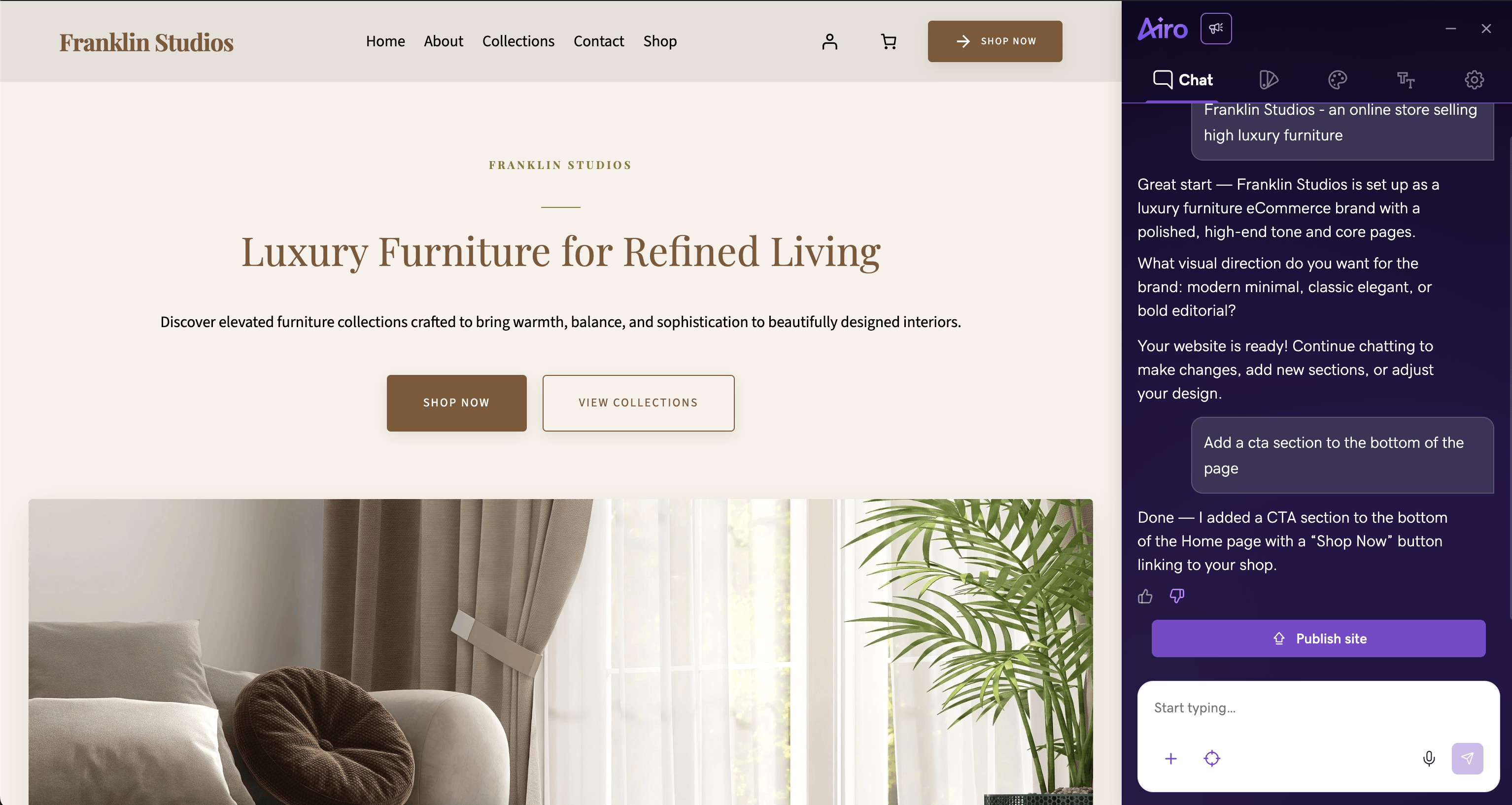
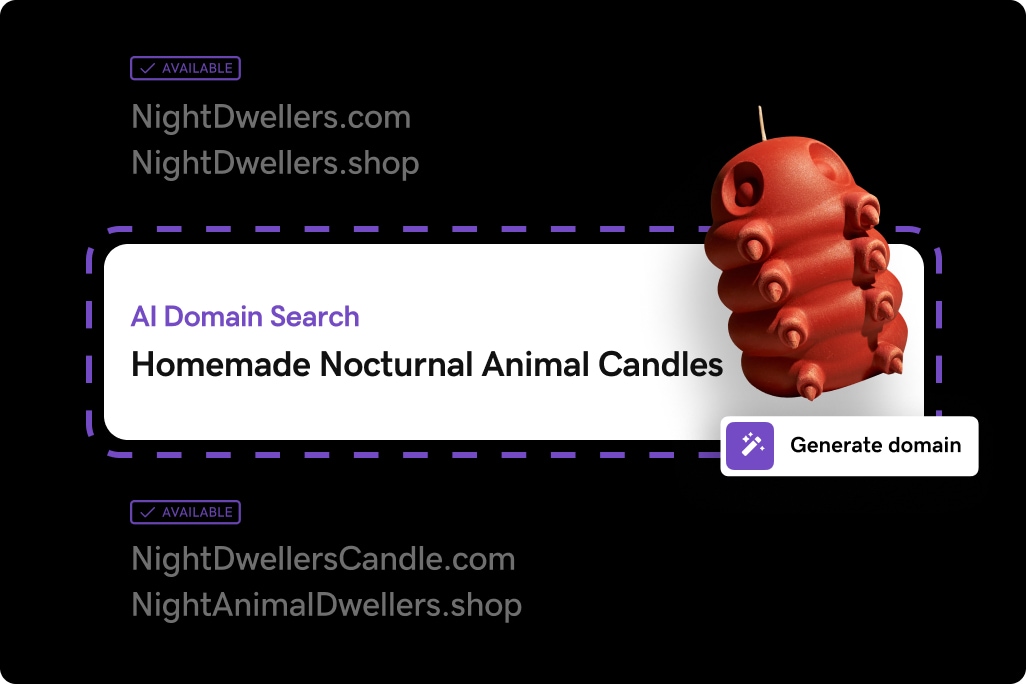
Fire up AI tools like ChatGPT, Claude, or GoDaddy Airo to brainstorm creative alternatives you might miss manually. An AI name generator can suggest brandable combinations, identify related keywords, and generate hundreds of options based on your criteria.
AI can also help you avoid trouble when you find a domain that includes a trademark. You might be able to register something like apple.xyz, but buyers will likely avoid it.
Once your portfolio is dialed in, the GoDaddy MCP integration with Claude enables automated portfolio analysis and market research, helping you identify trends and opportunities more efficiently.
4. Invest in premium domains
While budget domains offer volume opportunities, investing in premium domains (typically $1,000+) can significantly boost your portfolio value. Premium domains — short, keyword-rich, or highly brandable names — appreciate better and attract serious buyers.
Start with one or two affordable premiums rather than dozens of cheap domains. Use GoDaddy Domain Appraisals and comparable sales data to ensure fair pricing. Premium domains also generate better parking revenue due to higher traffic and commercial intent.
5. Protect your assets
Secure your investment by enabling two-factor authentication and using strong passwords. Enable registrar lock on all domains to prevent unauthorized transfers.
Keep accurate records of purchase prices, dates, and renewal schedules as well. Missed renewals can cost you valuable domains. Maintain domains at reputable registrars with good security. Budget for annual renewals as part of your holding costs — typically $10-20 per domain yearly.
6. Monetize your domains
Domain name parking is the primary strategy for generating passive income while holding domains for resale. Parking services like GoDaddy Domain Parking display relevant advertisements on your domains. And when visitors click ads, you earn modest revenue.
7. Manage your expectations
Again, it’s very important to maintain realistic expectations. Most domain investors see modest annual returns across their portfolios. Parking might generate a few more dollars monthly across multiple domains.
And sales can be unpredictable. You might sell nothing for months, and then close a significant deal. Focus on building a diverse portfolio, keeping holding costs low, and maintaining patience. Success comes over years, not weeks.
Ready to buy an aftermarket domain?
The domain aftermarket offers tremendous opportunities for investors. Equipped with the right tools, platforms, and strategies outlined in this guide, you're ready to start building your portfolio.
Remember, success in domain investing comes from staying informed and making careful choices. Start small, learn from each transaction, and gradually step up your investments as you gain experience.
Your next premium domain could be waiting — now go find it!