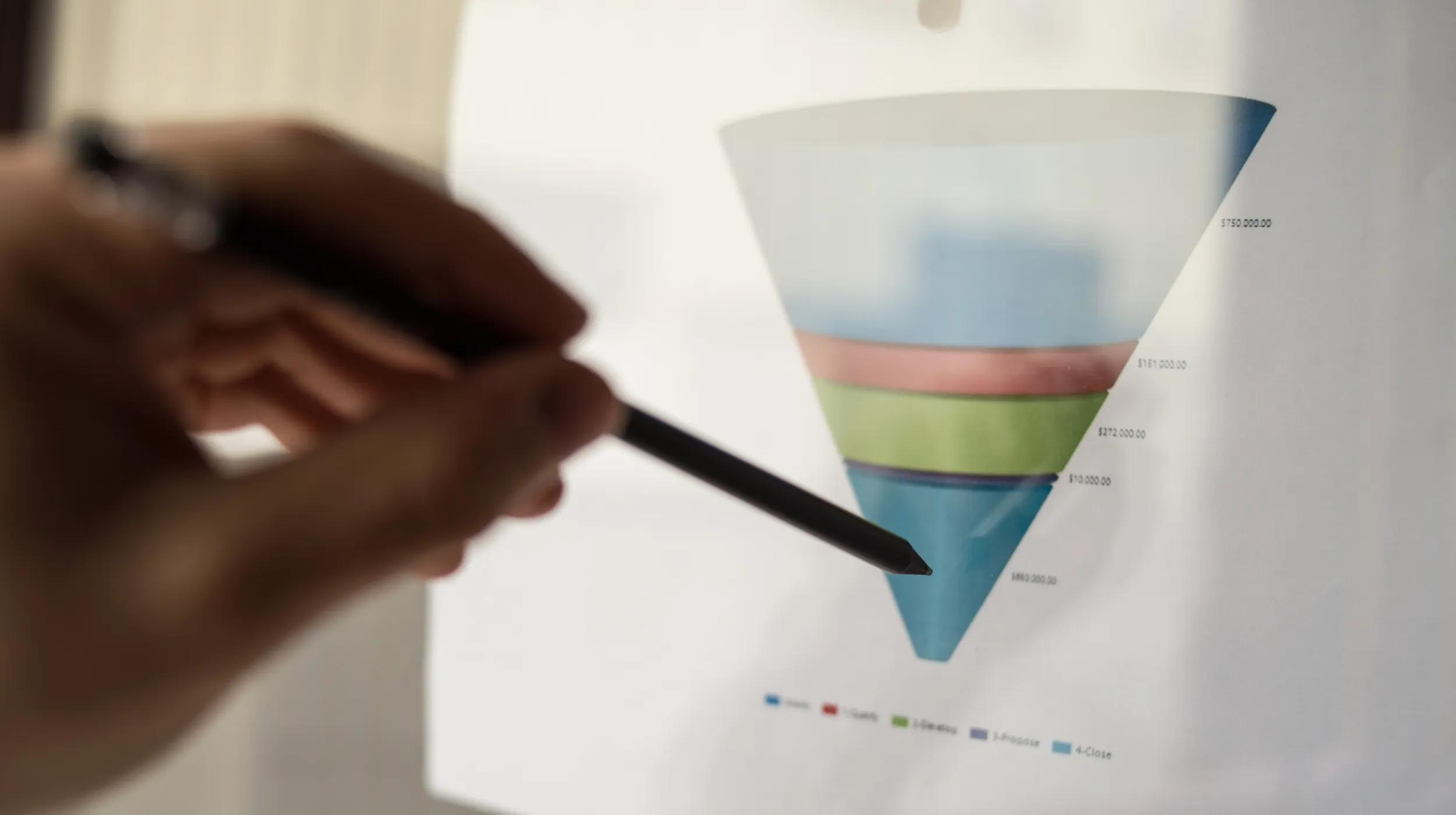

The digital sales funnel describes the journey a potential customer takes from first becoming aware of your brand. They start by researching what you offer, then move on to buying your product and, hopefully, becoming a repeat customer.
In its simplest form, the sales funnel traditionally consists of four stages: Awareness, Consideration, Purchase, Loyalty.
However, with the evolution of commerce around the world, the sales funnel has also begun to evolve. We’ll dive into the different stages of a digital sales funnel and what you need to do in each stage to move your customers along to the end. You’ll also find helpful tips on how to turn customers into loyal advocates of your brand.
The four stages of the digital sales funnel
The sales funnel was originally introduced as a concept in 1898. But, with over 20% of all retail purchases occurring through ecommerce, the sales funnel has shifted slightly to keep pace with the evolution of purchasing practices.
When it comes to how a business owner approaches the sales funnel from a digital point of view, the AIDA model stands out as a more intuitive way to think about how consumers move from window-shoppers to repeat customers.
So, what is the AIDA model?
The AIDA model is an established marketing framework that outlines the four psychological stages a customer moves through before making a purchase: Awareness, Interest, Desire, and Action (AIDA).
Let’s check out each of these stages below, how the traditional sales funnel and AIDA model concepts work, and how you can apply each to your business.
1. Awareness
In traditional marketing, the awareness stage was often referred to as “Above the Line” marketing (ATL). This included anything that first made your target market aware of your brand and offering. Typical examples were:
- A person spots your advert on TV.
- Someone sees a billboard ad while they are driving to work.
- Reading a print ad in the Sunday newspaper.
In a digital sales funnel, awareness is done entirely online. Modern marketing strategies typically range from:
- An ad on Google search results.
- A banner on a favorite blog.
- A sponsored post by an Instagram influencer in a specific space.
Social media is also big at this beginning stage. It’s where people go to discover new things and gather recommendations. Platforms like Instagram, Pinterest, and YouTube are popular for this, which is why it’s essential for your brand to build visibility here.
When working on the awareness stage for your business, it’s important to keep these concepts in mind:
Choose a platform that fits
The right platform for your brand will depend entirely on who your target audience is. With that audience in mind, you’ll then want to see how they behave online and which platforms they tend to use most. Are they pinning recipes on Pinterest or gathering service provider recommendations on LinkedIn? Knowing exactly who you’re marketing to is far more effective (and a much better use of budget) than trying to be everything to everyone.
You don’t have to be on every single platform out there to have a successful digital sales funnel. Trying to be everywhere is very time-consuming — especially as a small business owner.
Equip yourself with the right tools
Being able to accurately track your marketing efforts is important, so you’ll need to build your toolkit early on. You can use digital data tools like Google Analytics to easily track and monitor audience behaviors online.
Once you have a better understanding of who your audience is, it’s time to focus on creating targeted campaigns. Tools like GoDaddy app can help you easily create eye-catching ads using various templates for banners and social media posts. The best part is, you don’t even need to be a trained designer to use it. It’s built with the average business owner in mind.
Cater to your customers’ needs
Even though the sales funnel has evolved in recent years, the function of the awareness stage remains the same. The point is to get in front of where your customers’ eyeballs are. Let them know that you can solve a particular need they have. If you do well in this stage, you’ll push them toward the next step in the funnel and bring them closer to a sale.
KPIs and A/B testing for the Awareness stage
At the top of the funnel, your goal is simple: get seen. Because this stage is all about visibility and reach, your KPIs should help you understand how widely your message is spreading and whether it’s landing with the right people. Key metrics include:
- Reach and impressions: How many people are seeing your ads or posts
- Engagement rate: Likes, saves, comments, clicks
- CTR (click-through rate): How often viewers move from your ad to your website or profile
- Cost per mille (CPM): How efficiently you're buying visibility
A simple A/B testing cadence can help you quickly tighten your messaging and visuals without putting extra strain on your time or budget. Start by testing one variable at a time (like headline, image, or call to action) for one week. Roll out the better-performing variation the following week, then test a new variable. This steady rhythm keeps performance improving while ensuring your awareness efforts stay cost-effective.
2. Consideration/Interest
During the consideration (or interest) phase, the customer moves from passive viewing to active engagement.
Showcasing your unique perks helps give you the upper hand when it comes to potential sales prospects. It’s also a key factor in whether they’ll commit to buying from you in the future.
Remember, the consumers of today are savvier than ever. Information is readily at their fingertips with things like review sites and social media.
It’s what helps them compare products and services to find the best fit for them. Even if you were only marketing products offline, your customers might still use online methods to compare brands, so be visible in relevant spaces.
Consumer behaviors vary in this phase of the funnel. They may jump between different platforms to compare similar brands, which is why it’s important to have mentions of your offering in a variety of different places. Look beyond your own website or social media profiles and find online communities that tie in with your target audience.
Ideally, you’ll want to generate positive buzz about your brand in online spaces your audience frequents. This means you’ll need to create opportunities for people to leave reviews about your offering. Try getting recent customers to leave reviews on sites like Yelp or encourage them to post testimonials on their own profiles. Alternatively, you can also sponsor a product to a relevant influencer.
KPIs and A/B testing for the Consideration/Interest Stage
Now that your audience knows who you are, the next step is figuring out how deeply they’re engaging with your brand. This phase is all about evaluating interest and gathering signals that someone is getting serious about choosing you. Important KPIs to monitor include:
- Engagement depth: Saves, shares, replies, comments with intent
- Website behavior: Time on page, scroll depth, product page views
- Lead indicators: Email sign-ups, free trial requests, downloads, or clicks to learn more
- Referral traffic: Are people discovering you from review sites, influencers, or social proof spots?
For A/B testing, try a two-week cycle. Interest-stage decisions take a little longer, so give your audience time to interact with your variations. Test things like different value propositions, product angles, review placements, or influencer content types. Run each version for a full week and evaluate which one drives more meaningful engagement signals.
3. Purchase/Desire
This is the moment of truth: it’s the point where your casual browser decides to become a customer. It’s also the moment when a good checkout process can seal the deal and ensure customer satisfaction.
Enable a simplified checkout process
With ecommerce on the rise, many brands can benefit from a website that enables a simplified checkout process. New technology has made the online checkout process progressively simpler, and it’s worth exploring if it means creating a smoother, more convenient experience for your customers.
Another way brands handle payments online is through social media. Some simply sell via direct messages in their Instagram profile or use an Electronic Funds Transfer (EFT) to complete the final purchase. But if you’re selling this way, it’s important (perhaps more so) to make the sales process seamless and reassuring.
This is where ecommerce sites have a distinct advantage over their social media counterparts. They have the ability to reassure customers that their transaction is instant and secure through layers of payment technology. They also allow you to easily confirm payments and show the status of an order in transit.
Maintain a good line of communication
One-to-one communication with your customer in this stage of the funnel is absolutely crucial. You want to make them feel secure and that their money hasn’t just disappeared into a black hole — especially if you’re brand new!
A good way to keep in touch is to follow up with confirmation emails, tracking numbers, and text messages with status updates on order fulfillment.
To make things even better, try communicating with your customer using consistent branding. A good visual or graphic can go a long way in delivering a clear message to update customers. GoDaddy app’s extensive range of templates can help you do this.
KPIs and A/B testing for the Purchase/Desire stage
At this point, every metric needs to help you understand whether your checkout process is converting browsers into buyers. This is where tracking can really highlight friction points, and where even small tweaks can create big improvements. Focus on KPIs like:
- Conversion rate: The percentage of people who complete a purchase
- Cart abandonment rate: How often shoppers drop off before paying
- Average order value: A great indicator of how compelling your offers are
- Payment success rate: Whether transactions process smoothly
- Attribution insights: Which channel delivered the final nudge toward purchase
For A/B testing, shorter cycles work best because you’re tracking very clear actions. Try 3–5 day tests comparing things like CTA button text, checkout flow layouts, shipping messaging, payment options, or confirmation page wording. Adopt the winner quickly, then test the next improvement. Small refinements here build momentum fast.
4. Loyalty/Action
While Loyalty has traditionally been a good description of this stage, the AIDA model’s Action description is much more apt in the age of social media. After all, there’s no better ambassador for your brand than a happy customer, so gently encouraging those customers to take action can be hugely beneficial to your brand.
Request feedback from satisfied customers
One way to gain loyalty is to capitalize on the warm, fuzzy feelings a satisfied customer experiences after making a purchase. There’s no better feeling than the post-purchase glow of a happy customer. When asking for customer feedback, seek out customers who are happy with the product and the sales process. You can ask them to leave a review or even to do a testimonial video if you’ve knocked it out of the park.
Partner with influencers
Influencer partnerships can be a powerful tool here. If you see someone who likes your products, try approaching them about working with you on a long-term basis. It’s a good way to have them recommend offerings to their audience and boost your viewership. Reengagement here is golden at this stage. A loyal customer can mean a steady income stream for your business if they buy regularly. Plus, they’ll become a loyal brand ambassador through word-of-mouth.
KPIs and A/B Testing for the Loyalty/Action stage
Once someone becomes a customer, your KPIs shift to long-term relationship building. Here, you're measuring satisfaction, repeat behavior, and enthusiasm — the fuel behind word-of-mouth and long-term growth. Useful metrics include:
- Repeat purchase rate: How often customers return
- Customer lifetime value (CLV): A big-picture view of loyalty over time
- Referral volume: Organic shares, tagged posts, word-of-mouth leads
- Engagement with post-purchase messaging: Email opens, clicks, social reengagement
- Review and testimonial rate: Are happy customers speaking up?
A simple A/B testing cadence for this stage might run monthly, since loyalty behaviors take longer to surface. Test one variable per month, such as email subject lines for review requests, thank-you messaging tone, loyalty program perks, or reengagement offers. Identify what drives the best repeat activity and keep refining your nurturing strategy.
Bonus tips for building an effective digital sales funnel
Now that we’ve covered each of the stages of the digital sales funnel, let’s go over some additional strategies on how to apply the sales funnel concept to your business.
Strengthen omnichannel messaging and internal linking
To ensure a consistent customer experience across every channel, it’s a good idea to align messaging from blogs, social posts, emails, landing pages, product demos, and signup experiences. Map content paths so readers can move smoothly from Awareness to Action, and keep branding consistent at every touchpoint.
Use the same core value proposition, tone, and calls to action in blog posts, social content, emails, landing pages, and checkout experiences to minimize friction and build trust.
Map content paths
Create a content map that links blog topics to landing pages, demos, and signup flows for each funnel stage. This helps guide visitors along the journey and makes sure that your content is discoverable in the desired sequence.
Use internal links from blogs to core assets
Embed internal links within blog content to landing pages, demos, and signup experiences to move readers toward conversion while preserving a consistent brand narrative. Where possible, align anchor text with the funnel stage to reinforce intent (for example, linking blog content about awareness to a landing page or signup flow that reinforces the same message).
Tools like Google Analytics can help you monitor how readers move between assets, and GoDaddy app’s templates can help maintain a consistent design across channels. If you’re unsure how to tackle this, check out GoDaddy’s digital marketing plans.
Perform audience research and build buyer personas
Before you can guide anyone through a digital sales funnel, you need a clear picture of who you’re actually speaking to. Audience research sits at the heart of every effective marketing strategy because it helps you understand not just who your customers are, but what drives them, what they value, and how they behave online.
Developing detailed buyer personas is one of the most useful ways to bring your audience to life. These personas should represent the different segments of people who might engage with or buy from your brand. Include practical details like age ranges, locations, and professions, but also dive into motivation-based insights. Ask questions like:
- What problem are they trying to solve?
- What social platforms do they rely on for recommendations?
- What influences their decision-making process?
- How do they prefer to engage with brands online?
The more specific you are, the easier it becomes to tailor your messaging and choose the platforms where your audience is most active. Remember, these personas aren’t static. Customer expectations shift quickly as new trends emerge, new competitors enter the field, and digital habits evolve.
That’s why it’s important to regularly refresh your personas using real-world data. Tap into feedback from recent customers, review site trends, social media interactions, and even analytics from your own website. Over time, patterns will emerge that show how your audience is changing, and your personas should evolve alongside them.
Use the digital sales funnel to level up your business
Just because sales have gone digital doesn’t mean that the ideas from the traditional sales funnel should be scrapped. The AIDA model simply improves upon the traditional sales funnel; the age-old concepts themselves have not changed. Remember to focus on:
- Building your brand
- Offering something useful to your customers
- Producing quality goods or services
The main changes to the sales funnel over time are the ways you can reach your customers. It’s now much easier to communicate with them throughout the digital sales funnel — especially with all the technological advances available.
Remember, keeping your customers engaged with offerings they love increases your chances of building (and remaining) a successful business.