
A blog is a regularly updated website where individuals or businesses publish posts, with the newest content displaying first, that typically feature commentary, tutorials, or personal insights on specific topics.
Starting a blog is a chance to share your thoughts, interests, and expertise with the world. You might want to document your travels, share recipes, talk about your favorite hobbies, or simply create a space for self-expression.
Blogging gives you a platform to connect with others who share your passions. The best part is you don’t need to be a tech expert to get started. With the right tools and a clear plan, you can go from idea to published posts in no time.
Why start a blog in 2026?
Blogging has grown into a dynamic mix of creativity and technology. With over 700 million blogs on the internet in 2026, the medium continues to thrive as a powerful way to reach audiences.
The most impactful blogs today combine authentic storytelling with tools like AI, engaging video, and targeted email newsletters. Search engines still reward detailed, valuable content, and fresh opportunities for monetization are opening up all the time. Focus on developing a unique voice and delivering real value to your audience, and you’ll be set to stand out.
Wondering if blogging is still relevant? Check out if people still read blogs. And here's even better news: You’re only 10 steps away from launching your first blog!
Let's dive in.
1. Define your purpose and vision
Every successful blog starts with a clear sense of direction. Knowing why you’re creating it and who it’s for will shape everything from your content to your design.
Focus on one idea and one reader
Build each blog post around one specific idea for one specific reader.
Rather than trying to cover every aspect of a topic or appeal to everyone, narrow your focus. A post that deeply serves one reader’s specific need will often perform better than a broad post that superficially addresses many needs.
Posts earn attention through structure and original insight rather than length or breadth of coverage.
Set clear goals for your blog
Begin with a clear vision of what you want to achieve. Determine whether your goal is to educate, entertain, inspire, or sell. Set specific, measurable milestones, like reaching 1,000 monthly readers within six months or growing your email list to 500 subscribers by year’s end.
Create a mission statement
Think of your mission statement as your blog’s North Star. It should clearly define who your blog serves, the value you provide, and the feeling or action you want readers to take after engaging with your content.
Identify your target audience
Get to know your ideal reader. Consider their age, interests, challenges, and goals. Build a simple audience persona to guide your content strategy and marketing efforts so every post speaks directly to the people you want to reach.
Create a specific reader persona by documenting:
- Age range
- Lifestyle details (busy parent, health-conscious professional, etc.)
- Daily challenges they face
- Goals they want to achieve
- Where they spend time online
Example: Sarah, 35, working mom of two, wants quick healthy recipes, struggles with time constraints, and is active in parenting Facebook groups.
The more specific you get, the easier it is to write content that feels like you’re speaking directly to them.
2. Choose your blog’s niche
Before you dive into building your blog, decide what you’ll be writing about. Your niche could be travel, food, technology, parenting, health, or even a creative mix of interests. A clear niche helps you attract the right readers and makes it easier to brainstorm new content ideas.
The best niches combine something you’re passionate about with a topic that has an interested audience. Thankfully, there are many ways to find your niche. Use tools like Google Trends, AnswerThePublic, and keyword research platforms to confirm there’s active search demand. Browse forums, Reddit threads, and social media groups to see if the community around your topic is engaged.
It’s also worth checking out competitors. If the space feels crowded, look for unique angles or underserved subtopics where you can offer a fresh perspective.
Three consistently profitable niche categories (and why sub-niches matter)
Most profitable blogs fall into one of three evergreen categories:
- Health and Wellness: Fitness, nutrition, mental health, and personal development.
- Wealth and Finance: Personal finance, investing, making money online, and real estate.
- Relationships: Dating, parenting, and self-improvement.
To target your audience more effectively, aim for a smaller sub-niche within one of these broad categories.
For example, instead of “fitness,” you could focus on “kettlebell training for busy dads.” This kind of specificity can make it easier to attract a dedicated audience.
Before you commit: Niche validation checklist
Before committing to your niche, validate your idea with this checklist:
- Can you list 50 article ideas right now?
If you struggle to think of content topics, you may lose momentum quickly. - Is there existing competition?
This is actually a good sign — it means the market is viable and people are making money there. - Are there affiliate programs, courses, or products available in this space?
If no one is selling anything related to your niche, monetization will be difficult.
Tips for choosing a niche
- List your interests, hobbies, and areas of expertise.
- Consider what you enjoy researching or talking about.
- Check if there’s an active audience for your topic (Google Trends and forums can help).
- Identify ways your blog could stand out from others.
Your niche can evolve as your blog grows, so don’t get stuck trying to make it perfect from day one. Start with a topic you’re excited to write about and refine your focus along the way.
3. Pick a name for your blog
The next step in your blogging journey is to choose a name that captures your blog’s personality and makes a strong first impression.
Your blog name is often the first thing readers notice, so aim for something catchy, easy to remember, and aligned with your topic.
A business name generator can be a great source of inspiration if you’re feeling stuck.
Tips for picking a great blog name
- Keep it short and simple—avoid long or complicated words
- Make sure it’s easy to spell and pronounce
- Skip numbers and hyphens
- Choose something that reflects your niche or the tone you want to convey (serious, playful, personal, etc.)
- Avoid words with multiple spellings, such as to/two/too, or using the number 2 instead of "to" or "too." These variations can confuse people when they try to remember and type your web address; this could send traffic to the wrong site.
- Avoid names that are too close to existing blogs or brands
- Check domain availability so you can secure the matching web address
Write down your top ideas and say them out loud to see how they sound.
Also remember that your first domain choice may already be taken, especially if you’re aiming for a .com that includes your ideal keywords.
Be prepared to brainstorm multiple domain name ideas and keep a list of alternatives until you find an available option that fits.
When you land on a name that feels right, you’re ready to move forward.
4. Register your domain name
Your domain name is your blog’s online address and your personal space on the internet. While classics like .com, .net, and .us are always solid choices, there are now hundreds of creative web domain extensions to explore, such as .blog, .beauty, .tech, or .film.
A unique extension can help your blog stand out and give readers an idea of the content you produce. For more information, read our guide on what are domain extensions.
Once you’ve chosen the perfect domain name, register it through a domain registrar to make it officially yours. As long as you renew it, no one else can use it.
If branding is a priority, you might also consider buying additional domain extensions to secure your brand and prevent copycats. Learn how to buy a domain name here. If you’re blogging for fun or working with a limited budget, sticking with one extension is perfectly fine. The most important thing is that your domain is memorable, easy to spell, and a good reflection of your blog’s identity.
5. Choose a blogging platform
Now that your domain name is registered, it's time to choose a blogging platform — also known as a CMS (Content Management System), which is software that manages how your blog is displayed without requiring coding knowledge.
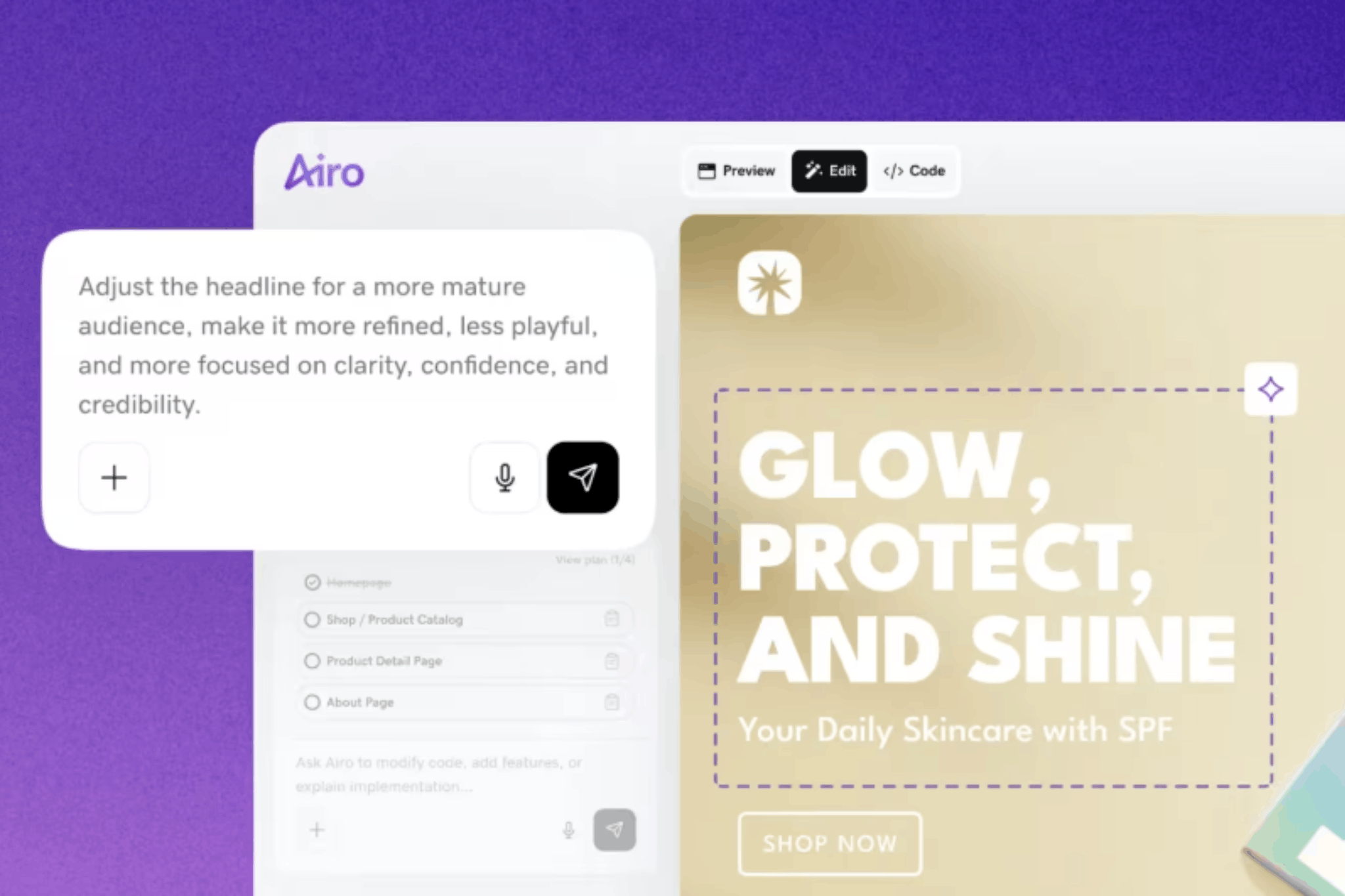
If you want something quick and beginner-friendly, Airo AI Builder makes it easy to launch your blog without any coding skills.
Airo AI Builder for blogging guides you through design and layout choices, helps you create a site, and includes AI-driven SEO tools to optimize your content so it can rank higher in search results. Built-in hosting, drag-and-drop design, and ready-to-use designs make setup quick and hassle-free.
6. Connect your domain and hosting
Web hosting is what makes your blog accessible to others online. Without it, your content would only exist on your own device, and no one else could view it.
Hosting works by storing your blog’s files on a server managed by a hosting provider, which delivers your site to visitors when they type in your domain name. Because of this, it’s important to choose a provider with strong security, reliable uptime, and responsive support.
Read our post on what is web hosting for more details.
Named "Best Hosting for Small Businesses 2025"
by HostingAdvice.com for our intuitive tools,
scalable solutions, and expert support
How to determine the hosting needs for your blog
When setting up your blog, think about what you’ll need from your hosting plan:
- Storage and bandwidth: If you plan to share a lot of photos, videos, or other large files, or expect high traffic, you’ll need more storage space and bandwidth.
- Maintenance and security: Some sites, like WordPress, require routine updates, backups, and security patches. If you don’t have the time or experience to handle these, look for managed hosting or hire someone to take care of it.
- Multiple domains or added support: If you want to direct multiple domain names to your blog or expect to need frequent technical help, skip free platforms and choose a paid hosting plan that offers robust support.
- Budget: Keep in mind that some hosting plans have low introductory prices but higher renewal rates. Consider the total cost of hosting before signing up.
Managed WordPress Hosting: a business investment
Managed WordPress Hosting is a convenient service that handles the technical aspects of running a WordPress site, including security, backups, updates, and performance optimization.
It's essential for a blogger because it frees you to focus on content creation and audience building instead of technical maintenance.
It includes hosting, automatic backups, strong security features, and expert support, so you can focus on creating content instead of managing servers.
7. Design your blog with branding impact in mind
Your blog’s design shapes how visitors experience your content and sets the tone for your brand. A strong, cohesive look helps create a lasting impression and keeps readers coming back.
For a deeper dive into design fundamentals, see our guide on what is web design .
Plan your site structure with a clear category hierarchy
Structure your blog with a clear category hierarchy.
In your header menu, list your main blog categories based on your niche’s primary topics.
Under each main category, create sub-categories for more specific content areas.
For example, if you’re a food blogger, your main categories might be: Breakfast Recipes, Lunch Recipes, Dinner Recipes, and Dessert Recipes.
Under “Dinner Recipes,” you could have sub-categories like Chicken, Beef, Pork, Seafood, and Vegetarian.
This hierarchical structure helps both readers and search engines understand and navigate your content more effectively.
Design a memorable logo
Your logo is a central piece of your brand identity. It helps your blog stand out, look professional, and stay top of mind for readers. If you don't have one yet, try using a logo maker to quickly create a design that reflects your style.
For inspiration, check out this guide on how to make your own logo . For a comprehensive approach to building your visual identity, explore the Brand Identity Guide .
Important note about free logo templates:
Free templates from design tools are acceptable for starting out, but you cannot trademark a logo created from a free template.
If you want full brand protection and the ability to trademark your logo, you’ll need to invest in a custom logo design.
Many bloggers start with free templates and upgrade to custom designs once their blog gains traction and they have the budget for professional branding.
Free templates are fine in the beginning, but plan to upgrade later if you want legal protection and to avoid costly rebranding.
Web accessibility (a11y): expand your audience and improve usability
Web accessibility (a11y) is the practice of ensuring your site can be used by people with disabilities.
This isn’t just the right thing to do — it opens your content to a wider audience, which means more potential customers and revenue.
Basic accessibility practices include adding alt text for all images, using readable fonts with strong color contrast, and ensuring your site navigation works with keyboard controls.
These improvements benefit all users while expanding your potential audience.
Build trust and credibility
Give readers a way to connect with you beyond your posts.
An About page lets you share your story, explain why you started your blog, and show the personality behind your content.
A Contact page makes it easy for visitors to reach out with questions, feedback, or collaboration ideas.
Adding social media links, like Instagram and X, is another great way to keep the conversation going and build stronger relationships with your audience.
8. Content strategy: planning, creating, and publishing
A great blog doesn’t just happen. It’s built on a solid plan.
Putting a simple content strategy in place now will save you time later and help you avoid roadblocks once you start publishing.
Here’s how to plan, create, and share content that connects with your audience and grows your blog.
Create an editorial content calendar
Consistency is one of the most important factors in building a loyal readership.
A content calendar helps you stay organized, plan ahead, and publish on a schedule that works for you, whether that’s weekly, biweekly, or monthly. Your calendar also makes it easier to plan seasonal posts, promotions, and collaborations.
Start by brainstorming topics that align with your niche and audience interests. Browse online courses on platforms like Udemy, Skillshare, and LinkedIn Learning to discover what topics people are actively paying to learn about.
Course titles, descriptions, and popular topics reveal what your audience finds valuable enough to invest time and money in, giving you proven content ideas.
Then map out publishing dates using a spreadsheet, digital calendar, or a dedicated content planning tool.
For step-by-step guidance, read this post on how to create a content calendar.
Modern keyword research techniques
Keyword research is the process of finding the terms and phrases your audience is already searching for so you can create content that meets their needs. Start by using tools like Google Keyword Planner to uncover relevant keywords with a strong search volume and low-to-moderate competition.
When selecting keywords, balance two factors: search volume and intent.
Broader keywords tend to have higher search volumes (more people searching monthly), but they often have lower intent matching. More specific phrases usually match audience intent more closely, but they typically have lower search volumes.
For example, "chocolate chip cookies" is a broad, high-volume keyword. "How to make chocolate chip cookies" is a more specific, typically higher-intent phrase.
When choosing target keywords, aim to strike a balance between high search volume and high intent.
Pay attention to search intent. This tells you what users are looking for when they type in a query. Are they seeking information, comparing options, or ready to make a purchase? Align your content with that intent for better engagement. You can also pull inspiration from related searches, “People also ask” boxes, and trending topics on Google Trends.
Writing for people and search engines (E-E-A-T)
E-E-A-T stands for Experience, Expertise, Authoritativeness, and Trustworthiness, which are four key qualities search engines look for when ranking content.
Showing real-world experience, demonstrating subject expertise, building authority through credible sources, and earning trust with accurate, transparent information all work together to boost your blog’s credibility.
If you want to write a good blog post , start by focusing on being genuinely helpful and reliable.
Break up your content with clear headings, bullet points, and visuals so it’s easy to read.
Incorporate your keywords naturally, link to reputable sources, and share your personal experiences where relevant.
This approach helps your blog perform better in search results and keeps readers engaged.
Voice and storytelling tips
Your voice is what makes your blog stand out. Write like you’re speaking to a friend who already cares about the topic. In your first post, introduce your blog, share why you started it, and let readers know what they can expect. You can keep it short and sweet or make it longer and more detailed.
Just remember that the goal is authenticity, not perfection. Share your personal experiences and the perspective that makes your content valuable. Need inspiration? Check out this guide on how to blog in 5 simple steps.
Here are some ideas on what to include in your first blog post:
- Welcome readers and outline your blog’s focus
- Share your motivation for starting the blog
- Give a glimpse into your background or experiences
Using AI tools responsibly
AI is a hot topic in creative industries, but it can be a powerful blogging tool. However, it works best when you use it to support — not replace — your own ideas and expertise. You can leverage AI to brainstorm fresh topics, outline your posts, refine headlines, and even generate draft content.
Always review and refine AI-generated content to ensure accuracy, relevance, and adherence to your brand voice. Check facts against credible sources, add your personal experiences and unique insights, adjust tone to match your authentic voice, and ensure the content truly serves your specific audience's needs.
Grammar checkers can assist in proofreading, but consider their suggestions carefully to avoid altering your creative writing style or removing intentional stylistic choices.
Add personal stories, original research, or unique insights that AI can't replicate.
Tools like GoDaddy Airo AI Builder can help you quickly create on-brand copy, suggest SEO-friendly keywords, and design visuals that align with your blog’s style.
You can also use AI marketing tools for behind-the-scenes tasks, like creating social media captions, repurposing blog posts into email newsletters, or building image prompts for graphics.
For guidance on using AI ethically, read about the risks of AI and practicing responsible use.
Optimize for SEO
Help your posts get discovered by choosing a relevant keyword or key phrase for each one, then including it in the title, a subheading, and naturally throughout the text. Add meta titles and descriptions using your website builder or an SEO tool like Yoast for WordPress.
Find out more about optimizing for search engines.
Secure your site
Your blog should have an SSL certificate that encrypts the connection between your site and its visitors, keeping data secure and showing readers they can trust your blog. A secure site is also preferred by Google, which can help with search rankings. For more details, check out this ultimate guide to SSL certificates.
Disclose sponsorships and ads
If you’re using affiliate links, sponsored posts, or ads, be transparent about it. The FTC requires disclosure, and honesty builds trust with your audience. For more on monetization, read this comparison of affiliate marketing vs. influencer marketing.
Once you’ve checked off these basics, don’t overthink it—publish your first post! You can always edit or update it later as your blog evolves.
9. Monetize and promote your blog
Once your blog is live, you need to grow your audience and explore ways to turn your hard work into income. The more you share your content, connect with readers, and diversify your revenue streams, the faster your blog can become a valuable asset.
Income timeline expectations (so you don’t get discouraged)
Set realistic expectations for your blogging income timeline and stay prepared for a journey of six to 12 months before seeing any significant income. It takes time for Google to find and rank your content and for you to build an audience.
Your first earnings will likely be small amounts from AdSense or Amazon affiliate sales.
Consistent income often starts in year two.
It’s common for bloggers in years 2-3 to earn four-figure monthly amounts by combining ads and affiliate marketing. Top-tier bloggers who add courses and premium products can earn five to six figures monthly.
Your income will directly depend on your traffic, niche, and monetization strategies.
Social media: adapt content for each platform
Social media is one of the fastest, most effective ways to promote your posts and reach new readers. However, just posting links to your latest content isn’t enough; you have to focus on building relationships.
Learn how to identify and connect with your target audience, then share insights, comment on posts, join conversations, and participate in groups related to your niche. When you engage authentically, you create connections that make people more likely to check out your blog.
For more strategies on growing your following, see this beginner's guide to social media and discover how to balance authenticity and professionalism on social media .
Consider guest blogging
Guest blogging is a great way to expand your reach and connect with new audiences. Write a guest post for another blogger in your niche or invite them to contribute to your site. Collaborating with other creators helps build relationships, increases your visibility, and can drive traffic back to your own blog.
Start adding videos to your blog
Video content can introduce your blog to entirely new audiences. Repurpose your blog posts into videos for platforms like YouTube, Instagram, and TikTok.
This boosts engagement and strengthens your appeal to sponsors or potential product buyers. For tips on growing your blog’s audience through videos, check out this guide on how to optimize YouTube videos, learn about how to sell on Instagram, and explore TikTok for businesses.
Utilize a diverse set of monetization strategies
It’s often easiest to turn your blog into a source of income or an effective side hustle when you combine multiple revenue streams. This helps you earn in different ways, keeps your income more consistent, and gives you the flexibility to try new opportunities as your blog grows. Some common blog monetization strategies include:
- Affiliate marketing: Partner with brands that fit your niche and promote their products or services using affiliate links. You’ll earn a commission for each sale made through your referrals.
- Sponsored content: Collaborate with companies to create posts that highlight their offerings in a way that feels natural and valuable to your audience.
- Online courses or workshops: Package your expertise into paid learning experiences to both generate income and establish yourself as a go-to authority in your field.
- Advertising: Use ad networks like Google AdSense to display ads on your site and earn revenue from clicks or impressions.
For more ideas on building income streams, explore passive income ideas .
Send an email newsletter to engage your audience
An email newsletter is one of the most reliable ways to keep readers coming back to your blog.
Unlike social media, where algorithms control what people see, your emails go directly to your subscribers’ inboxes, giving you full control over how and when your audience hears from you.
Start by adding a simple sign-up form to your blog, and offer a free incentive to encourage sign-ups, such as a checklist, downloadable guide, or exclusive tips your audience can’t get anywhere else.
Once you have subscribers, send regular updates that provide real value. This could include links to your latest posts, personal insights, behind-the-scenes content, or special offers. Aim for consistency in your schedule, but avoid overwhelming your readers—quality and relevance matter more than frequency.
Use a professional email to personalize your messages, manage your communications, and track performance metrics like open rates and click-throughs. You can also integrate your newsletter with your social media channels to reach new subscribers.
Over time, a well-managed newsletter can become one of your most powerful tools for driving traffic, promoting products or services, and building a loyal community around your blog.
Build a community (newsletters, forums)
Create spaces where your readers can connect with you and each other. This could be a newsletter, a dedicated Facebook group, a Discord server, or participation in niche online forums.
Building community helps turn casual visitors into loyal supporters who come back for every update.
Create a membership for predictable, recurring revenue
Membership sites create predictable, recurring revenue streams, which can be especially appealing if you’re looking for more stability from your blog income.
For example, 200 members paying a monthly fee can generate consistent, predictable monthly income.
To make a membership worth paying for, the content behind the paywall must be high-value and different from your free content.
Effective membership content includes:
- Exclusive in-depth articles or tutorials.
- A private community forum (like a Discord server).
- Live Q&A sessions.
- Early access to your content.
For creators seeking income stability, a membership model can be a desirable way to build more reliable monthly revenue while giving supporters an elevated experience.
Use word-of-mouth marketing
Online and offline networking can drive growth faster than you think. Join relevant social media groups, contribute to forums, and attend local events or conventions related to your blog’s niche.
Support others by sharing their work and engaging with their content.
Building genuine relationships can help naturally expand your blog’s reach to new audiences.
10. Measuring success and scaling up
If you want your blog to grow from a creative outlet into a sustainable venture, you need to track your progress, understand what’s working, and build on that success.
Below are tips for scaling your blog with purpose.
Key performance indicators (KPIs)
Tracking KPIs helps you see where your blog is thriving and where it needs attention. Keep an eye on:
- Traffic: Monitor unique visitors, page views, and sessions through Google Analytics or Airo AI Builder's dashboard.
- Engagement: Look at average time on page, bounce rate, comments, and social shares to see how readers are interacting with your content.
- Email subscribers: Track newsletter sign-ups as a strong measure of audience loyalty.
- Conversion rates: Measure actions like joining your list, purchasing a product, or clicking an affiliate link.
- Revenue: Break down earnings from ads, affiliates, products, and services to identify the most profitable streams.
Using analytics to refine strategy
Analytics tools like Google Analytics, Google Search Console, and your website builder’s built-in reports can reveal powerful insights, including:
- Top-performing content: Focus more on the topics, formats, or keywords bringing the most traffic or conversions.
- Drop-off points: Identify where visitors are leaving your site and make improvements to keep them engaged.
- Audience insights: Learn your readers’ demographics, devices, and locations to better target your content and promotions.
- Testing and iteration: Experiment with headlines, formats, or calls-to-action, and use the results to guide future decisions.
Preparing for future trends
Blogging isn’t stagnant. To be successful and stay ahead of competitors, you should:
- Embrace new formats: Try podcasts, videos, or interactive content to meet changing preferences.
- Leverage AI: Use AI-powered tools for brainstorming ideas, improving SEO, and analyzing performance while keeping your personal voice front and center.
- Stay informed: Follow industry news, participate in blogging communities, and keep learning from peers.
- Diversify traffic sources: Build a mix of traffic from search, email, partnerships, and direct visits so you’re not dependent on a single channel.
Building a scalable blogging business
As your blog grows, having the right systems in place will make it easier to manage, expand, and maintain quality. Consider doing the following:
- Document your processes: Create step-by-step guides for writing, publishing, and promotion to make it easier to delegate or automate tasks.
- Automate where you can: Use tools to streamline email marketing, social sharing, and analytics reporting.
- Invest in your skills: Keep learning about SEO, content creation, marketing, and monetization so you can stay competitive and continue growing.
Common pitfalls and how to avoid them
Every blogger hits bumps along the way, but knowing the most common mistakes and how to handle them can save you time, frustration, and lost momentum.
Why blogs fail in 2026
An authentic voice, audience-focused content, and consistent quality make blogs stand out, but what causes them to fade into the background?
- Lack of focus: Covering too many unrelated topics or constantly shifting your niche can confuse readers and search engines. Define your niche and stick with it. Build content pillars (main themes) and make sure every post supports your blog’s purpose.
- Inconsistent posting: Going silent for weeks or posting in sporadic bursts can stall growth and cause readers to lose interest. Create a realistic editorial calendar and consider batching content in advance. Even one strong post a month is better than inconsistent publishing.
- Ignoring audience needs: Only writing about what interests you—without addressing your readers’ questions—limits your reach. Ask for feedback, run polls, and track which posts get the most engagement to guide your content strategy.
- Neglecting SEO and promotion: Great content can go unnoticed if it isn’t optimized or promoted. Invest in keyword research, on-page SEO, and share your content across social media and email.
Maintaining consistency and avoiding burnout
Burnout happens in blogging when you push too hard or try to do everything yourself. To avoid it:
- Set achievable goals and celebrate small milestones
- Schedule regular breaks to recharge
- Automate or delegate tasks that take up too much time
Remember, blogging is a long game. If you want results, you have to pace yourself. For more strategies, read how small business owners can manage stress to increase productivity .
Dealing with plagiarism and protecting your work
Nobody wants to think about it, but content theft is a reality in the digital world.
Take these steps to protect your hard work:
- Add a copyright notice to your site and watermark original images.
- Use tools like Copyscape or Google Alerts to spot unauthorized use.
- If your content is stolen, contact the site owner or file a DMCA takedown request.
Blogging resources and tools
The right tools can help you stay organized, create better content, and grow your audience faster.
New platforms pop up all the time, but the trusted resources below will make it easier to plan, publish, and optimize your blog in 2026.
Content creation and editing
- Grammarly: AI-powered grammar and style checker to keep your writing polished and error-free.
- Hemingway Editor: Helps simplify your writing and improve readability.
- Unsplash / Pexels: Free, high-quality stock photos to make your posts more visually appealing.
- GoDaddy Logo Creator: Quickly design a professional logo and source on-brand visuals to match your blog’s identity.
SEO and analytics
- Google Analytics: Track blog traffic, audience behavior, and growth trends.
- Google Search Console: Monitor how your site appears in search results and catch technical issues early.
- Keyword research tools (SEMrush, Ahrefs, Moz): Find high-impact keywords and analyze your SEO performance.
- Your website builder’s analytics: Most builders include built-in reporting. With Airo AI Builder, you can access detailed analytics to understand your audience and stay ahead of the competition.
Your blogging journey begins here
Starting a blog in 2026 is easier than ever before. With the right planning, tools, and strategies, you can create a space that reflects your voice, connects with readers, and even generates income over time.
The key is to start, stay consistent, and keep learning as you go. Blogging is a journey, and every post you publish brings you closer to the audience and the impact you’re aiming for.
Ready to turn your ideas into a blog you’re proud of? Use GoDaddy Airo Airo AI Builder to create professional, on-brand content, logos, and visuals that help your blog stand out from day one.
Frequently asked questions
How do I start a successful blog?
A successful blog starts with a clear purpose, a defined niche, and a plan to consistently create valuable content for your audience. Choose a blog name and domain, set up your site on a reliable platform, and focus on quality over quantity. Promote your content across social media, email, and other channels, and track your results so you can refine your strategy as you grow.
What makes a blog great?
A great blog delivers useful, engaging content in a voice that feels authentic and relatable. It’s easy to navigate, visually appealing, and tailored to the needs of its audience. Consistency, strong branding, and a focus on solving reader problems all help make a blog stand out.
Is blogging still worth it in 2026?
Yes, even in 2026, blogging is an effective way to share your expertise, connect with an audience, and build an online presence.
Search engines still value in-depth, helpful content, and there are more ways than ever to monetize your blog, including affiliate marketing and selling digital products.
What is the 80/20 rule for blogging?
The 80/20 rule suggests you should spend about 20% of your time creating content and 80% promoting it.
While your blog posts are the foundation, promotion ensures your hard work reaches the right audience and has the impact you’re aiming for.
How to start a blog for free?
You can start a blog for free using platforms that offer no-cost hosting and basic templates, but you’ll often have limited customization and branding options.
If you’re serious about growing your blog, investing in your own domain and hosting is worth considering because it gives you more control and credibility from the start.
How do you make money from a blog?
Bloggers can earn through affiliate marketing, sponsored posts, ad revenue, digital product sales, online courses, and even paid memberships.
The best approach is to diversify your income streams so you’re not dependent on one source.
What is the fastest way to make money blogging?
The quickest route is to leverage an existing audience — either through social media, email, or another platform — and offer them something valuable right away, such as an affiliate product, a service, or a digital download.
While it’s possible to earn quickly, building a sustainable income typically takes time, consistent content, and trust from your readers.
How many posts should I have before launching my blog?
Aim to have 3-5 high-quality posts ready before launching your blog.
This gives visitors enough content to explore and helps establish your blog's topic and credibility from day one.
Focus on foundational content like beginner guides, how-to tutorials, or posts that answer common questions in your niche.
You don't need dozens of posts — quality matters far more than quantity at launch.
Do I need coding skills to start a blog?
No, you don't need any coding knowledge to start a blog.
Modern blogging platforms offer user-friendly interfaces with drag-and-drop builders and pre-designed templates.
You can create a professional-looking blog entirely through visual editors.
Basic understanding of HTML or CSS can be helpful for advanced customization later, but it's completely optional.